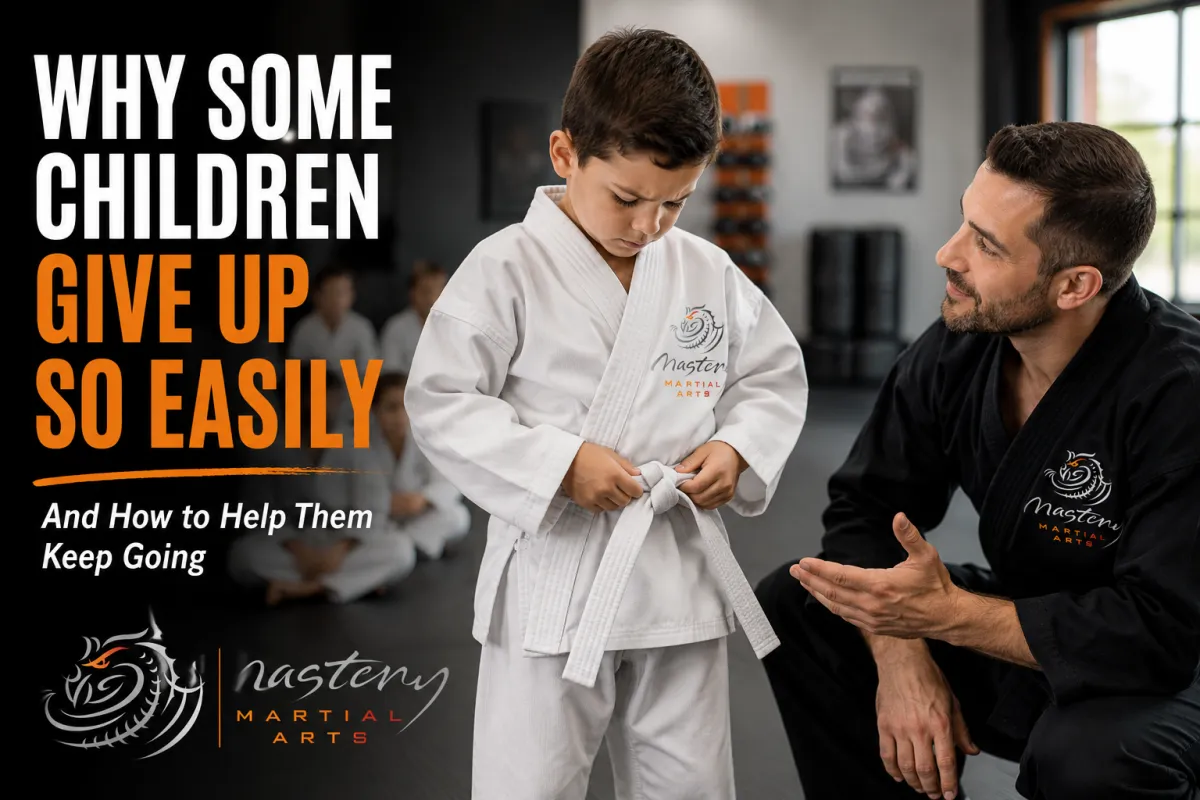
Why Some Children Give Up So Easily | How to Build Perseverance & Confidence in Kids
Quick Answer
When a child gives up easily, it usually is not because they are lazy, weak, or incapable. More often, they have not yet learned that frustration is a normal part of learning. Children develop perseverance by facing manageable challenges, receiving encouragement without being rescued, and collecting repeated evidence that effort can lead to progress.
Key Takeaways
Giving up is often a reaction to frustration, not a lack of ability.
Children may interpret difficulty as proof that they are not capable.
Confidence grows through earned experiences, not empty praise.
Parents can help by supporting children without solving every problem for them.
Structured activities such as martial arts give children a safe place to practice perseverance.
The goal is to help a child move from“I can’t”to“Let me try”and eventually to“Yes I Can.”
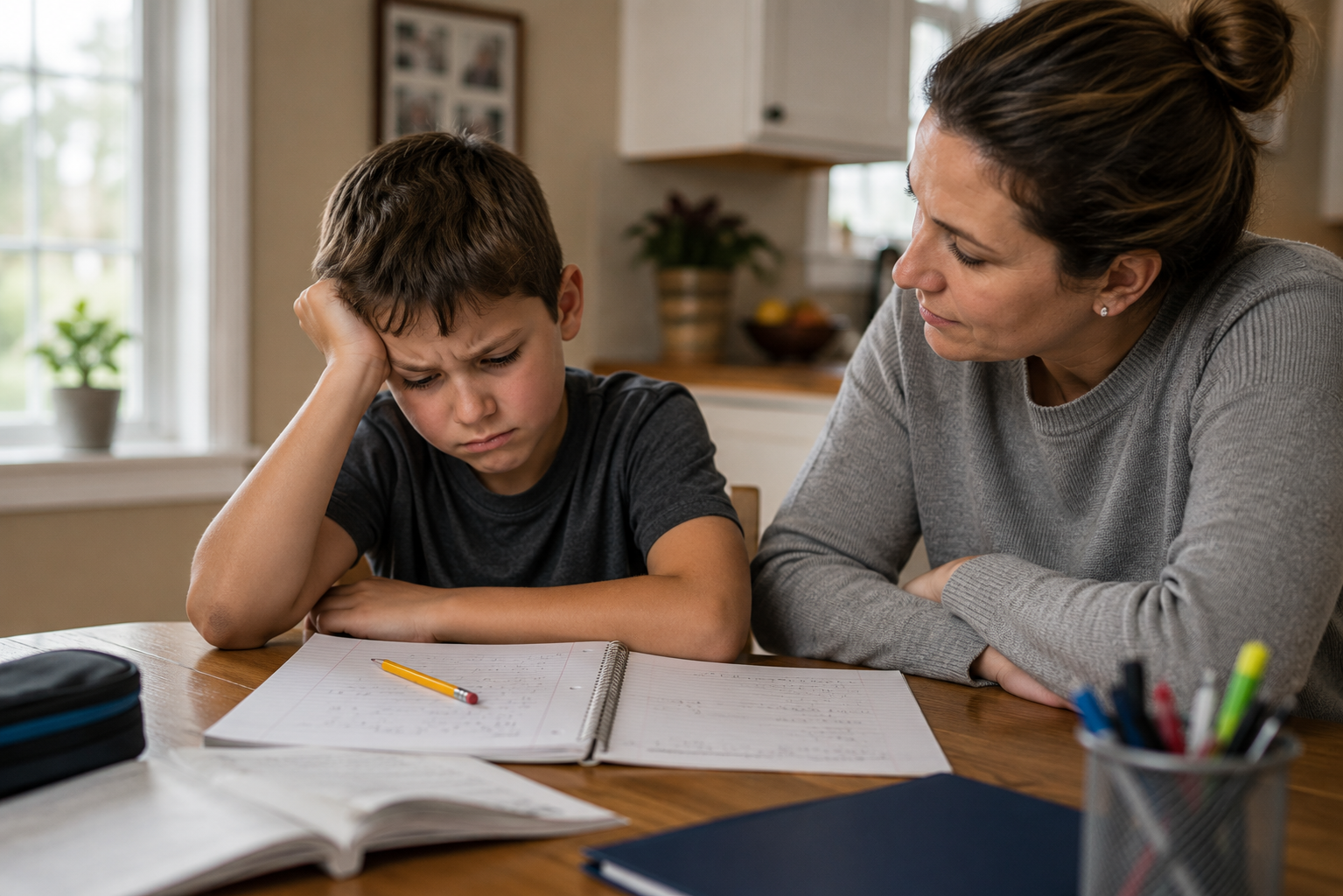
“I Can’t Do It.”
If you are a parent, you have probably heard these words.
Maybe it happened during homework.
Maybe while learning to ride a bike.
Maybe while tying shoes.
Maybe while reading a difficult sentence.
Or perhaps it happened during the first week of a new activity.
Your child tries once.
Maybe twice.
Then the frustration arrives.
Their shoulders drop.
Their voice changes.
And they say:
“I can’t do it.”
As parents, those words can be difficult to hear.
You can see something your child cannot see yet.
You know they are capable.
You know that if they stayed with the challenge a little longer, they might discover they can do it.
Instead, they stop.
They avoid.
They ask someone else to take over.
Sometimes they become upset before they have really begun.
If this sounds familiar, you are not alone.
Almost every child experiences moments when the challenge in front of them feels bigger than the belief they have in themselves.
The encouraging news is that belief can grow.
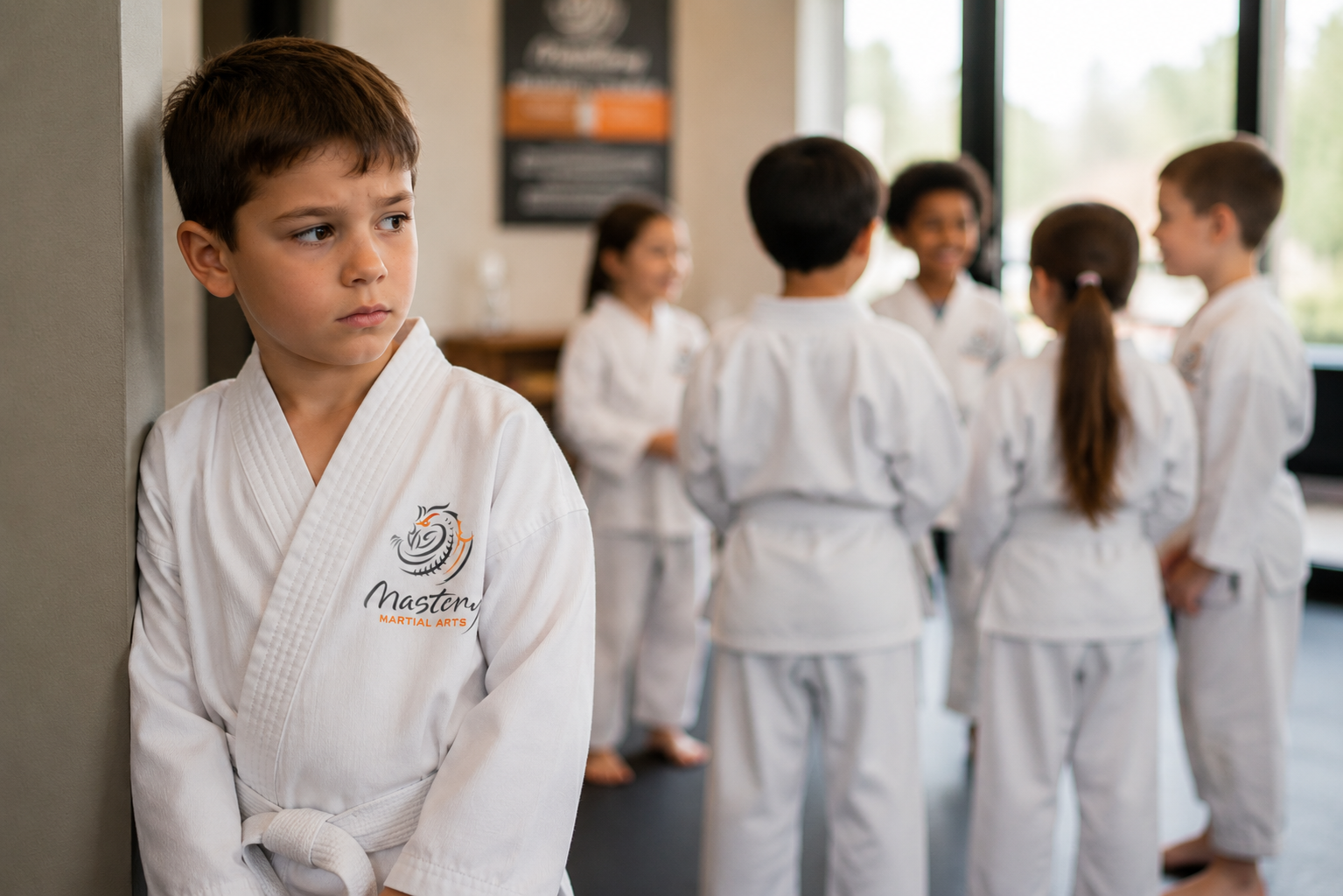
It May Not Be a Lack of Ability
When children quit quickly, adults sometimes assume they are not motivated.
We may think:
They are not trying hard enough.
They do not care.
They need more discipline.
They simply lack confidence.
But the real issue is often deeper.
The problem may not be the challenge itself.
It may be the meaning the child gives to the challenge.
A child may quietly think:
“If this feels hard, I must not be good at it.”
Or:
“Everyone else can do this except me.”
Or:
“If I make a mistake, people will think I’m not smart.”
Those thoughts create powerful emotions.
The emotions then influence the child’s next action.
Instead of trying again, the child looks for a way to escape the uncomfortable feeling.
This is why understanding why your child says “I can’t” can be so important. The words are rarely just about the task. They often reveal the story a child is beginning to tell themselves.
As we explain in Children Become the Story They Tell Themselves, repeated thoughts can slowly shape how children see their abilities, their potential, and their place in the world.
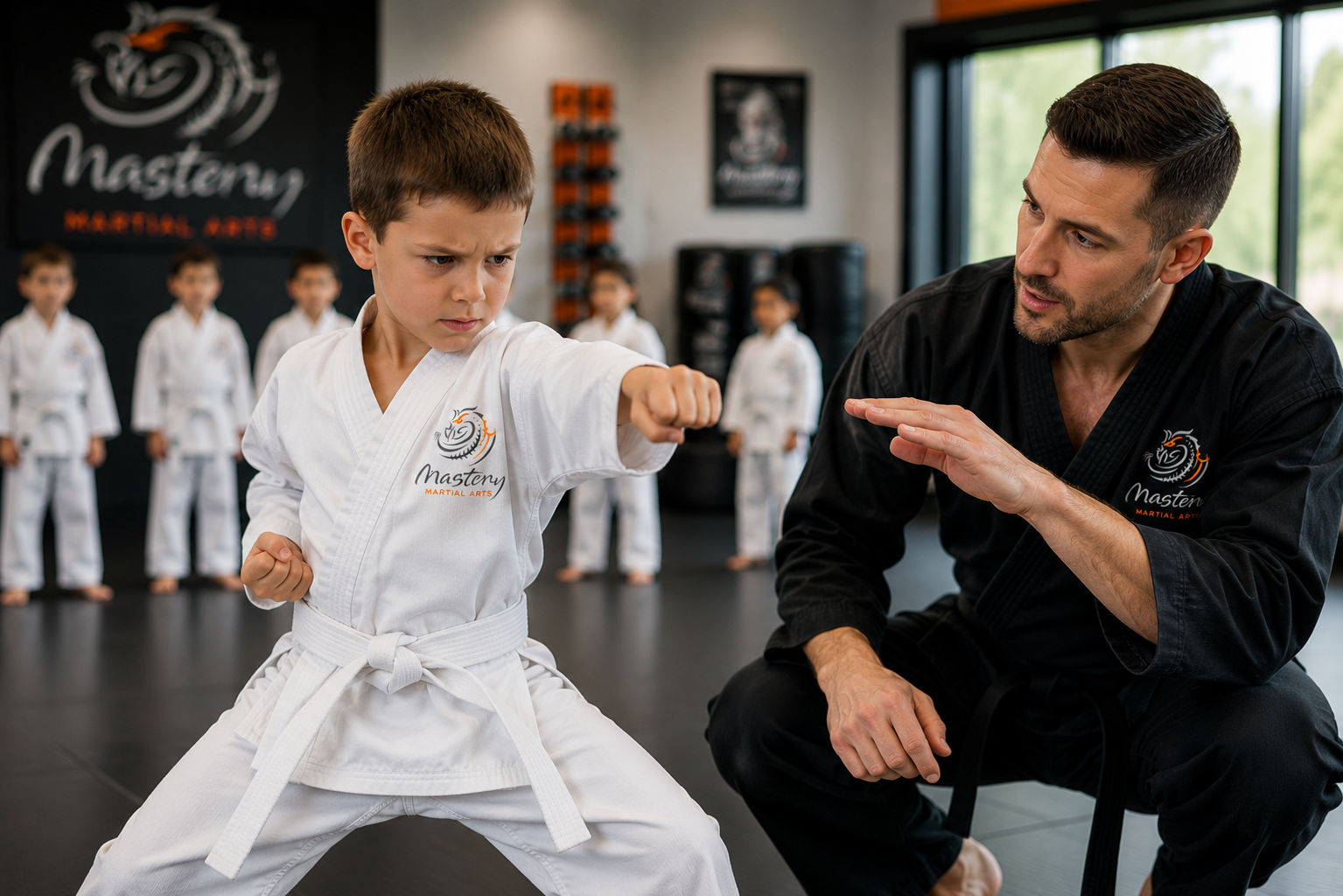
Frustration Is Often a Sign That Learning Is Happening
Learning rarely feels comfortable in the beginning.
Think about when your child first learned to:
Walk
Ride a bike
Read
Tie their shoes
Catch a ball
Speak in front of others
Join a new group
None of those skills arrived fully formed.
They developed through repetition.
Mistakes.
Adjustment.
Practice.
And trying again.
The difficulty was not proof that the child could not learn.
The difficulty was part of learning.
Children need help understanding that frustration does not automatically mean:
“I’m failing.”
Sometimes it means:
“My brain and body are working on something new.”
That change in meaning matters.
A child who sees frustration as proof of inability will often try to escape it.
A child who learns that frustration is temporary becomes more willing to stay with the challenge.
That is why helping children handle frustration is such an important part of building confidence and resilience.
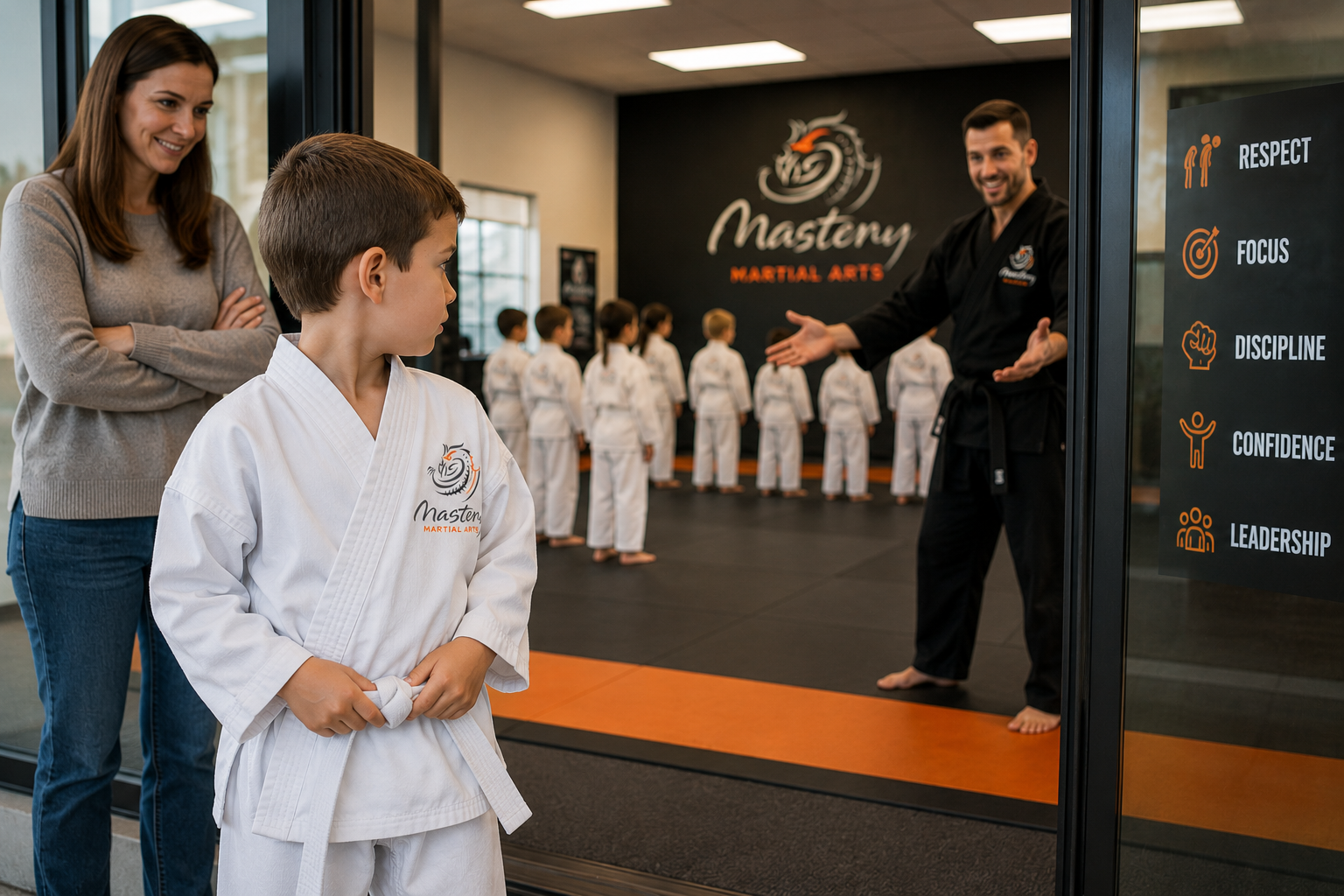
Why Some Children Avoid Challenges
Children naturally move toward experiences that feel safe and familiar.
They often move away from situations where they may:
Make a mistake
Look inexperienced
Be compared with others
Feel embarrassed
Disappoint an adult
Struggle in front of their peers
Avoidance provides immediate relief.
The child no longer has to feel uncomfortable.
But it also removes the opportunity to grow.
Every challenge avoided becomes an experience the child never gets to complete.
They do not reach the moment where they can say:
“I figured it out.”
They do not collect evidence that they can improve.
Over time, avoiding difficulty can weaken confidence because the child never receives proof that they can move through discomfort successfully.
This is why children need challenges to grow and why confidence often comes from doing hard things.
Confidence is not created by eliminating every uncomfortable moment.
It is created when children experience discomfort, receive support, continue trying, and eventually discover:
“That was hard, but I handled it.”
Today’s World Makes Quitting Easier
Children today are growing up in a world built around speed and convenience.
Videos begin instantly.
Games restart immediately.
Entertainment changes with one swipe.
Answers appear within seconds.
Real learning does not usually work that way.
A child may need weeks to become comfortable reading aloud.
Months to improve coordination.
Repeated practice to learn emotional self-control.
Many attempts to master a physical skill.
When children become accustomed to immediate stimulation and immediate results, the normal pace of growth can feel unusually frustrating.
This does not mean today’s children are less capable.
It means they need intentional opportunities to practice patience, persistence, and delayed gratification.
Children do not necessarily need fewer challenges.
They need more safe opportunities to discover that they can overcome them.
That is also why comfort can become the enemy of confidence. When children never experience manageable struggle, they have fewer opportunities to build the emotional strength they will need later.
Parents Naturally Want to Help
Every loving parent has experienced this moment.
Your child is struggling.
They are becoming frustrated.
You know the answer.
You know how to make the task easier.
So you step in.
There is nothing wrong with helping.
Children need support.
They need encouragement.
They need adults who believe in them before they fully believe in themselves.
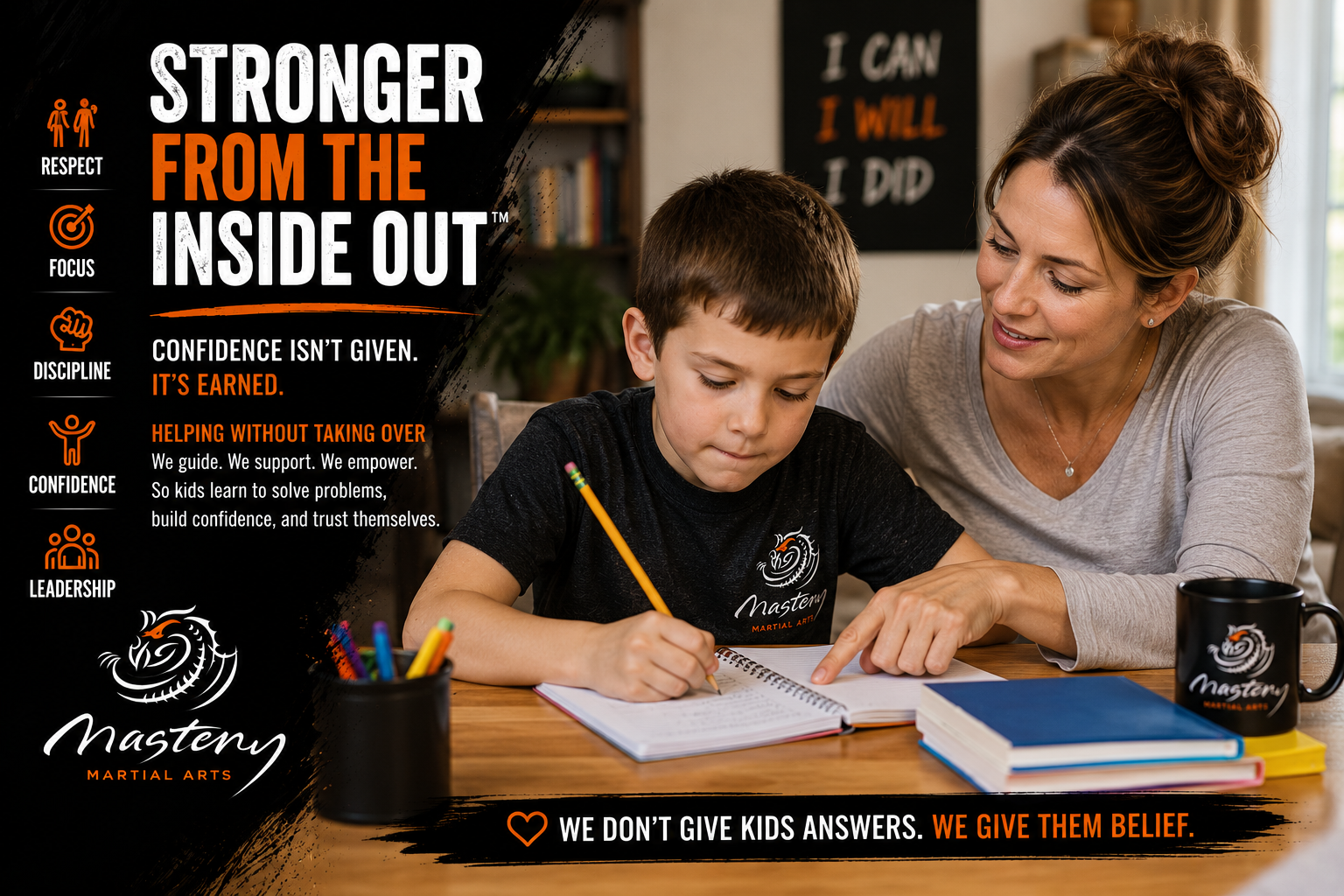
But there is an important difference between supporting a child and rescuing a child.
Support says:
“I’m here. Keep going. What could you try next?”
Rescuing says:
“This is uncomfortable, so I’ll do it for you.”
Rescuing solves the immediate problem.
But it can remove the experience the child needs most:
“I figured it out.”
That is why well-intentioned adults can sometimes accidentally teach children to fear failure.
The goal is not to make children struggle alone.
The goal is to remain close without taking over every difficult moment.
Five Ways to Help a Child Who Gives Up Easily
1. Normalize Frustration
Help your child understand that frustration is part of learning.
You might say:
“It makes sense that you feel frustrated. You’re still learning how to do this.”
This validates the feeling without treating the feeling as a reason to stop.
The message becomes:
“This feels hard, but hard does not mean impossible.”
2. Praise the Process
Instead of focusing only on the final result, recognize the behaviors that created progress.
Try saying:
“I noticed you tried a different way.”
“You stayed with that longer than you did last time.”
“You made a mistake and kept going.”
“You asked for help instead of giving up.”
These statements help children recognize the connection between effort and improvement.
The goal is not to convince them they are perfect.
The goal is to help them notice that their choices matter.
3. Break the Challenge Into a Smaller Step
Sometimes children quit because the entire task feels too large.
Instead of asking:
“Can you finish the whole thing?”
Ask:
“What is one small part you could do next?”
A child who feels overwhelmed by ten math problems may be able to begin with one.
A child who is afraid to join an entire group may be willing to say hello to one person.
A child who cannot perform the full martial arts combination may be able to practice the first movement.
Small steps create motion.
Motion creates evidence.
Evidence begins building belief.
4. Give Them Time Before Stepping In
Adults often solve problems quickly because we have more experience.
Children need longer.
They may need to pause.
Think.
Try the wrong way.
Adjust.
Try again.
That extra time can feel uncomfortable for both the child and the parent.
But it may also be where the learning happens.
Before stepping in, consider asking:
“Would you like a hint, or would you like another minute to try?”
That keeps support available while allowing the child to remain responsible for the next step.
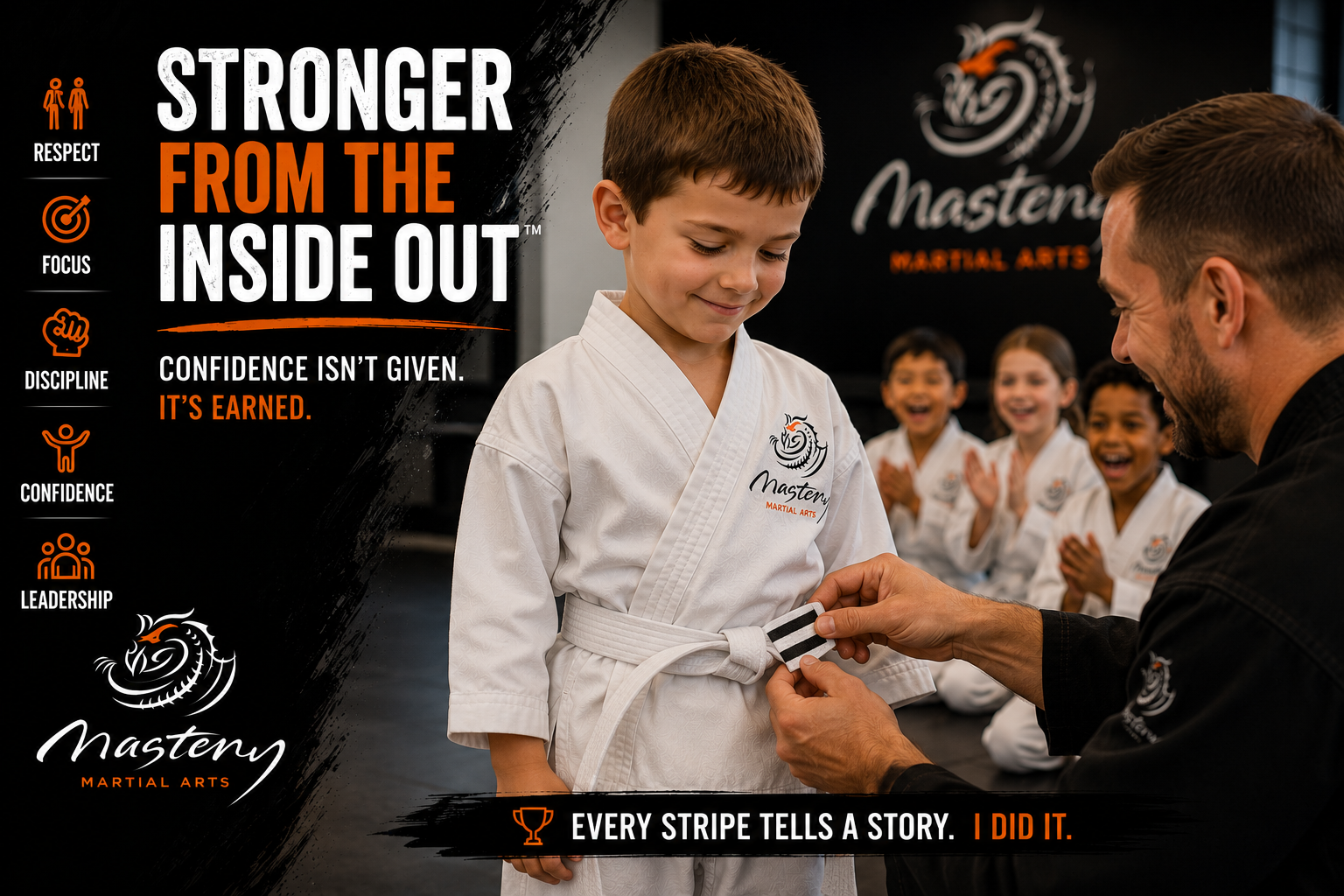
5. Celebrate Earned Progress
Children need to see that progress matters.
Not only first place.
Not only perfect scores.
Not only flawless performance.
Progress.
A child who participates after feeling nervous has made progress.
A child who tries again after making a mistake has made progress.
A child who asks for help instead of shutting down has made progress.
A child who stays with something for two minutes longer than last time has made progress.
Those moments deserve to be noticed.
They are the moments through which children begin learning how to believe in themselves.
One Question That Can Change the Moment
The next time your child says:
“I can’t.”
Pause before solving the problem.
Ask:
“What is one thing you could try next?”
That question does something important.
It shifts the child’s attention away from the size of the obstacle and toward the possibility of movement.
It helps them look for direction.
It encourages problem-solving.
And it keeps ownership of the challenge with the child.
Sometimes the next step will be small.
That is okay.
Confidence is rarely built through one giant breakthrough.
It is usually built through many small moments where a child realizes:
“I did more than I thought I could.”
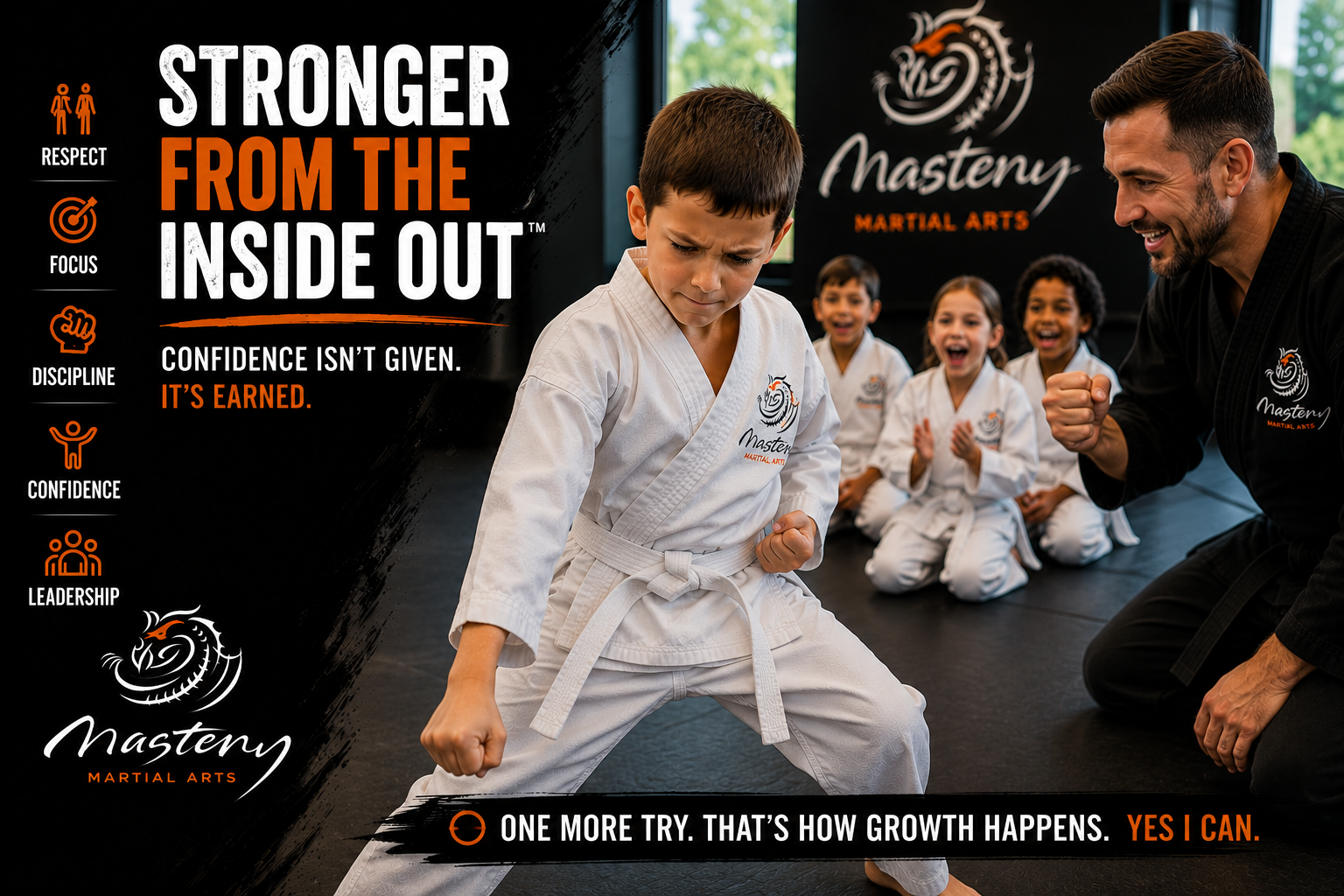
From “I Can’t” to “Let Me Try”
The transformation does not always happen overnight.
A child may begin by saying:
“I can’t.”
With encouragement, they may eventually say:
“Can you help me?”
Later, they may say:
“Let me try again.”
And one day:
“Yes I Can.”
That progression matters.
The goal is not to create a child who never feels afraid, frustrated, or uncertain.
The goal is to help them become a child who knows what to do when those feelings appear.
Confidence is not the absence of struggle.
Confidence is the growing belief that struggle can be faced.
How Mastery Martial Arts Helps Children Keep Going
At Mastery Martial Arts, we are not simply teaching punches, kicks, and forms.
We are helping children become Stronger From The Inside Out™.
Parents often begin by looking for an activity.
What many families discover is something much bigger.
Mastery becomes a school of life.
Every class gives children structured opportunities to practice:
Staying calm when something feels difficult
Listening even when they feel distracted
Trying again after making a mistake
Accepting coaching without feeling defeated
Encouraging classmates
Speaking clearly
Working toward a long-term goal
Experiencing progress they have earned
We call this Mental Health in Motion™.
Movement becomes the vehicle through which children practice mental, emotional, and social skills.
One week, a child struggles to remember a combination.
A few weeks later, they perform it with confidence.
One month, they cannot tie their own belt.
Later, they proudly help a newer student.
At first, they are nervous to stand in front of the class.
Eventually, they speak clearly and make eye contact.
One stripe.
One challenge.
One success at a time.
Children begin collecting evidence:
“I can learn.”
“I can improve.”
“I can recover from mistakes.”
“I can keep going.”
This is how martial arts can help children develop confidence that reaches far beyond the dojo.
You can learn more about that process in Raising Confident Kids Through Martial Arts and How to Build Confidence in Kids.
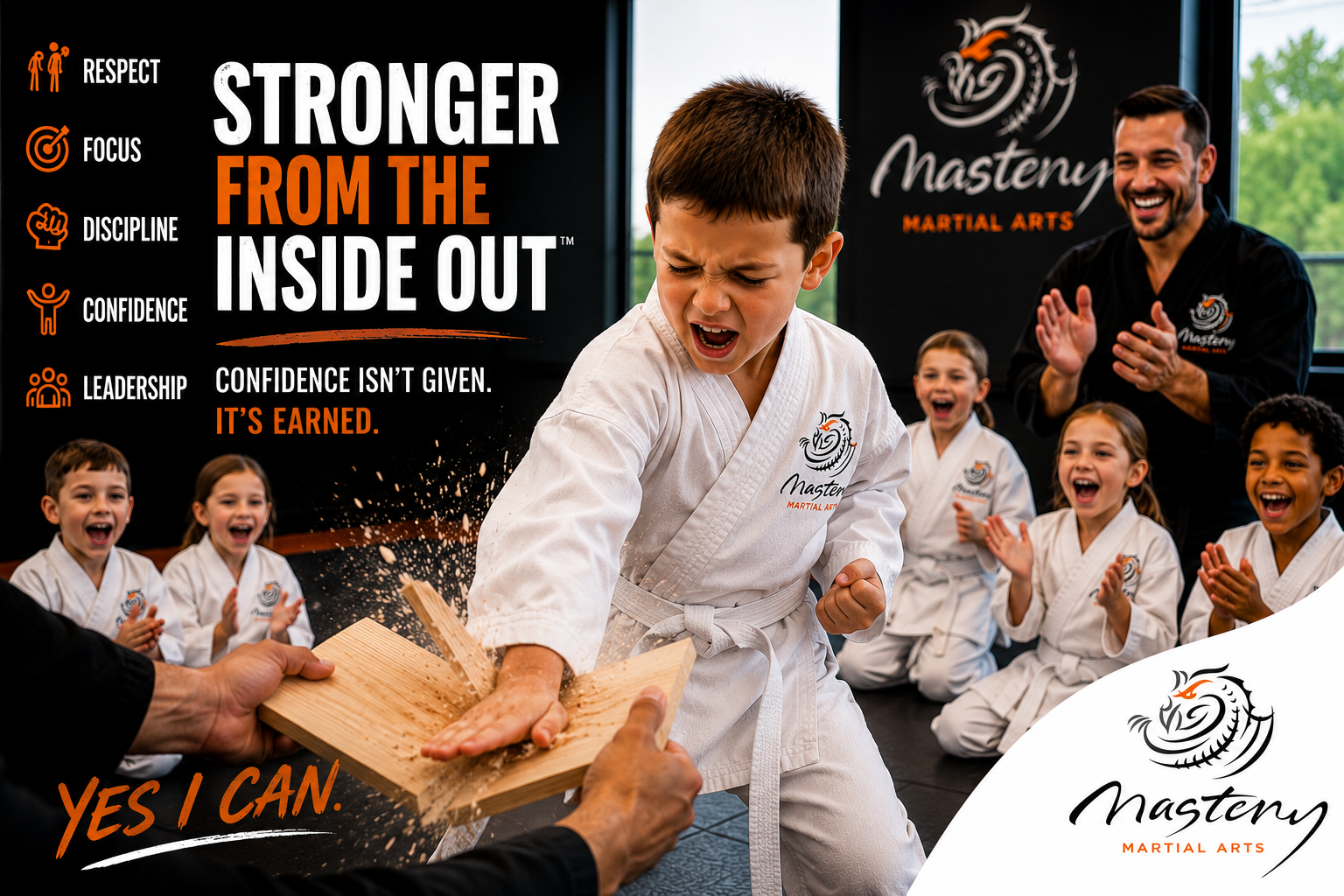
The Breakthrough Moment
There is a moment in a child’s development when something begins to change.
They face a challenge.
They become frustrated.
For a moment, it looks like they may stop.
Then they take another breath.
They try one more time.
And they do it.
They turn toward you with a smile and say:
“Did you see that?”
That moment changes more than the skill.
It changes how the child sees themselves.
They are no longer simply hearing that they are capable.
They are experiencing it.
That is where real confidence begins.
Continue Your Parenting Journey
Every article in the Mastery Confidence Hub is designed to help parents better understand how children develop confidence, resilience, courage, leadership, and emotional strength.
Continue with these resources:
Find a Mastery Martial Arts School Near You
Mastery Martial Arts has helped children throughout Rhode Island and southeastern Massachusetts becomeStronger From The Inside Out™since 1993.
Choose the location closest to your family:
Rhode Island
Massachusetts
Every Mastery location follows the same child-development philosophy, age-specific curriculum, positive coaching standards, and commitment to helping children become confident leaders for life.
Help Your Child Discover What They Are Capable Of
Confidence does not come only from hearing:
“You can do it.”
Confidence grows when a child experiences:
“I did it.”
During a free Mastery Martial Arts introductory lesson, your child can meet our instructors, experience our supportive learning environment, and take an important first step toward greater confidence, focus, resilience, and self-belief.
Being new is normal.
Mistakes are expected.
Effort is celebrated.
There is no pressure and no obligation.
Choose your nearest Mastery Martial Arts location and invite your child to experience a free introductory lesson.
Give your child the opportunity to move from “I can’t” to “Let me try”—and eventually to “Yes I Can.”
About Mastery Martial Arts
Since 1993, Mastery Martial Arts has helped thousands of children throughout Rhode Island and southeastern Massachusetts develop confidence, resilience, focus, leadership, emotional regulation, respect, and self-discipline.
Our age-specific programs are designed around one simple belief:
Children do not become confident only because someone tells them they are.
They become confident because they repeatedly experience success, move through challenges, and begin seeing themselves differently.
With eight convenient locations, more than 1,500 parent reviews, and over three decades of experience helping families, Mastery Martial Arts is committed to preparing children not only for their next belt, but for life.
We are building more than martial artists.
We are helping raise confident leaders who are Stronger From The Inside Out™.
