Why some kids are afraid to fail
WHY SOME KIDS ARE AFRAID TO FAIL
Many parents have watched their child avoid trying something new.
They hesitate.
They overthink.
They become frustrated.
They refuse to participate.
Sometimes they even quit before they begin.
At first glance, it may look like laziness, lack of motivation, or a bad attitude.
But often something much deeper is happening.
Fear of failure.
Many children become afraid to fail because they believe mistakes say something about who they are.
Instead of seeing mistakes as part of learning, they see mistakes as proof they are not good enough.
The good news is that fear of failure is not permanent.
It is a learned response.
And it can be replaced with confidence, resilience, and a healthier relationship with challenges.
WHY SOME KIDS BECOME AFRAID TO FAIL
Children are not born afraid of failure.
Most young children are naturally curious.
They try.
They experiment.
They fall down and get back up.
Over time, however, many children begin connecting their self-worth to performance.
They may start believing:
"I'm only successful if I get it right."
"If I make a mistake, people will think less of me."
"If I fail, I'm not good enough."
These beliefs create pressure.
And pressure often creates fear.
If you've already read Why Kids Lose Confidence, you know that confidence often declines when children begin doubting their own abilities.
You may also enjoy Why Kids Lose Confidence As They Get Older, which explains how social comparison and peer pressure can increase self-doubt as children grow.
HOW FEAR OF FAILURE DEVELOPS
Fear of failure usually develops gradually.
A child experiences disappointment.
They become embarrassed.
They compare themselves to others.
They receive criticism.
Or they simply begin expecting perfection from themselves.
Eventually they start avoiding situations where failure is possible.
The problem is that avoiding challenges also prevents growth.
Children who avoid failure often avoid learning.
Children who avoid learning often stop growing.
And children who stop growing often lose confidence.
THE LINK BETWEEN CONFIDENCE AND FAILURE
Confidence and failure are more connected than most people realize.
Many parents believe confidence comes first.
In reality, confidence often comes after failure.
Children become confident when they discover:
"I made a mistake and survived."
"I failed and learned something."
"I struggled and eventually figured it out."
Every challenge overcome becomes evidence.
Every setback survived becomes proof.
Every obstacle conquered builds confidence.
This is why children who are never allowed to struggle often struggle the most when life becomes difficult.
If you'd like to learn more, read How to Build Confidence in Kids and How to Help Your Child Believe In Themselves.
WHY PERFECTIONISM CAN HURT CHILDREN
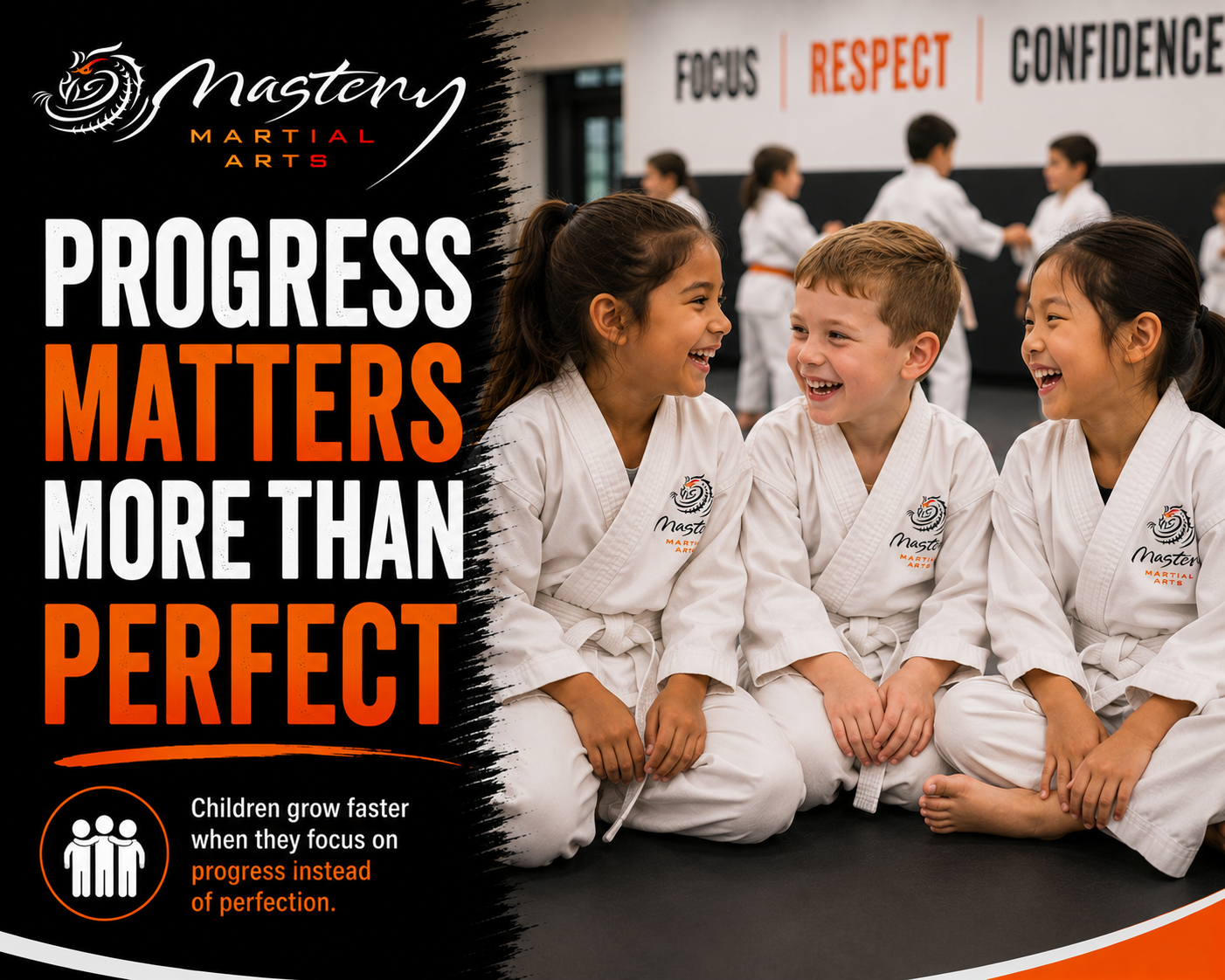
Perfectionism is often misunderstood.
Many people think perfectionism creates success.
More often, it creates fear.
Children who believe everything must be perfect frequently:
Avoid trying new things
Become frustrated easily
Fear mistakes
Give up quickly
Criticize themselves harshly
Perfectionism teaches children:
"If I cannot do it perfectly, I should not do it at all."
Growth teaches children:
"I can improve through practice."
One mindset creates fear.
The other creates confidence.
WHAT ONE MASTERY PARENT EXPERIENCED

Fear of failure can be incredibly limiting for a child.
Many children stop trying new things not because they lack ability, but because they are afraid of making mistakes.
One Coventry parent shared how fear of failure was holding her son back before joining Mastery Martial Arts:
"My son is on the spectrum and has been struggling with focus, social awareness and most of all confidence. His fear of failure had actually become debilitating when it came to trying new things and was starting to hold him back from learning and moving forward."
What happened next is what many parents hope for.
After just a few short months of training, she noticed dramatic changes in his confidence and willingness to try.
"He went from not believing in himself at all to having a 'YES I CAN' attitude in every aspect of his life."
That transformation highlights an important truth.
Children often do not need fewer challenges.
They need support, encouragement, and opportunities to discover they are capable of overcoming those challenges.
When children begin believing they can handle mistakes, fear starts losing its power.
And confidence begins taking its place.
Read the full review:
https://maps.app.goo.gl/Btx51Uq1jj62p8Pr9
HOW MARTIAL ARTS TEACHES HEALTHY FAILURE
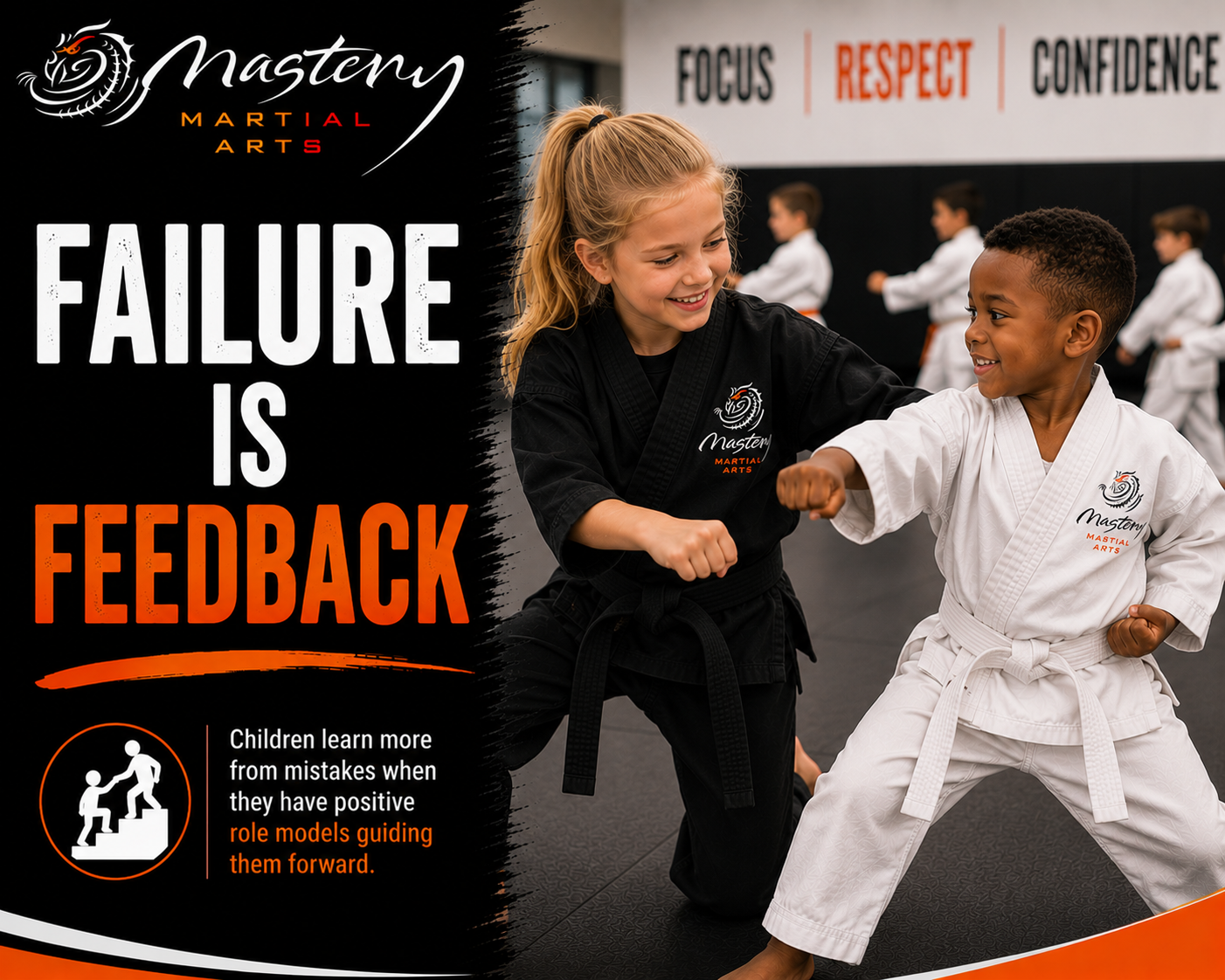
Martial arts gives children something many activities do not.
Regular opportunities to fail safely.
Students miss techniques.
Lose balance.
Forget steps.
Struggle with new skills.
Yet they keep practicing.
They keep learning.
They keep improving.
Eventually they discover something powerful:
Failure is not the end.
Failure is feedback.
This lesson changes how children approach challenges both inside and outside the dojo.
Over time, many children develop:
Confidence
Resilience
Self-belief
Persistence
Focus
Courage
WHAT PARENTS CAN DO AT HOME

If your child is afraid to fail, try these strategies:
Praise effort more than outcomes.
Share stories about your own mistakes.
Normalize failure as part of learning.
Avoid rescuing children too quickly.
Encourage trying over perfection.
Celebrate progress, not just results.
Most importantly, help children understand that mistakes do not define them.
Mistakes help them grow.
FINAL THOUGHT
Every successful person has failed.
Every confident person has struggled.
Every resilient person has experienced setbacks.
The difference is that they learned not to fear failure.
They learned to use it.
Children who understand this lesson become more willing to try.
More willing to learn.
More willing to grow.
And ultimately more confident in themselves.
RELATED ARTICLES
Why Kids Lose Confidence As They Get Older
How to Build Confidence in Kids
Why Kids With Low Confidence Become Quiet
How Bullying Impacts Confidence
How to Help a Shy Child Build Confidence
How to Help Your Child Believe In Themselves
