Why Some Kids Give Up Too Easily
WHY SOME KIDS GIVE UP TOO EASILY
Every parent has seen it happen.
A child starts something new.
They're excited.
They're motivated.
Then it gets difficult.
Suddenly you hear:
"I can't do it."
"This is too hard."
"I quit."
While it can be frustrating for parents, giving up is usually not the real problem.
Giving up is often a symptom of something deeper.
Fear.
Self-doubt.
Frustration.
A lack of confidence.
The good news is that persistence can be learned.
Just like confidence, resilience is a skill children develop through experience.
WHY SOME KIDS GIVE UP TOO EASILY
Most children do not quit because they are lazy.
They quit because they are uncomfortable.
Learning a new skill requires effort.
Effort often includes mistakes.
Mistakes can trigger frustration.
Frustration can trigger self-doubt.
And self-doubt can lead children to believe:
"Maybe I'm not good at this."
When children begin connecting mistakes to their identity, they become more likely to quit.
This is one reason confidence and persistence are closely connected.
If you haven't already, read:
https://masteryma.com/post/how-to-help-your-child-believe-in-themselves
and
https://masteryma.com/post/why-kids-lose-confidence
THE REAL REASON KIDS QUIT
Children rarely quit an activity.
More often, they quit a feeling.
They quit:
Feeling frustrated
Feeling embarrassed
Feeling behind
Feeling challenged
Feeling uncomfortable
The challenge isn't eliminating these feelings.
The challenge is helping children learn how to move through them.
Every successful person has learned how to keep going even when things become difficult.
Children need opportunities to develop that same skill.
HOW FEAR OF FAILURE AFFECTS CHILDREN
Many children avoid challenges because they fear failure.
If they don't try, they can't fail.
At least that's what their brain tells them.
Unfortunately, avoiding challenges also prevents growth.
Children who learn that failure is feedback become far more resilient.
Instead of thinking:
"I failed."
They learn to think:
"I'm still learning."
This shift can completely change how children approach difficult situations.
WHY STRUGGLE IS NECESSARY FOR GROWTH
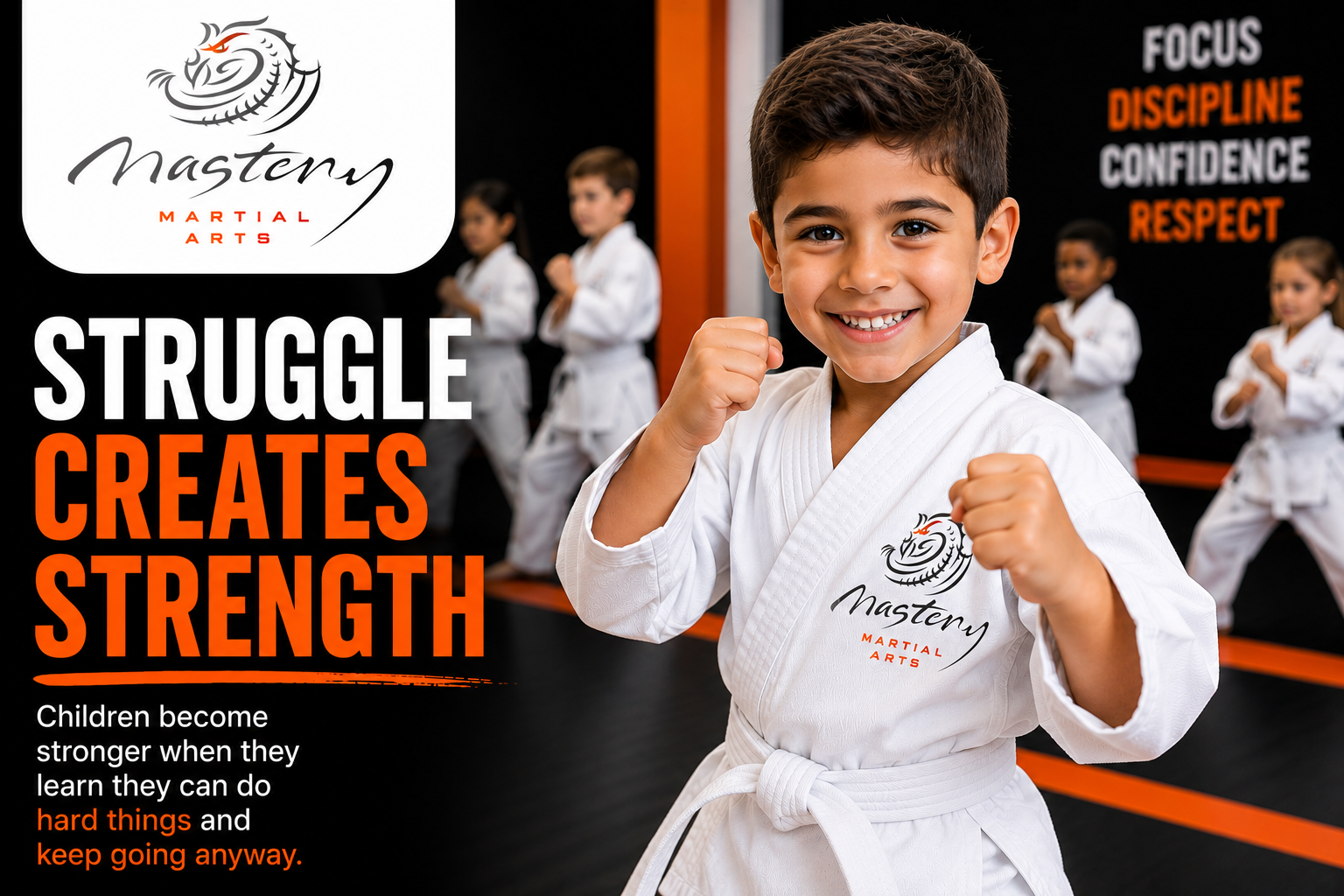
Parents naturally want to help their children.
But sometimes helping too quickly can prevent growth.
Children develop persistence when they experience challenges and discover they can overcome them.
Without struggle there is no opportunity to develop resilience.
Without resilience there is no opportunity to build confidence.
Growth requires challenge.
Challenge requires effort.
Effort requires persistence.
WHAT ONE MASTERY PARENT EXPERIENCED
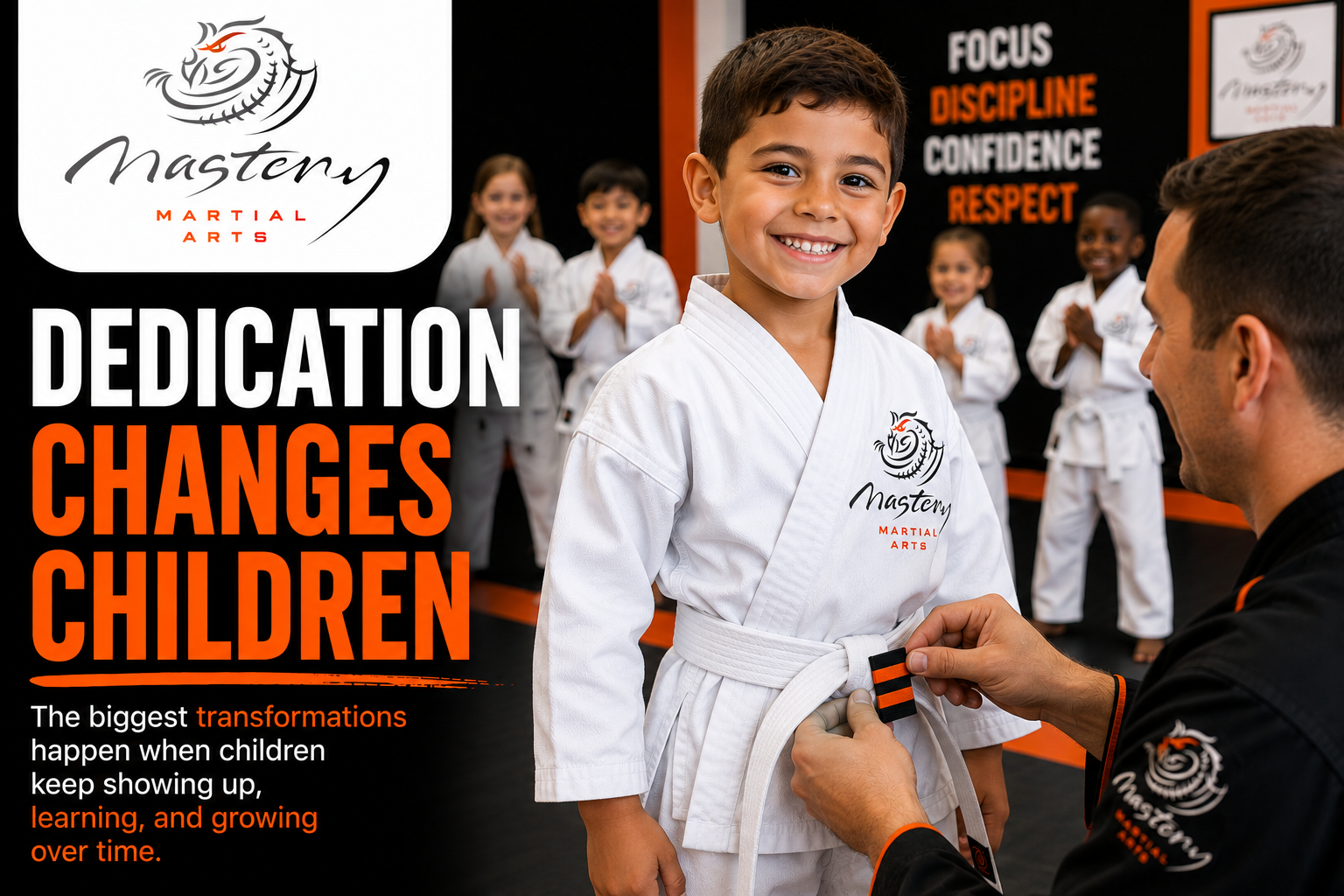
One North Attleboro parent recently shared how consistency and perseverance transformed their son's development.
"My son Thiago has been in Mastery for about almost 3 years now and I have seen a lot of improvement in those years with him having dedication and discipline and making long lasting friendships. The instructors here are such great role models and have such patience for these kids. I love the community and I love Mastery! If I could give them 10 stars I would because this program is life changing for these kids to grow up to be amazing human beings!"
What stands out most about this review is not a quick result.
It's the timeline.
Three years.
Confidence, discipline, resilience, leadership, and persistence rarely happen overnight.
They are developed through consistent effort over time.
Read the full review:
https://maps.app.goo.gl/iLizKoqGedjzu3cS7
HOW MARTIAL ARTS TEACHES PERSISTENCE
Martial arts creates an environment where children regularly encounter challenges.
Students learn:
New techniques
New forms
New skills
New goals
Sometimes they struggle.
Sometimes they fail.
Sometimes they need multiple attempts before succeeding.
This process teaches children something powerful:
"I can keep going."
Every stripe earned.
Every belt achieved.
Every challenge overcome becomes evidence that effort leads somewhere.
Over time children begin developing:
Resilience
Confidence
Discipline
Focus
Determination
Self-belief
WHAT PARENTS CAN DO AT HOME
If your child gives up easily, try these strategies:
Praise effort more than results.
Allow them to struggle appropriately before helping.
Remind them of previous successes.
Normalize mistakes.
Celebrate progress.
Avoid rescuing them too quickly.
Most importantly, teach them that difficult does not mean impossible.
Children who learn this lesson early often carry it with them for life.
FINAL THOUGHT
Every child will face challenges.
Every child will experience frustration.
Every child will want to quit something at some point.
The goal is not to eliminate those moments.
The goal is to help children learn what happens when they keep going.
Because confidence is often found on the other side of persistence.
And children who learn not to quit when things get hard often discover they are capable of far more than they ever imagined.
RELATED ARTICLES
How to Help Your Child Believe In Themselves
https://masteryma.com/post/how-to-help-your-child-believe-in-themselves
How to Build Confidence in Kids
https://masteryma.com/post/how-to-build-confidence-in-kids
Why Kids Lose Confidence
https://masteryma.com/post/why-kids-lose-confidence
How to Help a Shy Child Build Confidence
https://masteryma.com/post/how-to-help-a-shy-child-build-confidence
Raising Confident Kids Through Martial Arts
https://masteryma.com/post/raising-confident-kids-martial-arts
How Bullying Impacts Confidence
https://masteryma.com/post/how-bullying-impacts-confidence
This article becomes the bridge from confidence into resilience and persistence, which is exactly where the cluster should expand next.
