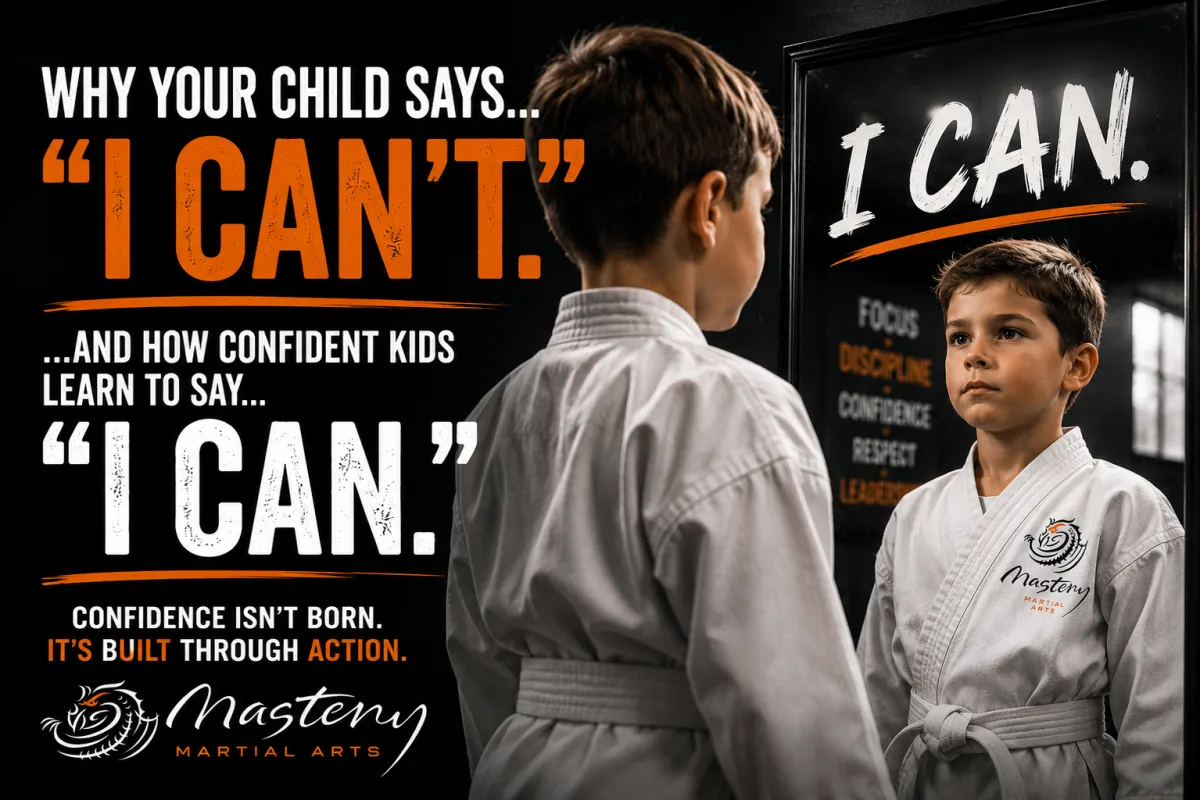
Why Your Child Says "I Can't" (And How to Change It)
Why "I Can't" Is Almost Never About Ability
Every parent has heard it.
"I can't."
Sometimes it's before homework.
Sometimes it's on the soccer field.
Sometimes it's while riding a bike.
Sometimes it's walking into martial arts for the first time.
Sometimes it's simply raising a hand in class.
As parents, it's easy to hear those words and think our child is talking about ability.
But most of the time...
They aren't.
When a child says, "I can't," they're often saying something much deeper.
They're saying:
"I'm afraid."
"What if I fail?"
"What if everyone watches me?"
"What if I disappoint you?"
"What if I'm just not good enough?"
Those three little words are usually protecting a child from uncomfortable emotions—not describing what they're are actually capable of doing.
That's important to understand because the way we respond can either reinforce fear...
Or slowly replace it with confidence.
"I Can't" Is Fear Disguised As A Fact
Children are not born believing they can't do difficult things.
Watch a toddler learning to walk.
They fall.
Stand up.
Fall again.
Stand up again.
They don't say,
"I'm not a walking person."
They simply keep trying.
Somewhere along the way, children begin connecting mistakes with embarrassment.
Failure starts feeling personal.
Comparison begins.
They notice what everyone else can do.
And little by little...
"I haven't learned this yet."
Becomes...
"I can't."
If you've noticed your child avoiding difficult situations altogether, you'll probably recognize many of the same patterns we discuss in why Kids Avoid Challenges where we explain how fear of failure slowly teaches children to avoid the very experiences that build confidence.
Avoiding challenge isn't laziness.
It's often self-protection.
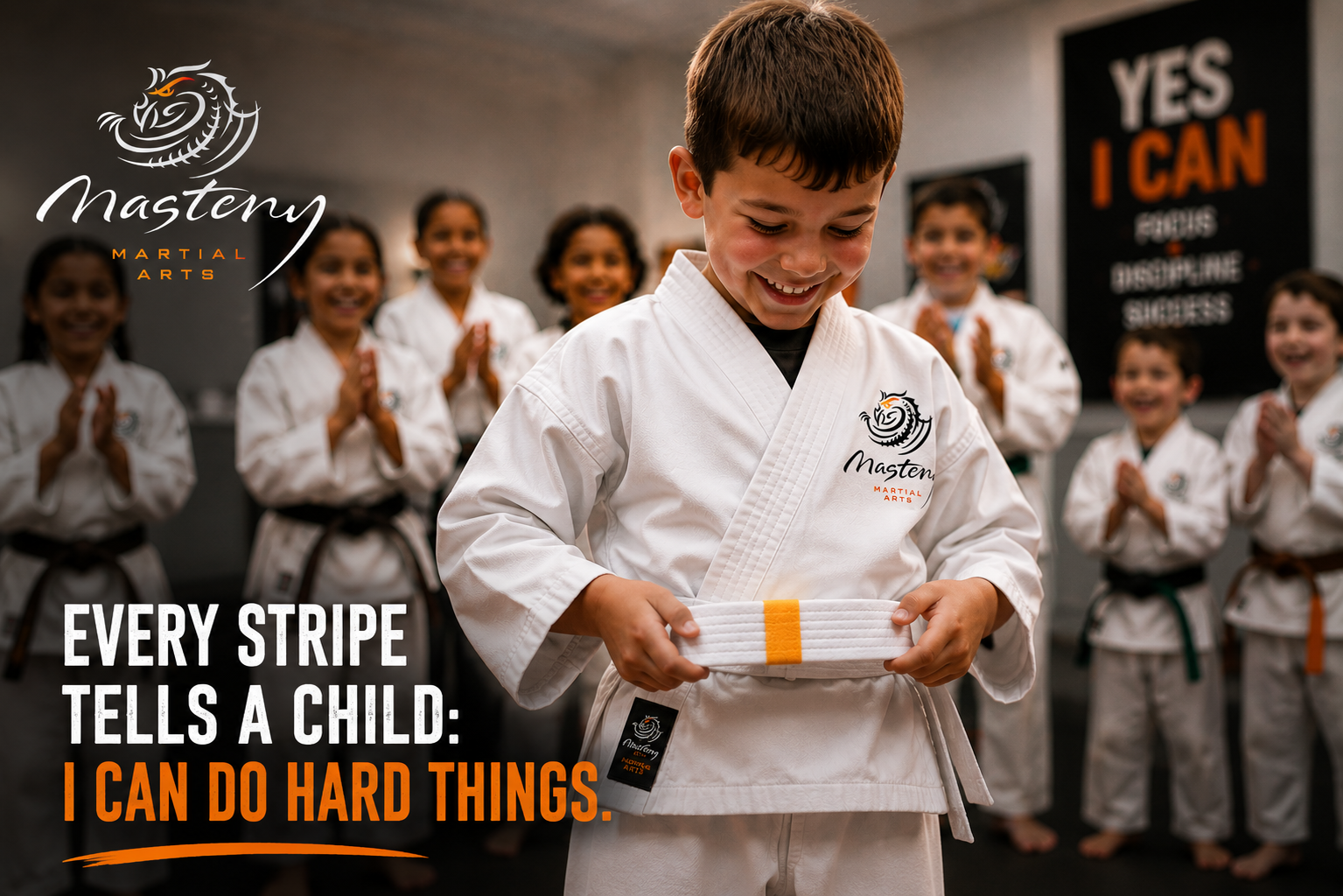
Confidence Never Comes Before Action
One of the biggest myths parents believe is that confidence comes first.
It doesn't.
Many parents say:
"When she becomes more confident, she'll join."
"When he believes in himself, he'll try."
But confidence has never worked that way.
Think about every major skill your child has learned.
Walking.
Swimming.
Reading.
Riding a bike.
Making friends.
Speaking in front of class.
None of those happened because your child suddenly became confident.
They happened because your child kept trying despite feeling uncomfortable.
Confidence was the result.
Not the starting point.
That's why, when parents ask us how to build confidence in kids, our answer is always the same:
Give children opportunities to experience themselves doing difficult things.
Because confidence is evidence.
Not encouragement.
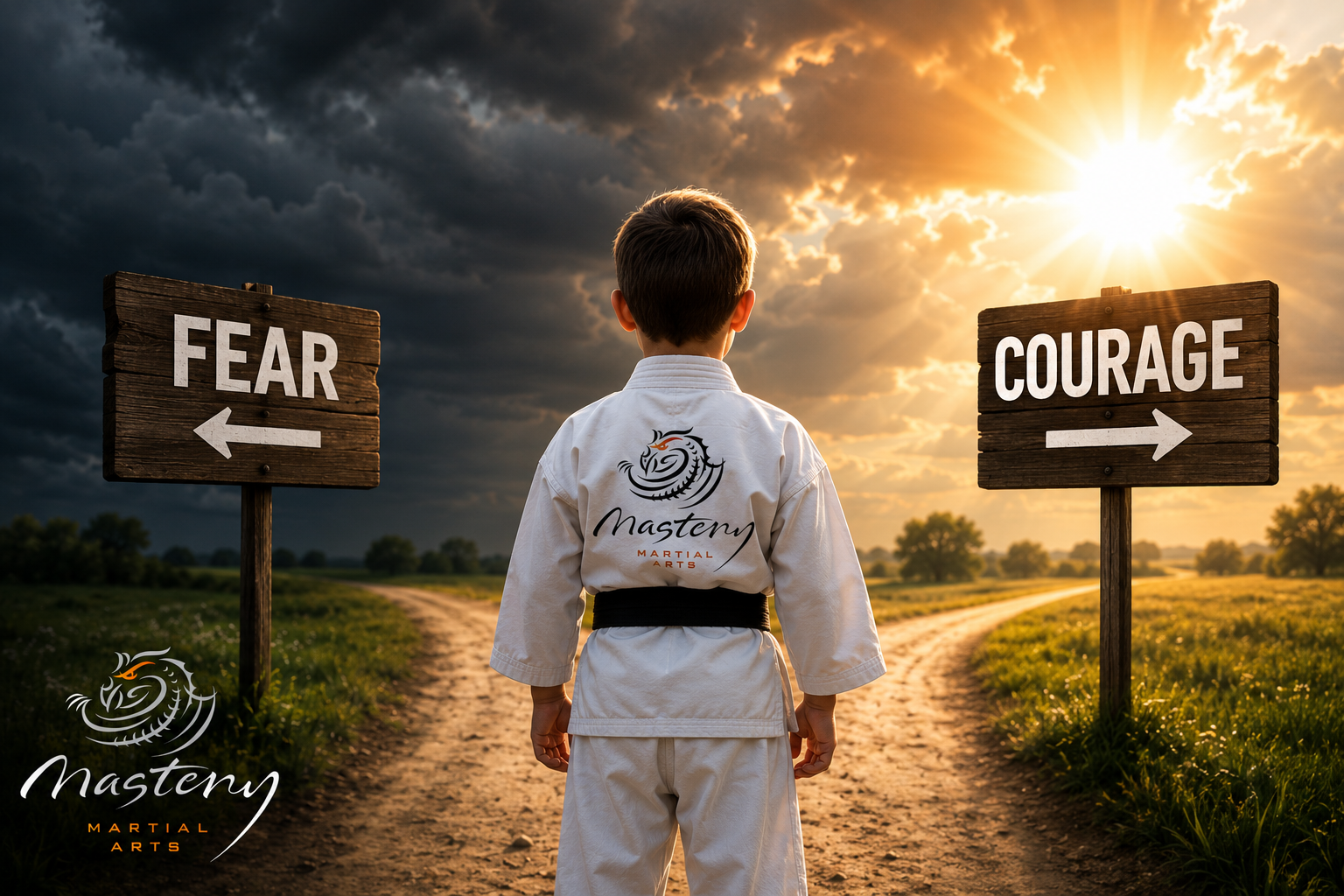
Every Time A Child Says "I Can't"...
They Are Actually Standing At A Crossroads
One path says:
Quit.
Avoid.
Stay safe.
Protect yourself.
The other path says:
Try.
Learn.
Improve.
Grow.
Children don't need to choose perfectly every time.
They simply need enough experiences choosing courage over comfort.
That's why we believe How Kids Build Confidence By Doing Hard Things is one of the most important lessons every parent can understand.
Confidence isn't created through praise.
It grows through experience.
Be Careful Not To Rescue Away Confidence
As parents...
Helping feels loving.
We tie the shoe.
Finish the homework.
Speak for them.
Solve the disagreement.
Fix the mistake.
Remove the obstacle.
And sometimes...
That's exactly what's needed.
But sometimes...
We accidentally remove the very experience that would have taught our child:
"I figured it out."
Those four words are incredibly powerful.
Every time children solve a problem...
Recover from frustration...
Or overcome something difficult...
Their brain quietly records another piece of evidence.
"I can."
That's why we've written extensively about why Kids Need To Feel Capable, Not Just Protected.
Protection creates safety.
Capability creates confidence.
Children need both.
What Should Parents Say Instead?
When your child says:
"I can't."
Resist the urge to immediately answer:
"Yes you can."
Instead...
Become curious.
Try asking:
"What feels hardest?"
"What part do you already know how to do?"
"What would happen if you tried for just one minute?"
"Have you ever done something difficult before?"
Questions create thinking.
Thinking creates ownership.
Ownership builds confidence.
Instead of giving children belief...
Help them discover it.
Parents often worry that letting children struggle will damage their confidence. In reality, the opposite is usually true. That's exactly what we explore in Why Comfortable Kids Often Struggle Later.
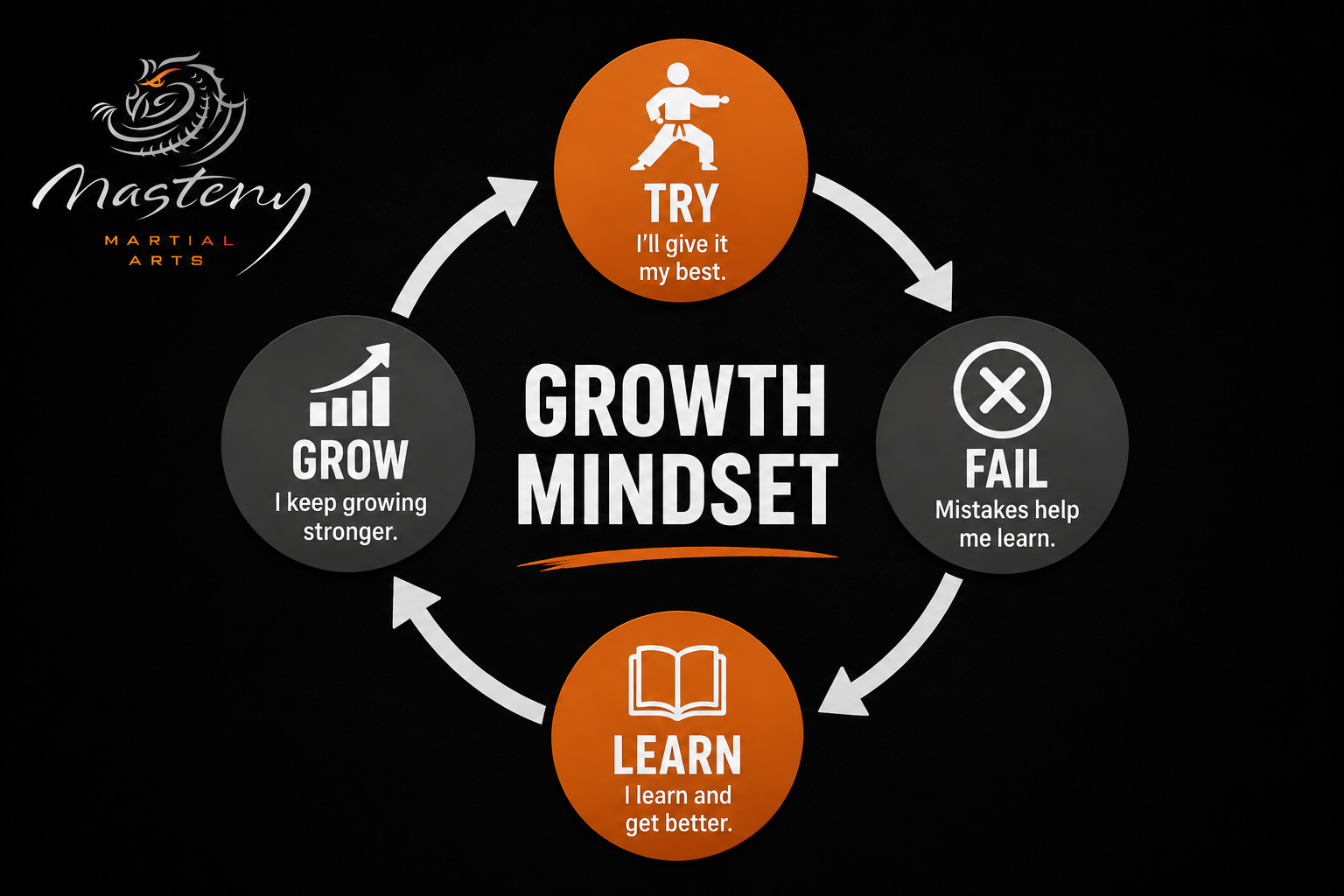
The Smallest Wins Often Become The Biggest Turning Points
Many parents think confidence comes from huge accomplishments.
Winning the championship.
Getting straight A's.
Breaking a big board.
Receiving a black belt.
Those moments matter.
But real confidence is usually built much earlier.
It's built the first time your child:
Raises their hand.
Speaks loud enough for everyone to hear.
Stands in front of the class.
Attempts something difficult.
Doesn't quit after making a mistake.
Those small victories quietly change identity.
Instead of saying,
"I'm someone who can't..."
Children begin thinking,
"Maybe I can."
And eventually...
"I know I can."
That is how confidence grows.
If your child constantly doubts themselves, you may also enjoy Why Smart Kids Doubt Themselves, where we explain why intelligence and confidence don't always develop at the same pace.
Why Martial Arts Changes "I Can't" Into "I Can"
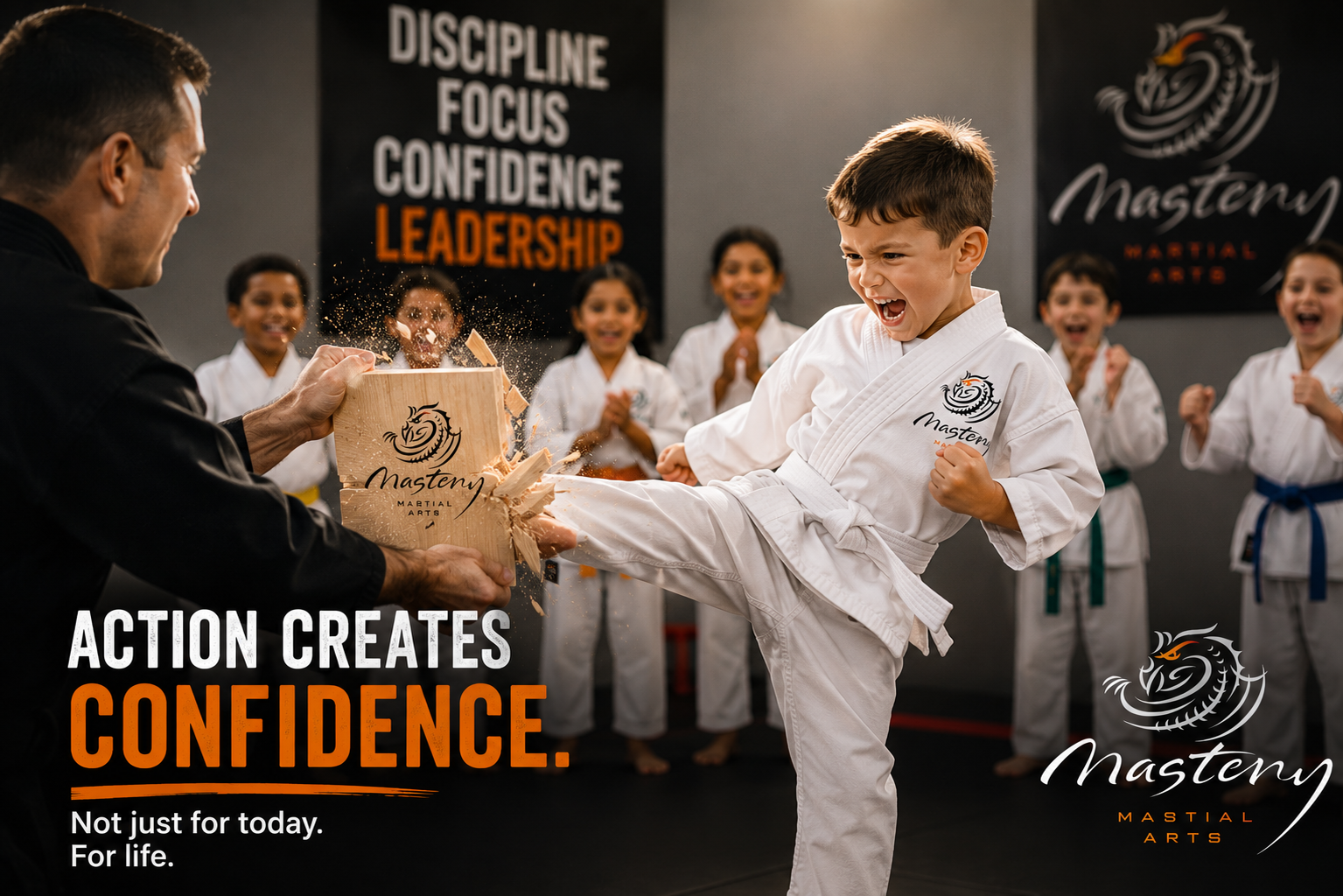
One of the reasons martial arts is so effective at building confidence is because children don't just hear encouraging words.
They collect evidence.
Every class gives them another opportunity to prove something to themselves.
The first class.
The first bow.
The first kick.
The first time speaking in front of the group.
The first board break.
The first belt test.
Each experience quietly replaces one limiting belief with a stronger one.
"I couldn't..."
becomes...
"I can."
Unlike activities where children may spend long periods on the sidelines, martial arts gives every student opportunities to participate, improve, and experience progress. That steady progression is one of the reasons so many parents tell us their child becomes more confident not only in class, but also at school, at home, and with friends.
If you've ever wondered why this works so well, Building Confidence In Children Through Martial Arts explains how structured challenges become lasting confidence.
What Parents Tell Us
One parent from our Barrington location shared a story that perfectly captures what happens when children stop believing "I can't."
"My kids have been coming here for nearly 7 months and they have not only increased their athleticism, but their confidence, optimism, and 'Yes, I Can' attitude has increased exponentially. They are excited to come to class and request more classes. The instructors go above and beyond and truly care about the kids and the community."
—Sam Albahari
That review isn't just about martial arts.
It's about identity.
Children who repeatedly experience success begin expecting success.
Children who repeatedly discover they can overcome difficult moments begin believing they can overcome the next one too.
That mindset carries into:
school
friendships
sports
public speaking
leadership
life
What If Your Child Says "I Can't" Every Day?
Don't panic.
Don't label them as lacking confidence.
Instead...
Listen carefully.
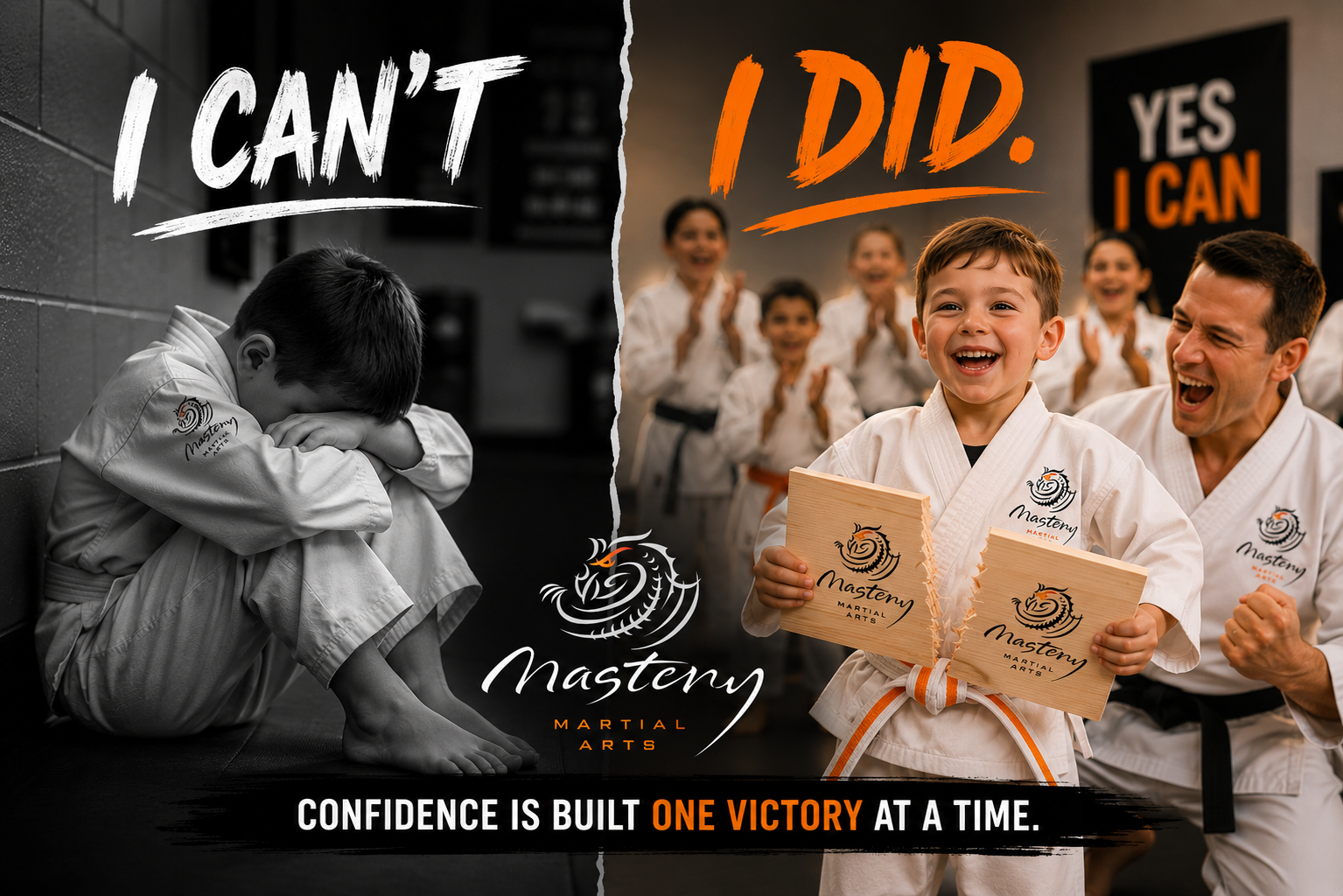
"I can't."
may actually mean:
"I'm nervous."
"I've never done this before."
"I don't want to fail."
"I need someone to believe in me until I believe in myself."
Those are very different conversations.
The goal isn't convincing children they are already confident.
The goal is helping them collect enough experiences that confidence naturally grows.
If your child frequently doubts themselves, you may also enjoy reading Why Smart Kids Doubt Themselves, where we explain why intelligence and confidence don't always develop together.
About This Topic
Mastery Martial Arts has helped thousands of children develop confidence, resilience, focus, emotional strength, leadership, and self-belief through structured martial arts training across Rhode Island and Massachusetts.
For more than 30 years, we've worked with families whose children struggled with fear of failure, shyness, low confidence, frustration, and self-doubt. The ideas in this article are based on decades of helping children replace limiting beliefs with real experiences of growth.
Confidence isn't something we give children.
It's something we help them build.
About Mastery Martial Arts
At Mastery Martial Arts, we believe every child deserves opportunities to discover what they're capable of.
Our programs are designed to help children develop:
Confidence
Resilience
Focus
Leadership
Discipline
Emotional Strength
Every class gives students opportunities to:
Try something new.
Make mistakes safely.
Learn from challenges.
Practice perseverance.
Celebrate progress.
Believe in themselves.
Over time, children develop what we call an Inner Black Belt—the confidence to face challenges both on and off the mat.
Families Across Rhode Island & Massachusetts Trust Mastery Martial Arts
Families throughout Rhode Island and Massachusetts choose Mastery Martial Arts to help children become stronger mentally, emotionally, physically, and socially.
A Final Thought
The next time your child quietly says...
"I can't."
Pause before answering.
Because those words may not be a statement.
They may be a question.
"Do you believe I can?"
Children often borrow belief before they create it themselves.
Your encouragement matters.
Your patience matters.
But eventually...
Your child needs something even more powerful.
Evidence.
Evidence that they can do hard things.
Evidence that mistakes don't define them.
Evidence that perseverance changes outcomes.
Evidence that they are more capable than they imagined.
That is how "I can't" slowly becomes...
"I'll try."
Then...
"I did."
And finally...
"I can."
Children who believe in themselves are also more likely to stand up for what's right, make better decisions under pressure, and become leaders among their peers. We explore that connection further in Why Confident Kids Handle Peer Pressure Better.
Ready To Help Your Child Replace "I Can't" With "I Can"?
At Mastery Martial Arts, we help children discover what they're capable of through structured challenges, encouraging instructors, and a proven system that builds confidence one small victory at a time.
If you're ready to help your child believe in themselves—not because someone told them they could, but because they've experienced it—we'd love to meet you.
Schedule your child's Free Introductory Lesson today and take the first step toward building confidence that lasts a lifetime.
Call 888-MASTERY today.
