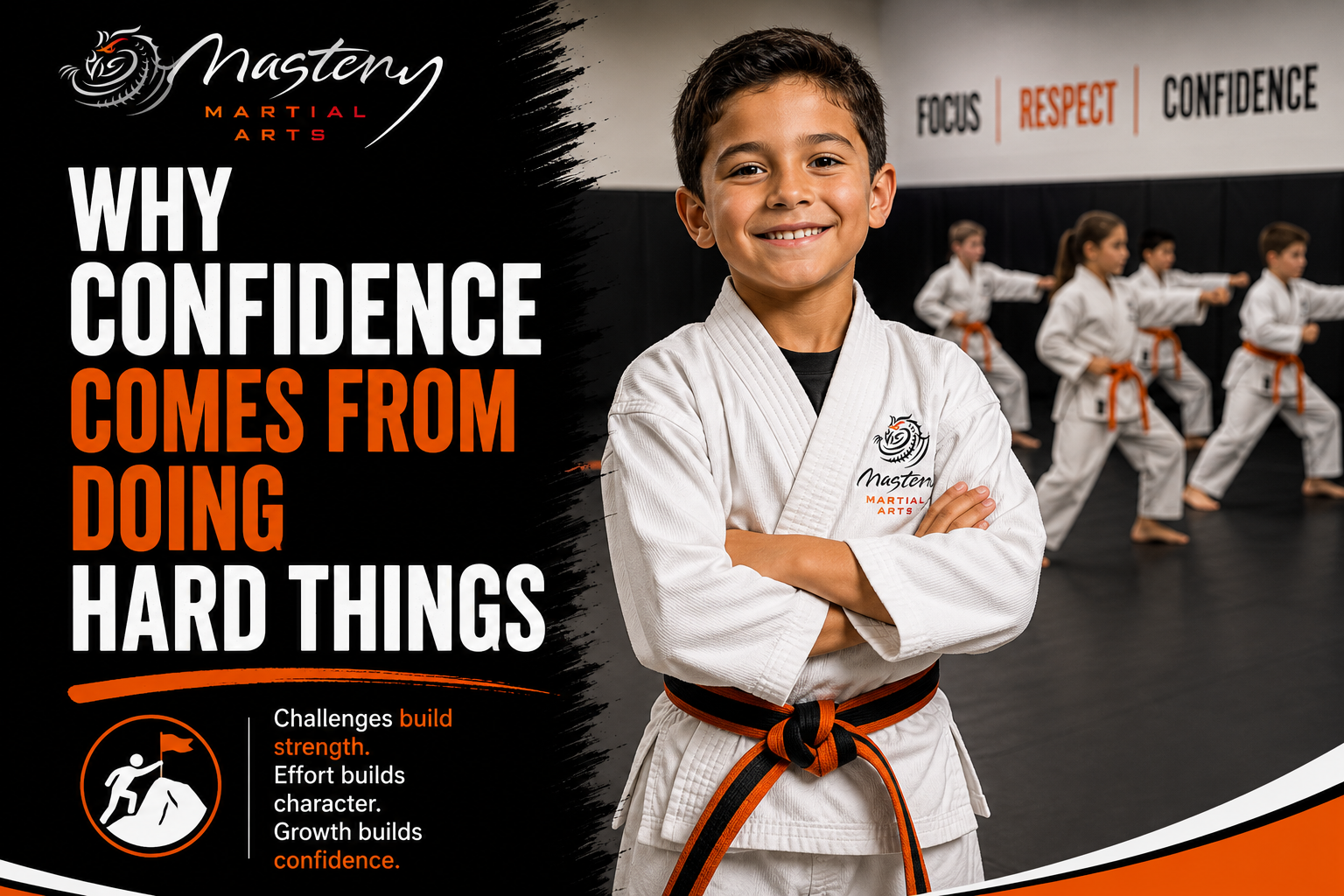
Why Confidence Comes From Doing Hard Things
WHY CONFIDENCE COMES FROM DOING HARD THINGS
Most parents want their child to be more confident.
They want them to speak up in class.
Make friends more easily.
Believe in themselves.
Try new things.
Handle setbacks.
Stand up for what is right.
But there is one important truth about confidence that many people never learn:
Confidence is not what comes before doing hard things.
Confidence is what comes after.
Children do not become confident and then take on challenges.
They take on challenges and become confident.
Understanding this simple idea can completely change how parents help their children grow.
WHY MANY PARENTS GET CONFIDENCE BACKWARDS

When children struggle, parents naturally want to help.
We want to remove frustration.
Prevent disappointment.
Protect them from failure.
Reduce stress.
The problem is that confidence cannot be handed to a child.
Confidence is earned through experience.
Every confident child you know has a history of doing things they weren't sure they could do.
They experienced uncertainty.
They experienced difficulty.
They experienced setbacks.
And they discovered they could handle them.
That experience became confidence.
If you have already read Why Some Kids Are Afraid To Fail, you know that fear often causes children to avoid challenges.
The problem is that avoiding challenges also prevents confidence from developing.
CONFIDENCE IS THE RESULT, NOT THE STARTING POINT
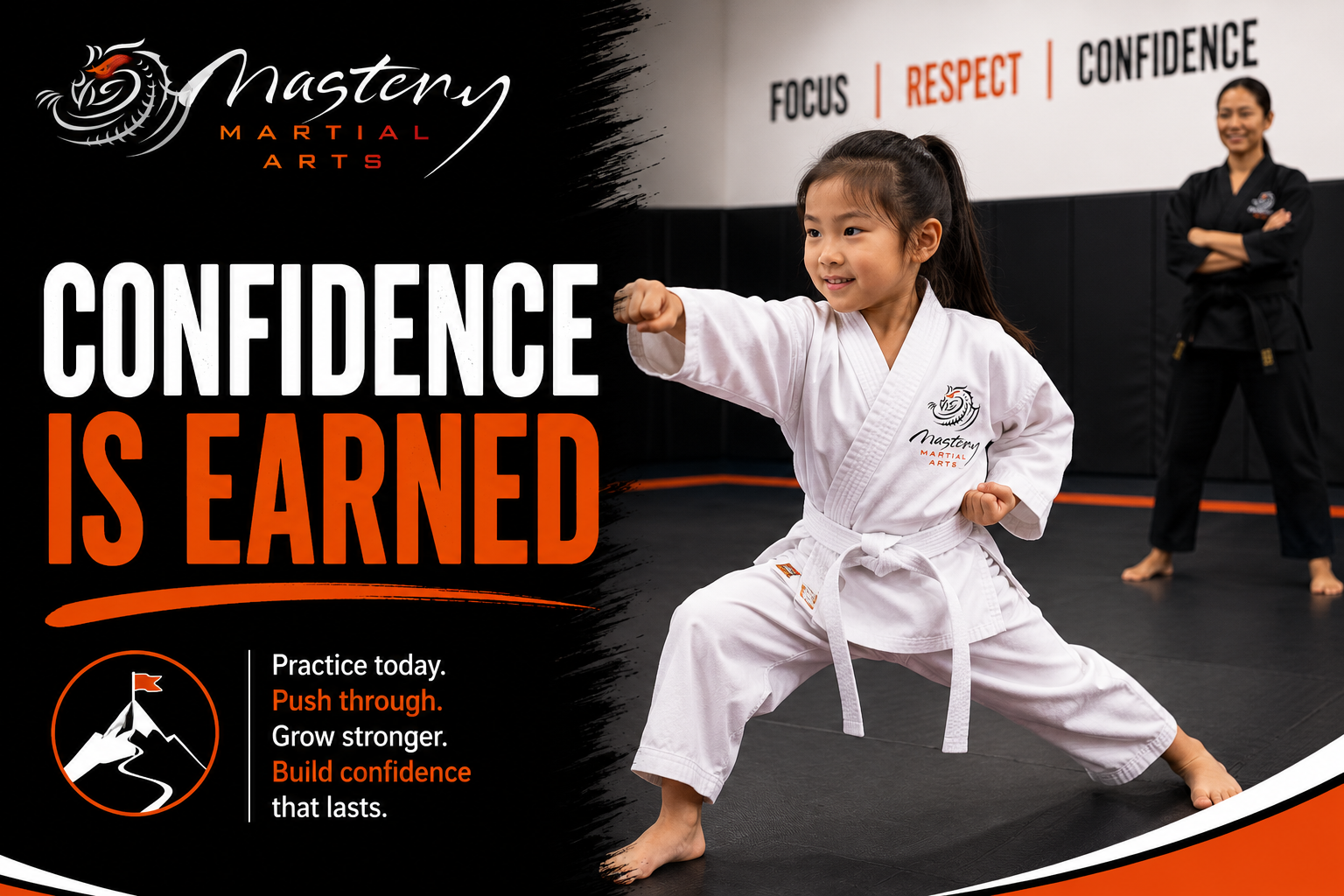
Think about learning to ride a bike.
Children are rarely confident at the beginning.
They wobble.
Fall.
Get frustrated.
Try again.
Eventually they succeed.
Only after experiencing success do they become confident.
The same pattern appears throughout life.
Confidence follows:
Effort
Practice
Persistence
Struggle
Growth
Without challenge, confidence has nothing to grow from.
Many parents are searching for confidence when what they actually need is healthy challenge.
WHY CHALLENGES BUILD SELF-BELIEF

Every challenge teaches children something valuable.
"I can handle this."
"I can figure this out."
"I can improve."
"I can try again."
Each experience becomes evidence.
Over time, children begin building a collection of proof that they are capable.
That proof becomes self-belief.
Children who learn to work through difficulty often develop stronger confidence than children who avoid it.
If you enjoyed How to Build Confidence in Kids, this is the next step in the confidence journey.
Confidence grows when children discover what they are capable of.
THE PROBLEM WITH MAKING EVERYTHING EASY
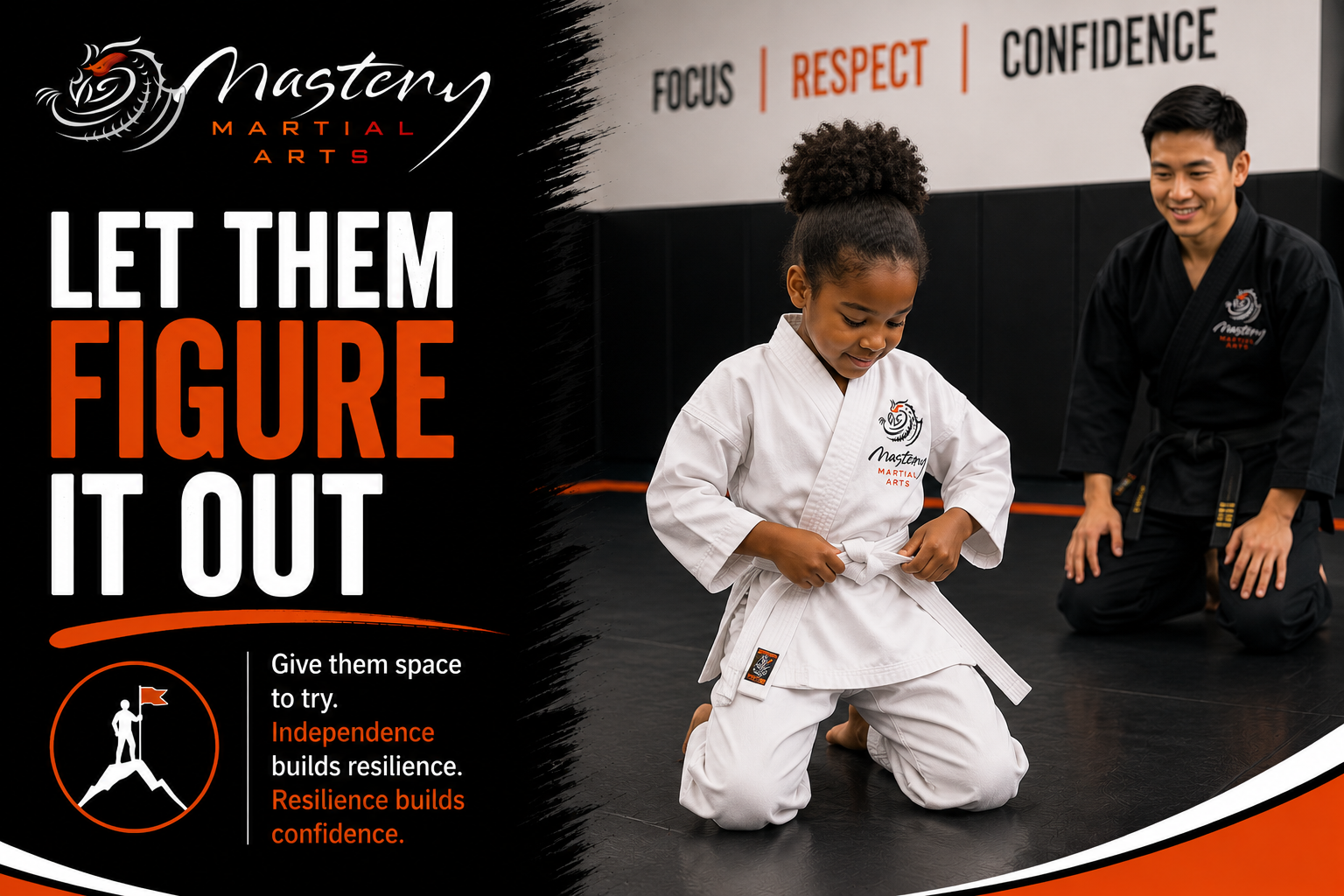
Most parents have good intentions.
We want our children to succeed.
But sometimes we accidentally make life too easy.
We solve problems too quickly.
We rescue too often.
We remove every obstacle.
Unfortunately, children who never experience struggle never develop proof that they can overcome struggle.
Life will eventually present challenges.
Friendships.
School.
Sports.
Work.
Relationships.
Children need opportunities to practice overcoming obstacles while they still have support around them.
The goal is not to create hardship.
The goal is to help children discover they are stronger than they think.
WHAT ONE MASTERY PARENT EXPERIENCED
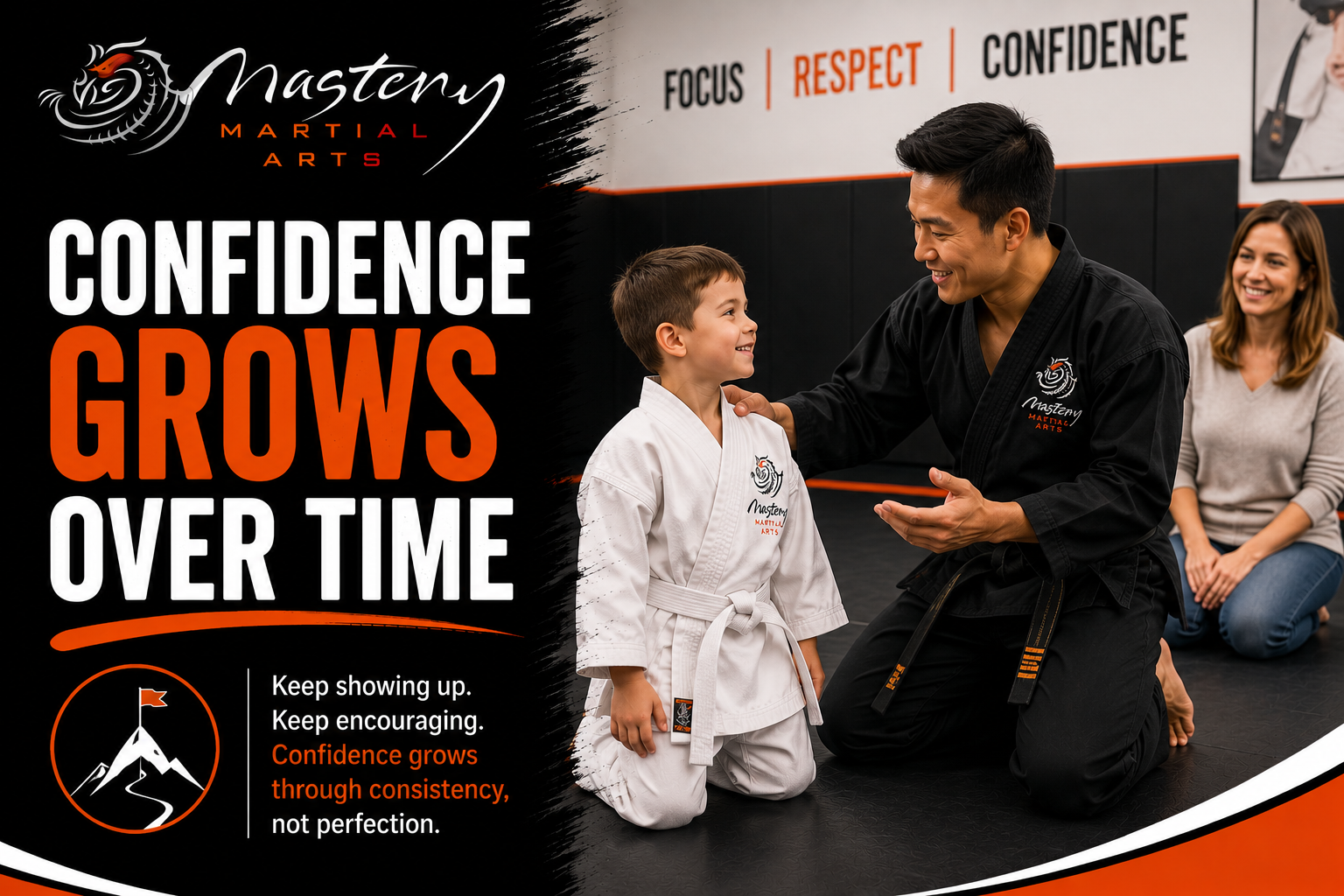
One Mastery Martial Arts parent shared a story that perfectly demonstrates how confidence is built through difficult experiences.
"We enrolled our youngest in the Little Dragons program almost 3 years ago now and to be honest, wasn't sure he or even his father and I would make it through the trial period! So many temper tantrums and meltdowns."
Many families can relate to that experience.
The easy choice would have been quitting.
Instead, they stayed committed.
The instructors continued supporting him.
His parents continued encouraging him.
And little by little, things began changing.
"He eventually gained enough confidence to join the class on the mat!"
That confidence didn't appear overnight.
It was built through challenges.
Through persistence.
Through continuing even when things were difficult.
The transformation continued.
"He has not only completed the Little Dragons program, he accomplished the intermediate/advanced training and just received his candidate belt!"
Perhaps the most powerful part of the review was this:
"He has been working really hard and it shows!"
That is confidence.
Not avoiding difficult things.
Doing difficult things and discovering you can handle them.
Read the full review:
https://www.google.com/maps/contrib/103084351439655198782/reviews?hl=en
HOW MARTIAL ARTS CREATES HEALTHY CHALLENGES
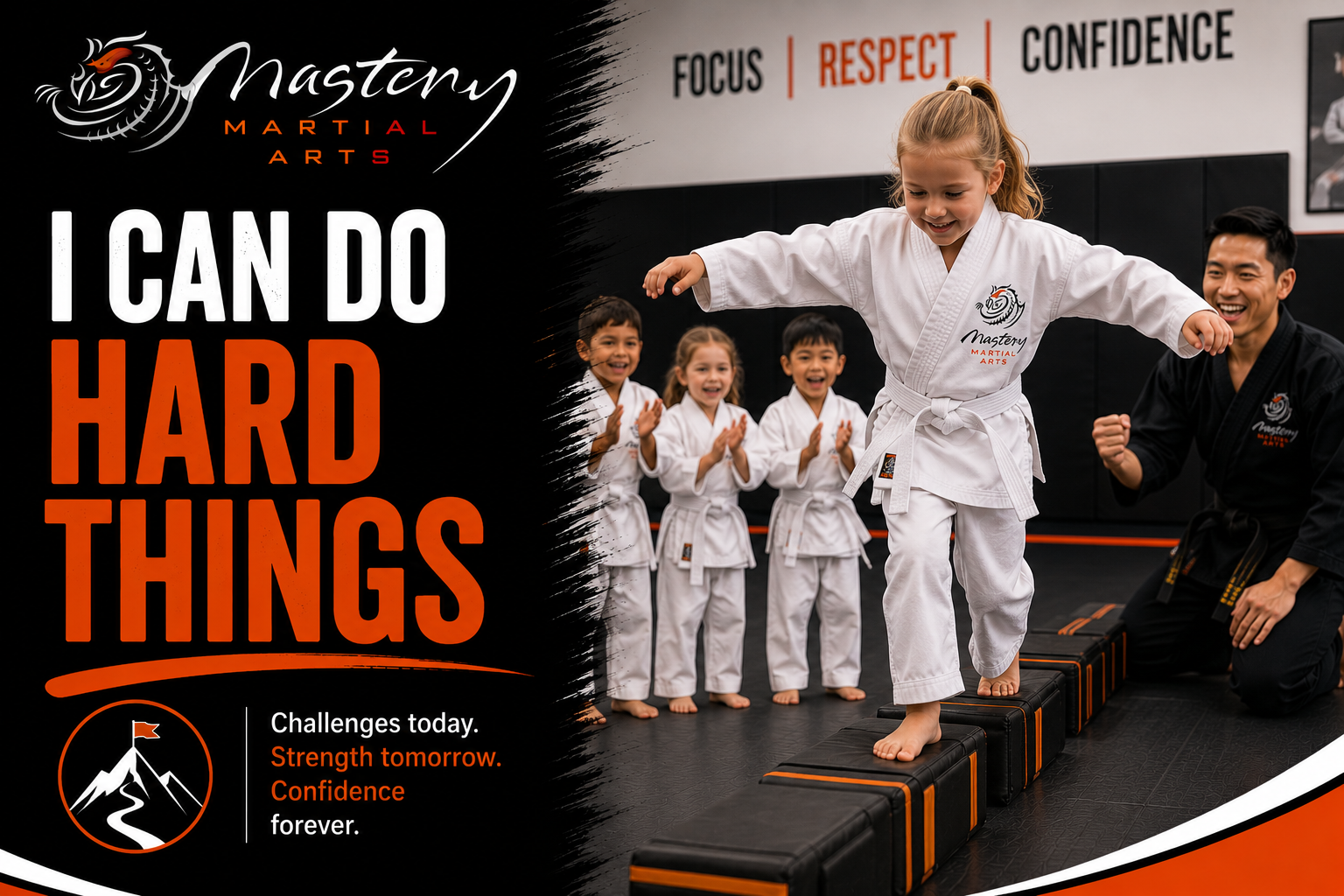
Martial arts gives children opportunities to face challenges in a safe and supportive environment.
Students learn:
New techniques
New skills
New forms
Leadership responsibilities
Public demonstrations
Belt promotion requirements
Not every challenge is easy.
Sometimes students become frustrated.
Sometimes they struggle.
Sometimes they want to quit.
But every challenge creates an opportunity for growth.
Over time, children begin learning something powerful:
"I can do hard things."
That lesson extends far beyond martial arts.
It influences school.
Friendships.
Sports.
Public speaking.
And life itself.
HOW PARENTS CAN HELP CHILDREN EMBRACE DIFFICULTY

One of the greatest gifts parents can give children is the opportunity to work through challenges.
Instead of immediately solving every problem, try:
Encouraging effort
Praising persistence
Celebrating progress
Normalizing mistakes
Asking questions instead of giving answers
Helping children reflect on what they learned
Children become stronger when they discover they can solve problems.
Confidence follows competence.
Competence follows effort.
Effort requires challenge.
FINAL THOUGHT
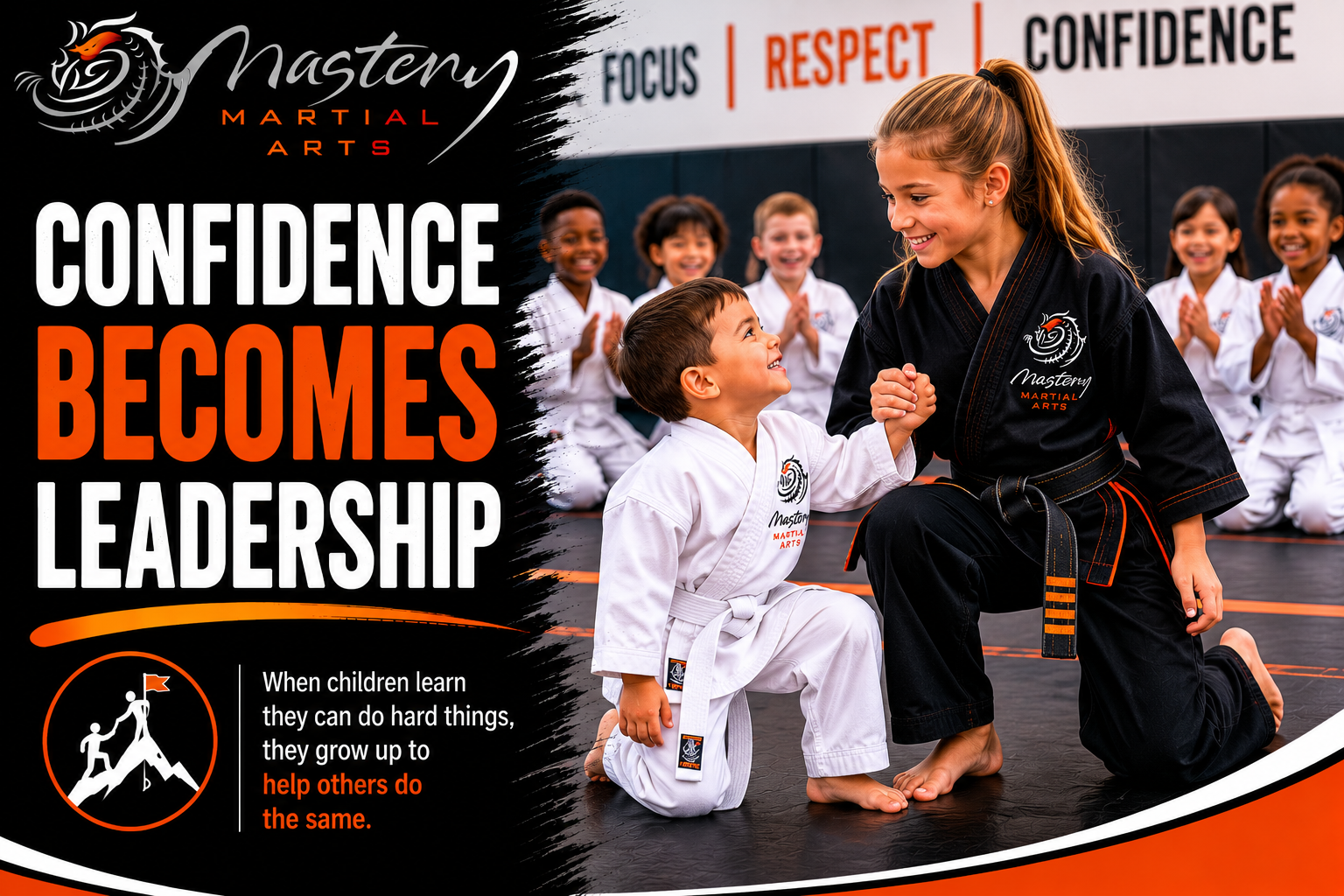
Confidence is not built through comfort.
Confidence is built through experience.
Every challenge overcome becomes evidence.
Every obstacle conquered becomes proof.
Every difficult moment survived becomes a reason to believe.
Children who learn they can do hard things develop something more powerful than confidence.
They develop self-belief.
And self-belief can last a lifetime.
RELATED ARTICLES
Why Some Kids Are Afraid To Fail
Why Some Kids Give Up Too Easily
How to Build Confidence in Kids
How to Help Your Child Believe In Themselves
Why Kids Lose Confidence As They Get Older
Why Kids With Low Confidence Become Quiet
How to Help a Shy Child Build Confidence
