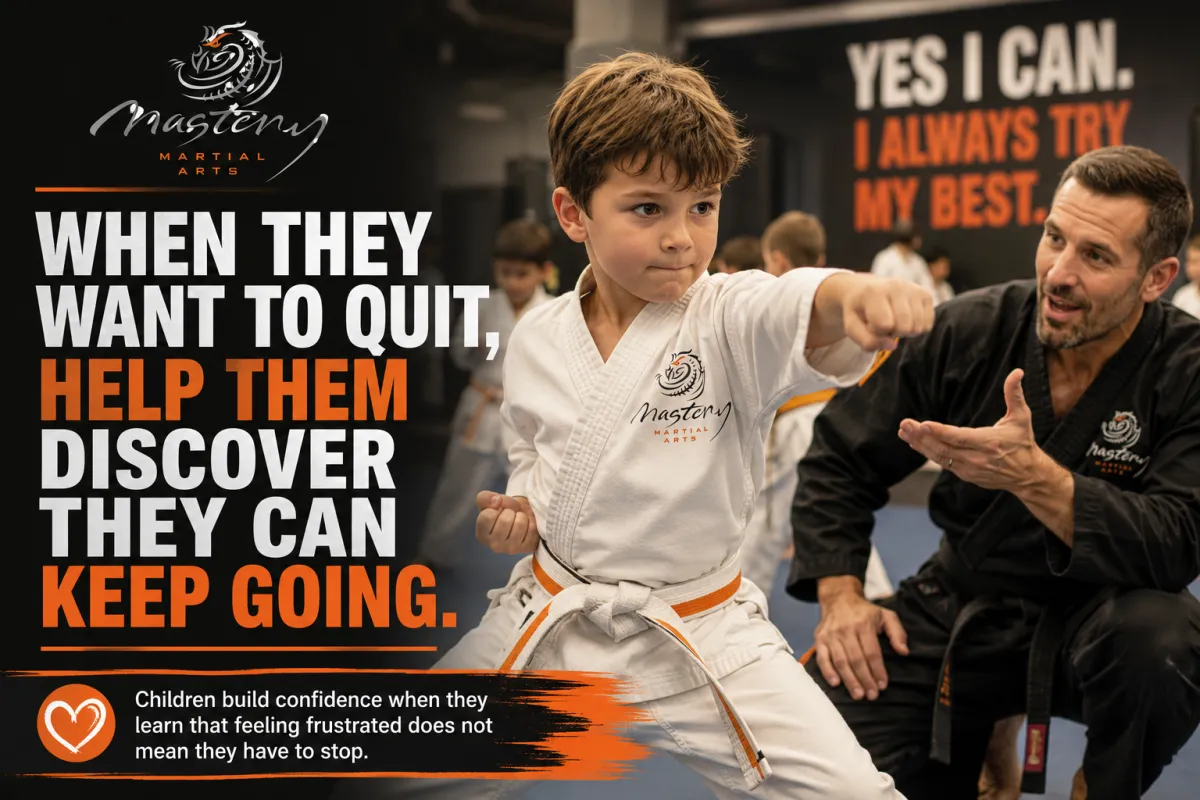
How to Help a Child Who Quits Too Easily (And Build the Confidence to Keep Going)
Every child wants to succeed.
No child wakes up thinking,
"Today I hope I fail."
Yet many children quit the moment something feels difficult.
They stop trying when they can't solve the math problem.
They want to quit soccer after one bad game.
They become frustrated while reading.
They give up during homework.
They refuse to try something new because they might not be good at it.
To a parent, it can look like laziness.
Or a lack of motivation.
But most of the time, it isn't either.
It's a lack of confidence.
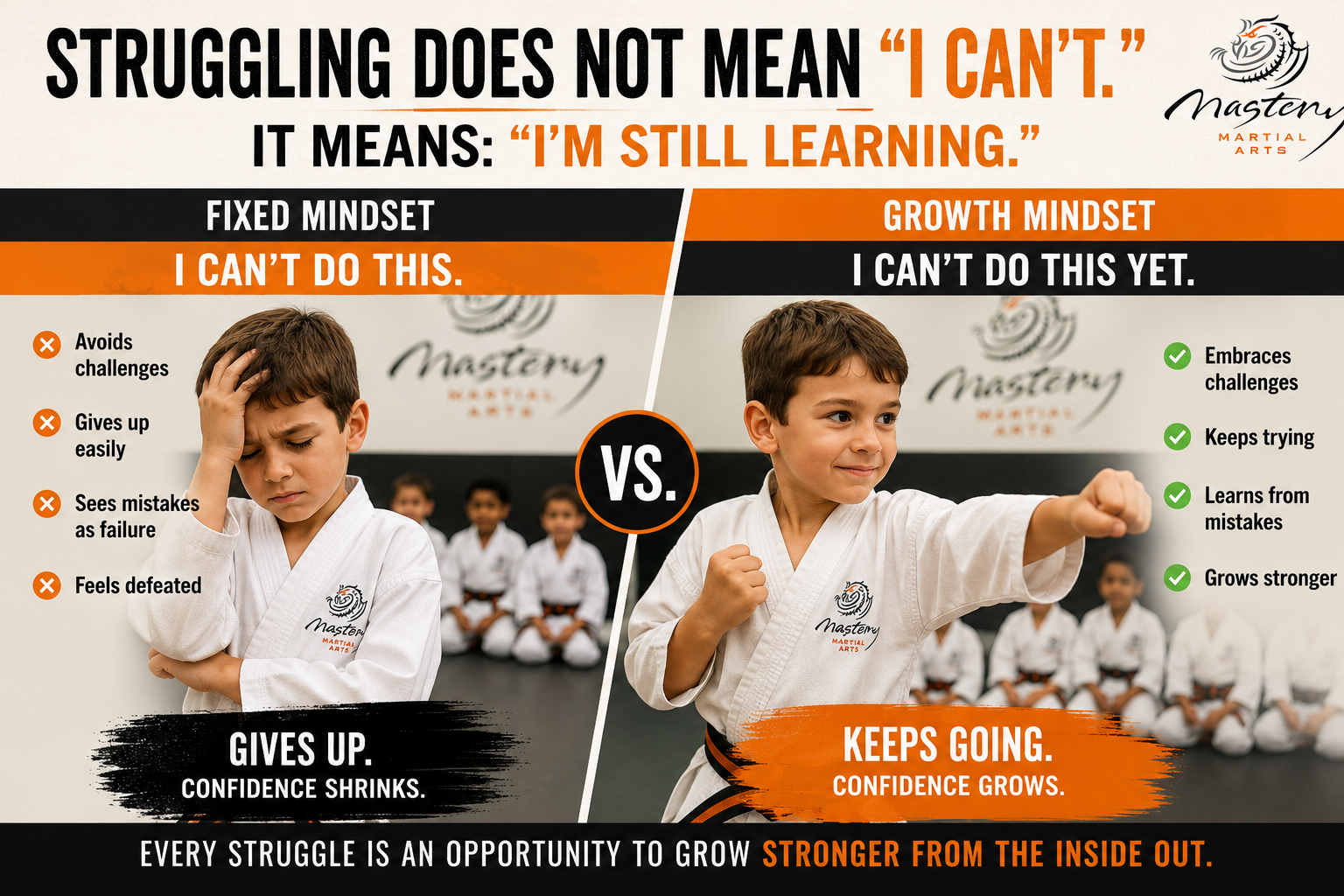
Children don't usually quit because something is hard.
They quit because they no longer believe they can succeed.
That belief—not the challenge itself—is what determines whether a child keeps going or gives up.
The good news?
Perseverance is a skill.
And like confidence, leadership, discipline, and focus...
It can be trained.
Quick Answer
Children quit too easily when they begin believing that struggling means they aren't capable. Parents can help by teaching that mistakes are part of learning, praising effort over perfection, and giving children repeated opportunities to overcome challenges. Every time a child works through something difficult, they build the confidence to keep going the next time.
Key Takeaways
Children often quit because they lose belief, not because the task is impossible.
Confidence grows after working through challenges.
Parents shape how children interpret setbacks.
Perseverance is built through repeated experiences, not lectures.
Safe struggles prepare children for real life.
Martial arts gives children regular opportunities to practice not giving up.
Why Children Quit
Children rarely say,
"I'm quitting because I don't believe in myself."
Instead they say:
"I can't."
"This is stupid."
"I don't want to."
"I'm bored."
"It's too hard."
"I don't care."
Those words often hide something much deeper.
Fear.
Embarrassment.
Frustration.
Disappointment.
A child who quits is often trying to escape an uncomfortable feeling.
Not the activity itself.
That distinction matters.
Because parents who only fight the behavior miss the emotion driving it.
The Moment Confidence Begins to Disappear
Imagine a child learning to ride a bicycle.
They fall.
It hurts.
People are watching.
Now two voices compete inside their mind.
One says:
"Keep trying."
The other says:
"Maybe you're just not good at this."
That second voice is dangerous.
Because once children believe difficulty means inability...
They begin avoiding challenge.
Read:
Why Quitting Feels Safer Than Trying Again
Trying again means risking another failure.
Quitting removes that risk.
For a moment...
Quitting actually feels better.
But every time children avoid discomfort, they lose an opportunity to build confidence.
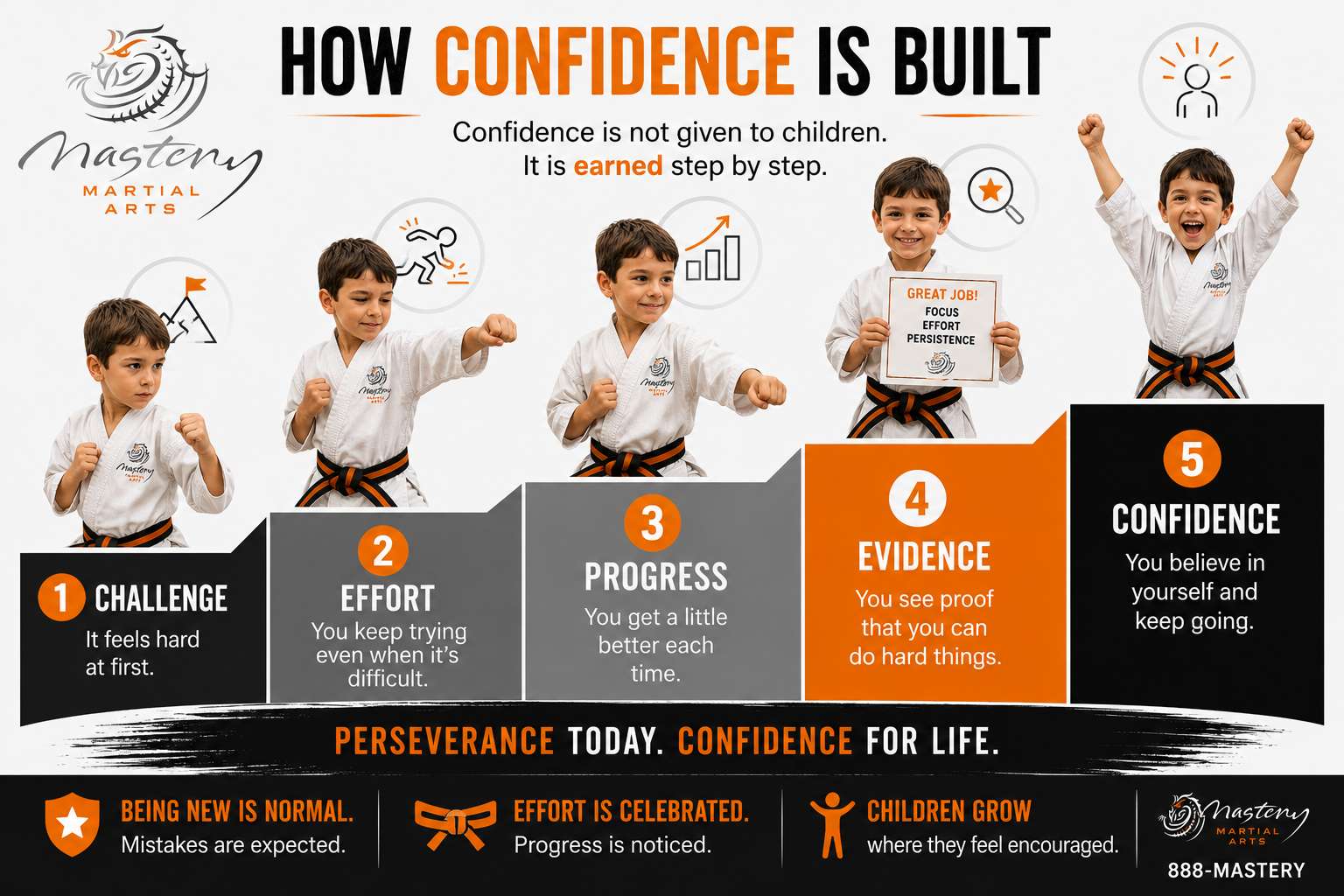
Confidence is earned through evidence.
Evidence comes from experience.
Experience requires trying again.
That's why perseverance is one of the greatest confidence builders in childhood.
Read:
Why Confidence Comes From Doing Hard Things
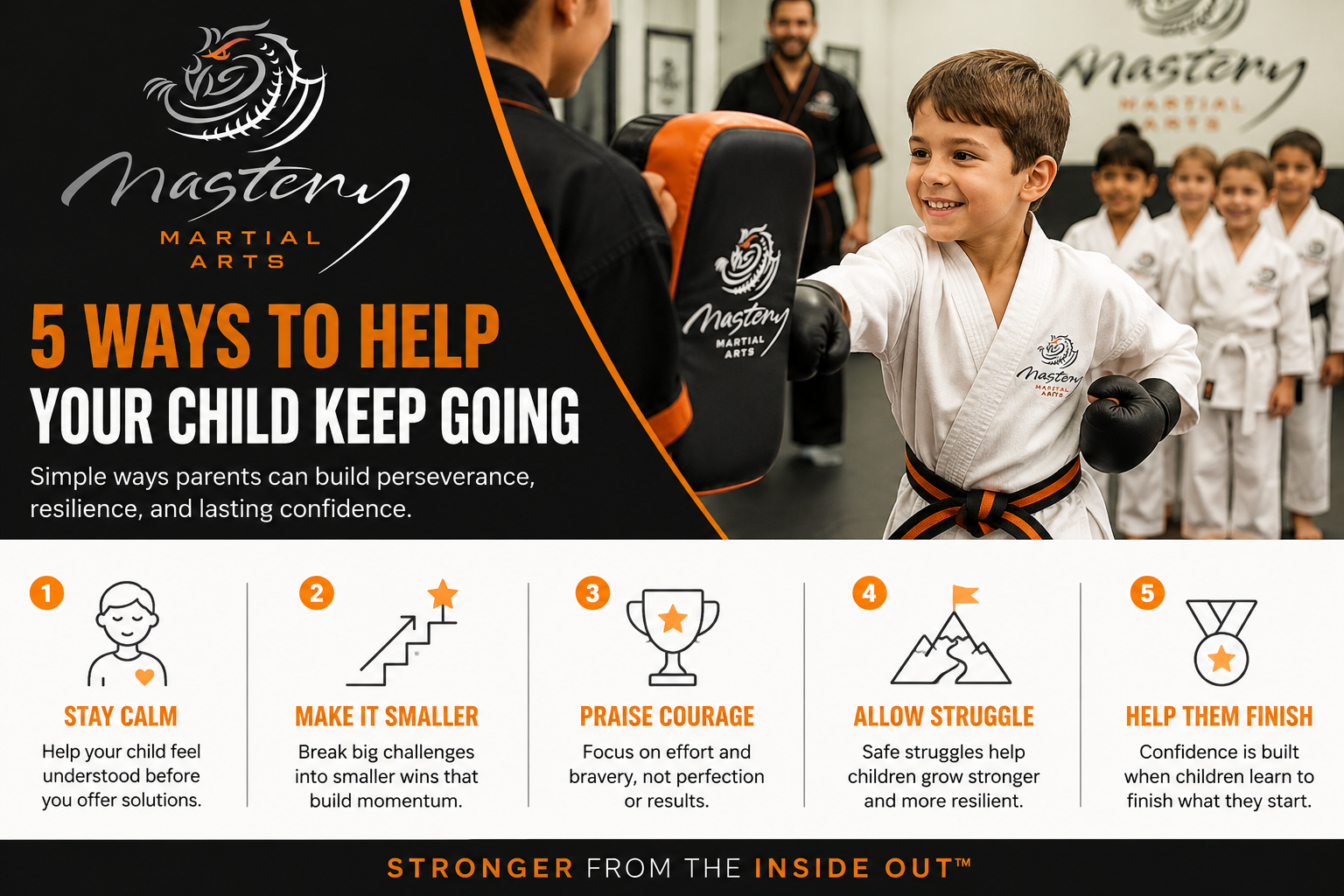
Five Ways Parents Can Help Children Stop Quitting
1. Stay Calm
When your child wants to quit, don't immediately lecture.
Instead ask:
"What feels difficult right now?"
Children need to feel understood before they'll accept coaching.
2. Break Big Challenges Into Smaller Wins
Success builds momentum.
Instead of:
"Finish the whole book."
Try:
"Let's read two pages together."
Small victories teach children:
"I can do this."
3. Praise Courage More Than Results
Instead of saying:
"Great job winning."
Say:
"I'm proud you kept trying."
Children begin chasing effort instead of perfection.
Read:
How to Help Your Child Believe in Themselves
4. Let Children Experience Safe Failure
Parents naturally want to protect children.
But protecting children from every disappointment also protects them from resilience.
A missed answer.
A forgotten homework assignment.
A difficult belt test.
These moments become teachers.
Read:
Why Children Need to Struggle to Grow
5. Help Them Finish Something Hard
Confidence isn't built by starting.
It's built by finishing.
The child who completes something difficult begins collecting evidence.
"I did it."
That evidence changes identity.
Read:
How to Build Confidence in Kids
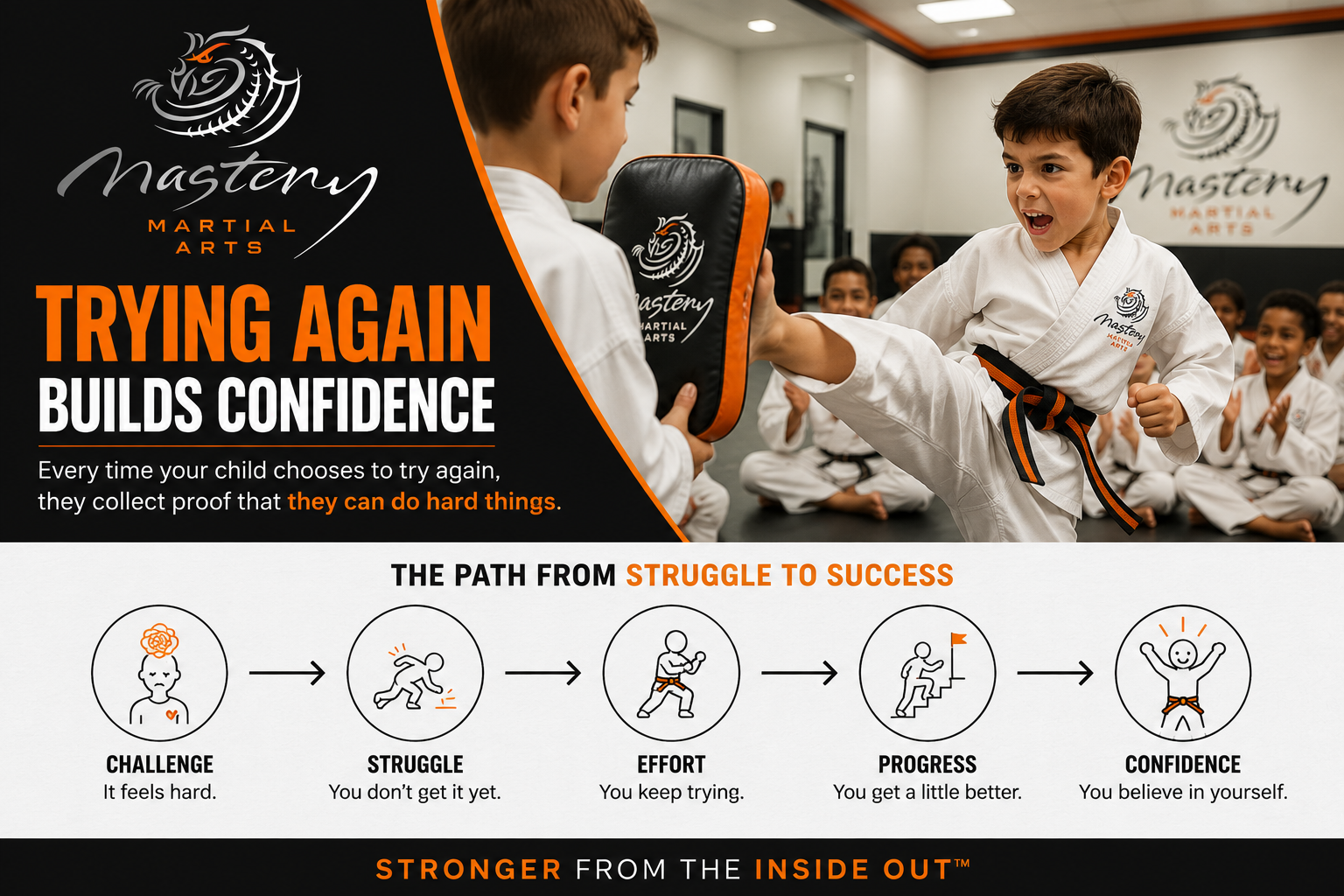
Perseverance Creates Confidence
Children often think confidence comes first.
It doesn't.
Action comes first.
Then courage.
Then experience.
Then evidence.
Then confidence.
Every difficult thing your child finishes tells their brain:
"Maybe I can do hard things."
Eventually...
"Maybe"
becomes
"I can."
Research-Backed Insight
Psychologist Angela Duckworth's research on grit suggests that perseverance and passion for long-term goals are strong predictors of achievement. Children who learn to stay with challenges—even when progress is slow—develop greater resilience and are more likely to achieve meaningful success over time.
For parents, the lesson is simple:
The goal isn't to remove every obstacle.
The goal is to help children become the kind of people who know they can work through obstacles.
Why Martial Arts Helps Children Learn Perseverance
Every class offers children opportunities to continue when they feel like stopping.
A new technique.
A difficult stance.
A belt test.
A challenge with a partner.
A correction from an instructor.
Students quickly discover something important.
Feeling frustrated does not mean stop.
It means keep practicing.
Over time they begin saying:
"I couldn't do it..."
"But now I can."
That sentence is the foundation of confidence.
Read:
Building Confidence in Children Through Martial Arts
What Parents Tell Us
“My daughter Kendall is a student at Mastery in Johnston. When she first started, she was very shy, quiet, and had low self-esteem. Now she is very confident. She tries her hardest at everything she does. Even if she struggles, she never gives up.
Mastery has taught her to believe in herself and never give up, just like one of their sayings: ‘Winners never quit, quitters never win.’
I highly recommend any parent let their child experience the same experience my daughter did, and you will see how much and how fast they grow.”
— Shawn Duguay, Mastery Martial Arts Johnston Parent

Perseverance Leads to Leadership
Children who learn to keep going become children others look up to.
They become teammates who encourage.
Students who finish.
Friends who don't give up.
Future leaders who understand that success rarely happens on the first attempt.
Leadership isn't about being the best.
It's about refusing to quit when things become difficult.
Read:
How to Build Leadership Skills in Kids
Frequently Asked Questions
Why does my child quit so easily?
Many children quit because they begin believing that struggling means they aren't capable. Helping children see mistakes as part of learning builds perseverance and confidence.
How do I teach perseverance?
Teach perseverance by praising effort, breaking challenges into manageable steps, allowing safe failure, and celebrating progress instead of perfection.
Does confidence help children persevere?
Yes. Confident children are more likely to continue trying because they believe effort can improve results. Likewise, perseverance also builds confidence by giving children evidence that they can overcome challenges.
Should I let my child quit activities?
Sometimes it's appropriate to change activities, but children benefit from learning to work through temporary frustration before making that decision. Teaching thoughtful persistence helps build resilience.
Can martial arts help children stop quitting?
Yes. Martial arts regularly asks children to try again, improve gradually, accept correction, and work toward long-term goals, helping them develop perseverance in a supportive environment.
About This Topic
Perseverance is one of the most important building blocks of confidence. Children who learn to continue through setbacks develop resilience, emotional strength, and the belief that they can overcome life's challenges.
About Mastery Martial Arts
At Mastery Martial Arts, we help children build far more than martial arts skills.
Every class develops confidence, perseverance, discipline, focus, responsibility, leadership, and resilience through structured challenges and positive coaching.
Because we believe children become Stronger From The Inside Out™.
Find a Mastery Martial Arts Location Near You
Warwick, RI —https://masteryma.com/warwick
Coventry, RI —https://masteryma.com/coventry
Johnston, RI —https://masteryma.com/johnston
Smithfield, RI —https://masteryma.com/smithfield
Barrington, RI —https://masteryma.com/barrington
East Greenwich, RI —https://masteryma.com/east-greenwich
Cumberland, RI —https://masteryma.com/cumberland
North Attleboro, MA —https://masteryma.com/north-attleboro
Ready to Help Your Child Keep Going?
Every challenge your child overcomes becomes evidence that they are stronger than they thought.
At Mastery Martial Arts, children don't just learn kicks and punches.
They learn how to get back up.
How to keep trying.
How to believe in themselves.
Because confidence isn't built by avoiding hard things.
It's built by overcoming them.
Schedule your child's Free Introductory Lesson today and discover how Mastery Martial Arts helps children become stronger from the inside out.
Call 888-MASTERY.
