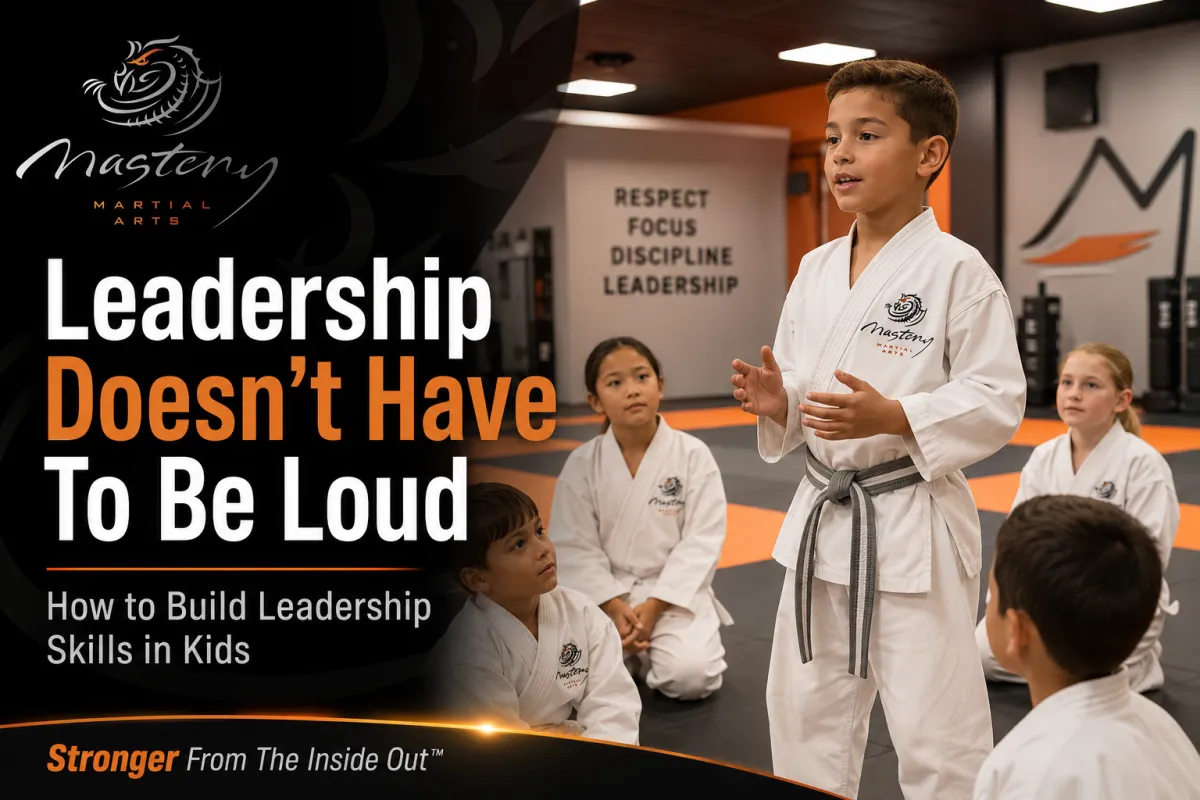
How to Build Leadership Skills in Kids | Mastery Martial Arts
How to Build Leadership Skills in Kids Without Forcing Them to Be Loud
Every parent wants their child to become a leader.
But many parents misunderstand what leadership really means.
They picture the loudest child in the room.
The child who raises their hand first.
The child who takes charge.
The child who naturally walks into a group and knows what to say.
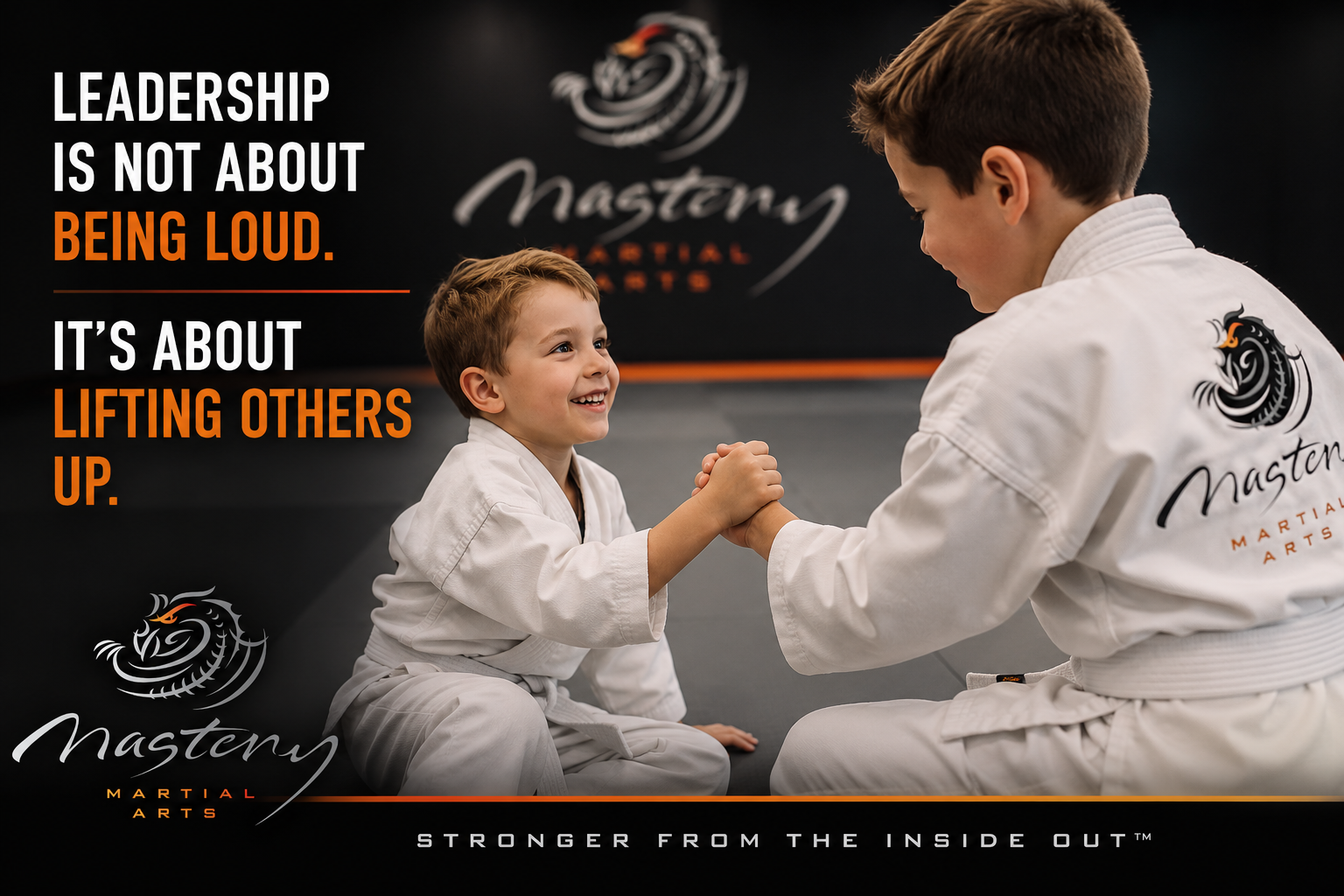
But real leadership is not about being loud.
It is not about being bossy.
It is not about needing attention.
Real leadership starts much deeper.
It starts with confidence.
Responsibility.
Self-control.
Courage.
Kindness.
The ability to do what is right even when it is uncomfortable.
That is why leadership is not something children magically develop when they become teenagers.
It is something they practice while they are still young.
Quick Answer
Children build leadership skills by practicing responsibility, communication, confidence, self-control, and courage in real situations. Leadership is not about being loud or bossy. It grows when children are trusted with small responsibilities, encouraged to speak clearly, help others, make good choices, and lead by example.
Key Takeaways
Leadership is a skill children can practice early.
Confident children are more likely to speak up, help others, and make responsible choices.
Leadership does not require a child to be loud or outgoing.
Small responsibilities help children see themselves as capable.
Martial arts gives kids structured opportunities to practice leadership in real life.
Parents can build leadership at home by encouraging responsibility, problem-solving, and courage.
Leadership Does Not Start With Being Loud
Some children are naturally outgoing.
Some are quiet.
Some are cautious.
Some need time before they feel comfortable speaking.
That does not mean they cannot become leaders.
A quiet child can be a leader.
A shy child can be a leader.
A sensitive child can be a leader.
A child who does not love attention can still become the kind of person others trust, respect, and follow.
Leadership is not personality.
Leadership is behavior.
A child leads when they do the right thing.
A child leads when they help someone else.
A child leads when they use a strong voice even though they feel nervous.
A child leads when they stay calm under pressure.
A child leads when they choose courage over comfort.
This is why confidence matters so much. If your child struggles to speak up, our article on Why Some Kids Are Afraid to Speak Up explains how children begin finding their voice through small brave moments.
Why Leadership Starts With Confidence
Children rarely lead when they do not believe in themselves.
If a child constantly thinks:
“I might be wrong.”
“What if they laugh?”
“I can’t do that.”
“Someone else should go first.”
“I’m not a leader.”
Then leadership feels risky.
But when a child begins believing:
“I can try.”
“I can help.”
“I can speak.”
“I can do hard things.”
“I can make a good choice.”
Leadership begins to feel possible.
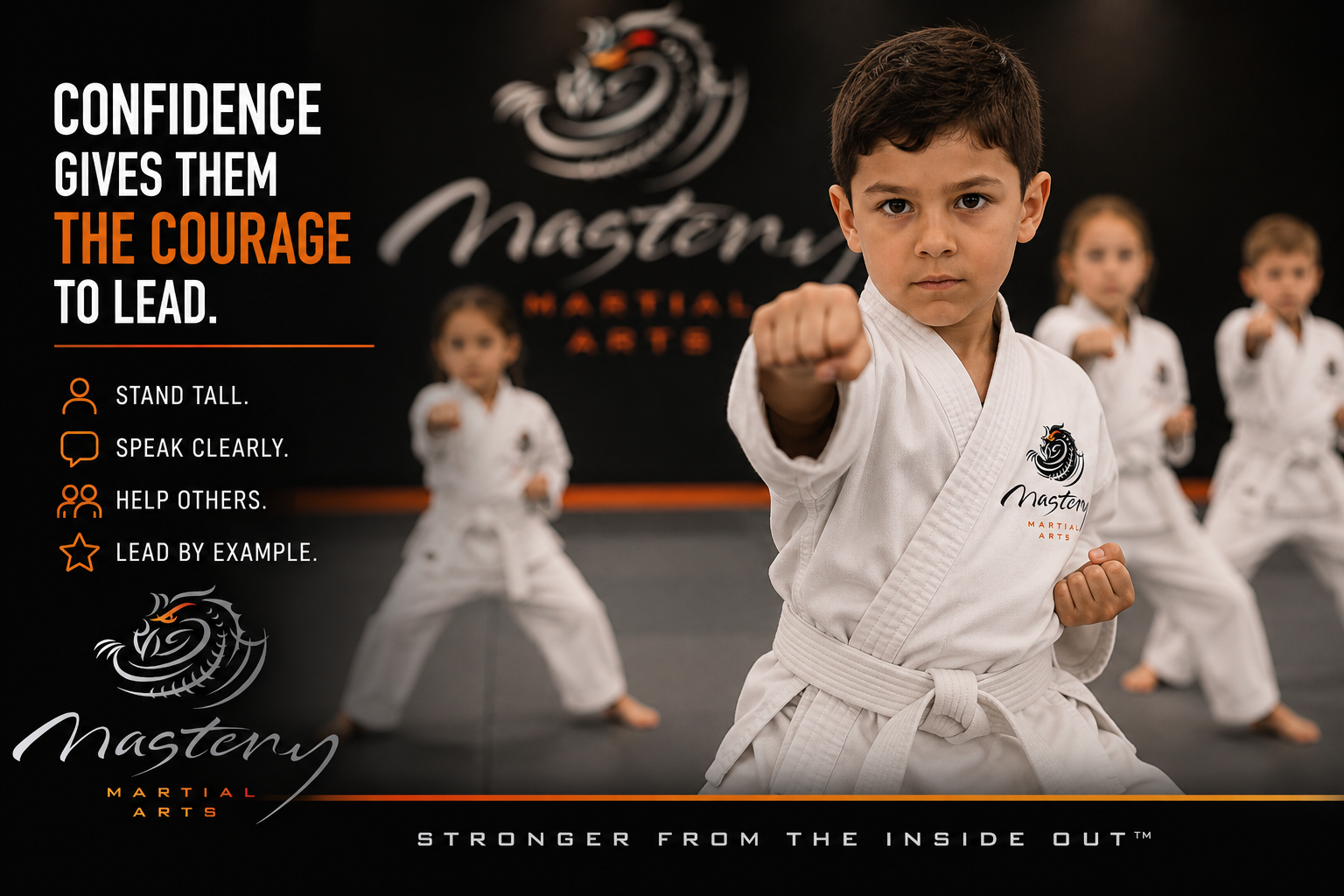
Confidence gives children enough belief to take the first step.
That is why building confidence in kids is the foundation for building leadership.
Confidence helps a child stand tall.
Leadership helps them use that confidence to serve others.
What Leadership Looks Like in Children
Leadership in kids often looks smaller than adults expect.
It may look like:
Welcoming a new student
Raising a hand in class
Saying no to peer pressure
Helping a younger child
Apologizing first
Standing up for someone being teased
Taking responsibility for a mistake
Trying again after failing
Encouraging a teammate
Doing the right thing when no one is watching
Those moments may seem small.
But they are not small to a child.
They are identity-building moments.
Every time a child acts like a leader, they collect evidence:
“I am responsible.”
“I am brave.”
“I can help.”
“I can lead.”
Over time, those experiences shape the story they believe about themselves. That is why leadership connects so closely to the story children tell themselves.
7 Leadership Skills Kids Can Build Early
Children do not need to wait until high school to practice leadership.
They can begin now.
Here are seven leadership skills kids can build early:
Responsibility
Doing what needs to be done, even when they do not feel like it.Communication
Using eye contact, a clear voice, and respectful words.Self-control
Managing emotions before reacting.Courage
Doing the right thing even when it feels uncomfortable.Kindness
Helping others feel seen, included, and encouraged.Problem-solving
Thinking through challenges instead of quitting or blaming.Follow-through
Keeping promises and finishing what they start.
These are not just “nice traits.”
They are life skills.
And they are built through practice.
Why Some Kids Avoid Leadership
Some children avoid leadership because they do not want attention.
Others avoid it because they fear making mistakes.
Some are afraid of being judged.
Some do not believe anyone will listen to them.
Some have learned to stay quiet because quiet feels safer.
And some children are capable of leading, but they have never been given the chance to practice.
That matters.
Children often become what they repeatedly experience.
If a child never gets opportunities to lead, they may assume leadership is not for them.
If a child is always rescued, they may not feel capable.
If a child is never trusted with responsibility, they may not develop responsibility.
This is why kids need to feel capable, not just protected.
Protection creates safety.
Capability creates confidence.
Leadership grows from both.
What Leadership Looks Like in Children
Leadership Is Responsibility, Not Control
Many children think leadership means telling other people what to do.
But that is not leadership.
That is control.
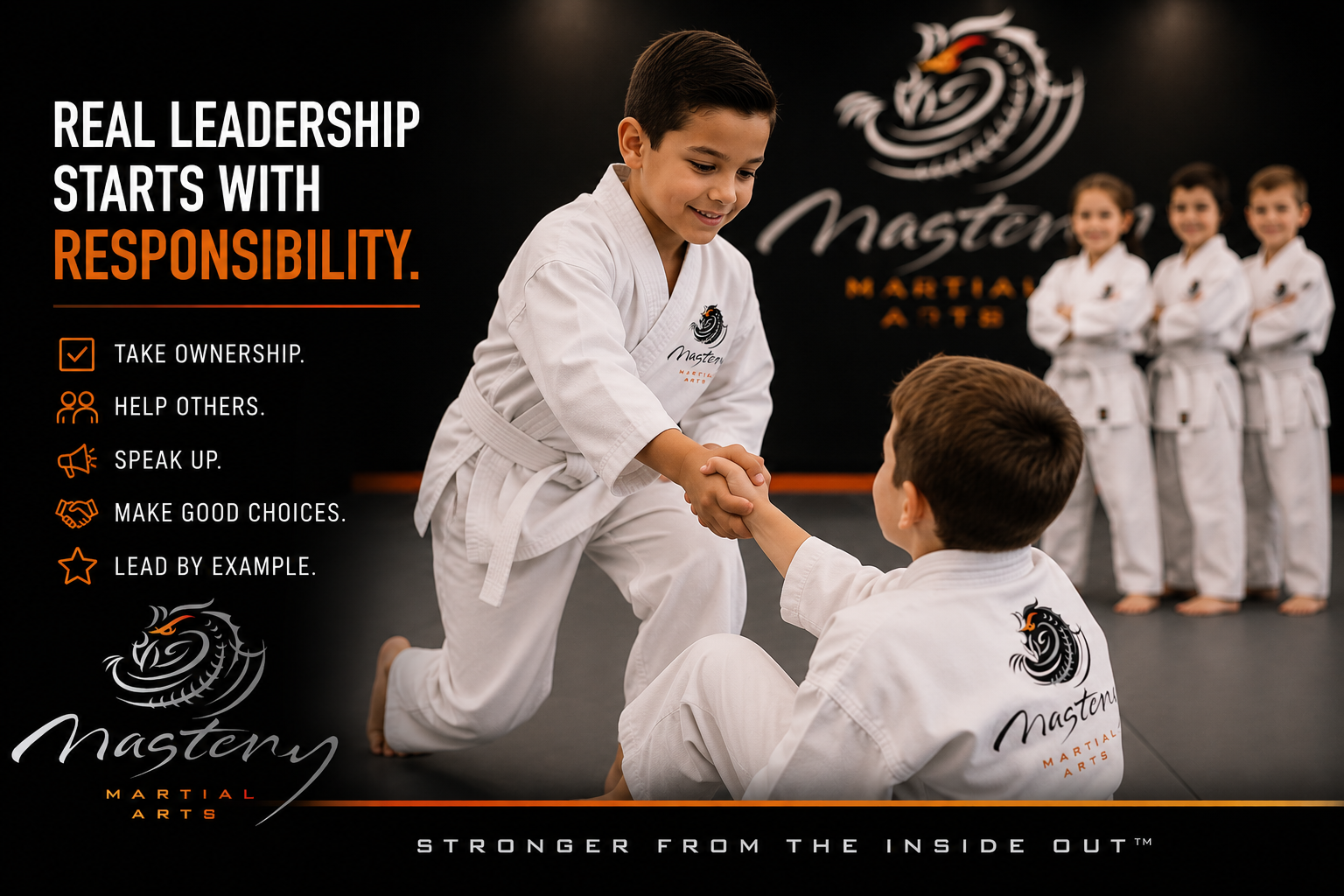
Real leadership begins with responsibility.
CONTROL-BASED BEHAVIOR
Bosses others around
Needs to be in charge
Wants attention
Reacts emotionally
Blames others
Talks over people
Tries to look powerful
TRUE LEADERSHIP BEHAVIOR
Helps others improve
Takes responsibility
Sets an example
Stays calm under pressure
Owns mistakes
Listens first
Uses confidence to serve
This distinction matters.
A child who learns control may become demanding.
A child who learns responsibility becomes trustworthy.
That is the kind of leadership parents actually want.
How Parents Can Build Leadership at Home
Parents do not need a complicated leadership curriculum.
Leadership can be built in everyday family life.
Try this:
Give your child real responsibilities
Let them help pack their bag, care for belongings, feed a pet, help with dinner, or prepare for class.Ask better questions
Instead of “Why didn’t you do that?” ask, “What would a responsible leader do next?”Let them solve small problems
Do not rush to fix everything. Guide them, but let them think.Praise leadership behavior
Say, “I noticed you helped your sister without being asked. That was leadership.”Let them speak for themselves
Encourage them to order food, greet adults, thank instructors, and ask questions.Model calm leadership
Children learn leadership by watching how adults handle frustration, pressure, and conflict.Connect choices to identity
Help them see the kind of person they are becoming.
Leadership grows when children are given meaningful opportunities to practice.
Not lectures.
Opportunities.
Research-Backed Insight
Child development research often connects confidence with self-efficacy, which is a child’s belief that their actions can influence outcomes. When children are given age-appropriate responsibilities and experience success through effort, they begin to trust their own ability to affect the world around them.
That belief matters.
A child who believes, “My choices matter,” is more likely to take initiative.
A child who believes, “I can help,” is more likely to serve others.
A child who believes, “I can improve,” is more likely to keep trying.
That is where leadership begins.
Not with a title.
With belief.
Why Martial Arts Helps Kids Become Leaders
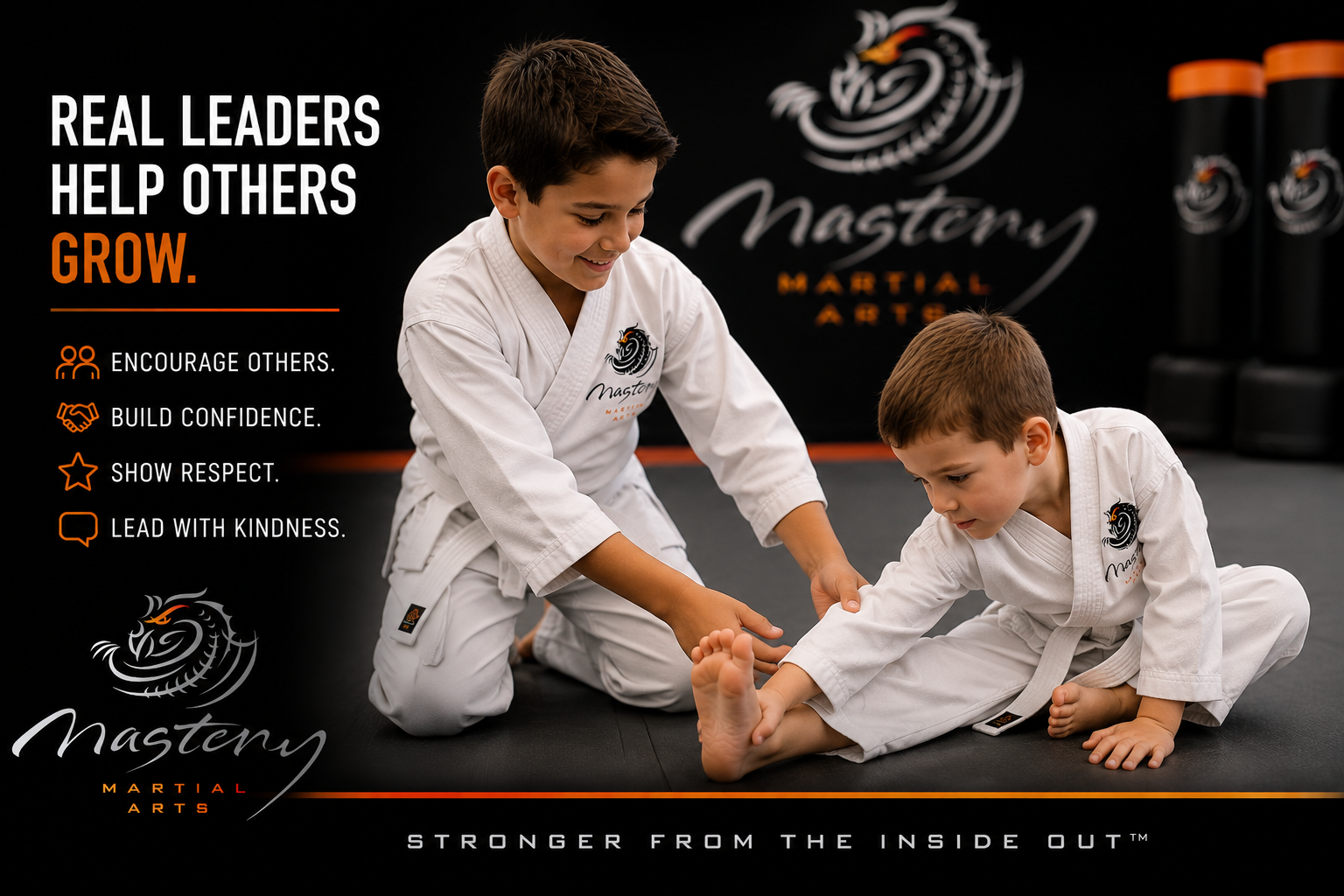
Martial arts gives children leadership practice in a structured, supportive environment.
They do not just hear about leadership.
They practice it.
In class, students learn to:
Stand tall
Make eye contact
Use a clear voice
Answer with confidence
Encourage partners
Help newer students
Demonstrate skills
Lead warm-ups
Show respect
Control their emotions
Keep going when things are hard
These experiences create leadership evidence.
A child who once stood in the back may begin helping someone new.
A child who once whispered may begin counting loudly.
A child who once avoided attention may begin demonstrating in front of class.
That is not just martial arts.
That is identity development.
This is why martial arts helps build confidence in children in a way that carries into school, friendships, and family life.
What Parents Tell Us
One Barrington parent shared how Mastery helped his son build confidence, communication, teamwork, and leadership:
“Our son has had such a positive experience at Mastery. Ms. Lemoi & Mr. Parks have such a great mix of support, encouragement, and expectation for the age groups with which they’re working. Our son is gaining both confidence in his body, and important life skills such as communication, teamwork, and leadership. He is big for his age and experiences challenges with his ADHD, so learning these skills in this environment are so valuable to our family. The school is inclusive and feels like a true community. We highly recommend the program!”
— Mike Lefebvre, Mastery Martial Arts Barrington Parent
Leadership Helps Children Handle Peer Pressure
Leadership becomes especially important as children get older.
There will come a moment when your child has to make a choice without you standing beside them.
A friend may pressure them.
A group may tease someone.
Someone may dare them to do something wrong.
They may need to say no.
They may need to speak up.
They may need to walk away.
They may need to stand alone.
That is leadership.
Not public speaking.
Not being popular.
Not being the loudest.
Leadership is the ability to choose character when it would be easier to follow the crowd.
That is why confident kids handle peer pressure better.
They are not simply more outgoing.
They are more grounded.
Leadership Builds Confidence, Too
Confidence builds leadership.
But leadership also builds confidence.
Every time a child helps someone else, they feel capable.
Every time they use their voice, they feel stronger.
Every time they make a responsible choice, they trust themselves more.
Every time they lead by example, they begin believing:
“I am someone others can count on.”
That belief is powerful.
Children do not become leaders because adults call them leaders.
They become leaders because they practice leadership long enough to believe it is who they are.
Frequently Asked Questions
How do you build leadership skills in kids?
You build leadership skills in kids by giving them opportunities to practice responsibility, communication, courage, problem-solving, and self-control. Leadership grows when children are trusted with small responsibilities, encouraged to help others, and guided to make good choices even when it feels uncomfortable.
Can a shy child become a leader?
Yes. Shy children can become excellent leaders. Leadership is not about being loud or outgoing. A shy child can lead through kindness, responsibility, listening, courage, and example. Many quiet children become strong leaders when they are given safe opportunities to practice.
What age should kids start learning leadership?
Children can begin learning leadership as early as preschool through simple responsibilities, helping others, taking turns, following directions, and practicing courage. Leadership should grow gradually as children mature.
What are signs of leadership in children?
Signs of leadership in children include helping others, taking responsibility, speaking up respectfully, staying calm under pressure, including others, following through on commitments, and doing the right thing even when it is hard.
Is leadership the same as confidence?
Leadership and confidence are connected, but they are not the same. Confidence is a child’s belief in their own ability. Leadership is using that confidence to make good choices, help others, take responsibility, and set an example.
How can parents encourage leadership at home?
Parents can encourage leadership by giving children age-appropriate responsibilities, asking problem-solving questions, praising effort and responsibility, letting children speak for themselves, and modeling calm decision-making.
Can martial arts help kids become leaders?
Yes. Martial arts helps kids become leaders by giving them structured opportunities to practice focus, respect, communication, responsibility, self-control, helping others, and leading in front of peers.
What if my child does not want to lead?
Do not force leadership. Start small. Let your child practice low-pressure leadership moments, such as greeting someone, helping a younger child, answering a question, or taking responsibility for one task. Confidence grows through small wins.
Why is leadership important for kids?
Leadership helps children build confidence, responsibility, communication, resilience, and character. It prepares them to handle peer pressure, make good decisions, stand up for others, and become trusted by the people around them.
How does leadership help with peer pressure?
Leadership gives children the confidence to make choices based on values instead of pressure. A child who sees themselves as a leader is more likely to say no, walk away, stand up for others, and choose what is right.
About This Topic
Leadership is one of the most important life skills a child can develop. But leadership does not begin with being loud, popular, or in charge. It begins with confidence, responsibility, self-control, communication, and courage. When children practice leadership early, they become better prepared for school, friendships, peer pressure, and life.
About Mastery Martial Arts
At Mastery Martial Arts, we help children build more than martial arts skills.
We help them build confidence.
Focus.
Respect.
Discipline.
Resilience.
Leadership.
Every class is designed to help children become stronger mentally, emotionally, physically, and socially.
That is what we mean by:
Stronger From The Inside Out™
Find a Mastery Martial Arts Location Near You
Mastery Martial Arts Johnston, RI
Mastery Martial Arts Smithfield, RI
Mastery Martial Arts Cumberland, RI
Mastery Martial Arts Barrington, RI
Mastery Martial Arts Warwick, RI
Mastery Martial Arts Coventry, RI
Mastery Martial Arts North Attleboro,MA
Ready to Help Your Child Build Leadership Skills?
Leadership is not something children suddenly discover later in life.
It is something they practice.
One responsibility.
One brave moment.
One act of kindness.
One good choice.
One opportunity to lead.
At Mastery Martial Arts, we help children build the confidence and character to become leaders in school, at home, and in life.
Schedule your child’s Free Introductory Lesson today or call 888-MASTERY to learn more.
Mastery Martial Arts — Stronger From The Inside Out™
