
Why Some Kids Are Afraid to Speak Up (And How Parents Can Help Them Find Their Voice)
Why Some Children Stay Quiet
Some children can talk all day at home.
They tell stories.
Ask questions.
Share opinions.
Laugh loudly.
But when they are around classmates, teachers, coaches, or new people…
They disappear into silence.
They know the answer.
They have something to say.
They may even want to participate.
But when the moment comes, they freeze.
Parents often assume their child is simply shy.
Sometimes that is true.
But many children are not afraid of speaking.
They are afraid of what might happen after they speak.
What if I am wrong?
What if people laugh?
What if everyone looks at me?
What if I embarrass myself?
What if I say the wrong thing?
For many children, silence feels safer than risk.
And that is why helping children find their voice is such an important part of building confidence.
If your child often stays quiet because they are unsure of themselves, you may also find value in How to Help a Shy Child Build Confidence, where we explain how confidence grows through small, safe moments of courage.
Every Child Has a Voice
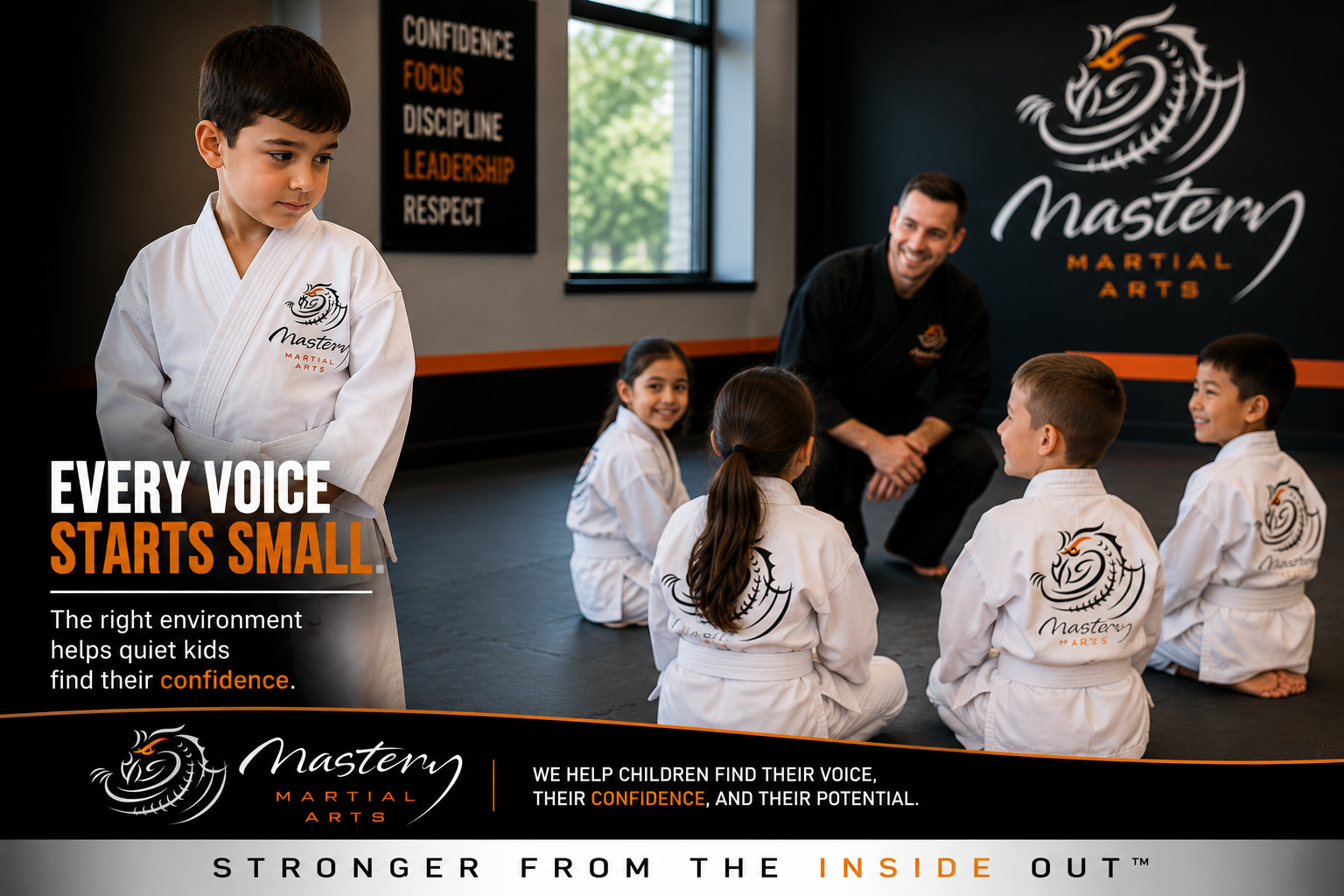
Every child has a voice.
But not every child believes their voice matters yet.
Some children need more practice being heard.
Some need more encouragement.
Some need more safe opportunities to speak.
Some need to collect enough evidence that speaking up does not have to be scary.
A child who stays quiet is not broken.
They are often protecting themselves.
Silence becomes a shield.
It protects them from attention.
It protects them from judgment.
It protects them from being wrong.
But over time, that protection can become a habit.
And eventually, the child begins believing:
“I am not someone who speaks up.”
That belief can follow them into school, friendships, activities, leadership opportunities, and eventually adulthood.
A child’s internal story matters more than most parents realize. We explain this more deeply in Why Children Become the Story They Tell Themselves.
Speaking Up Is a Confidence Skill
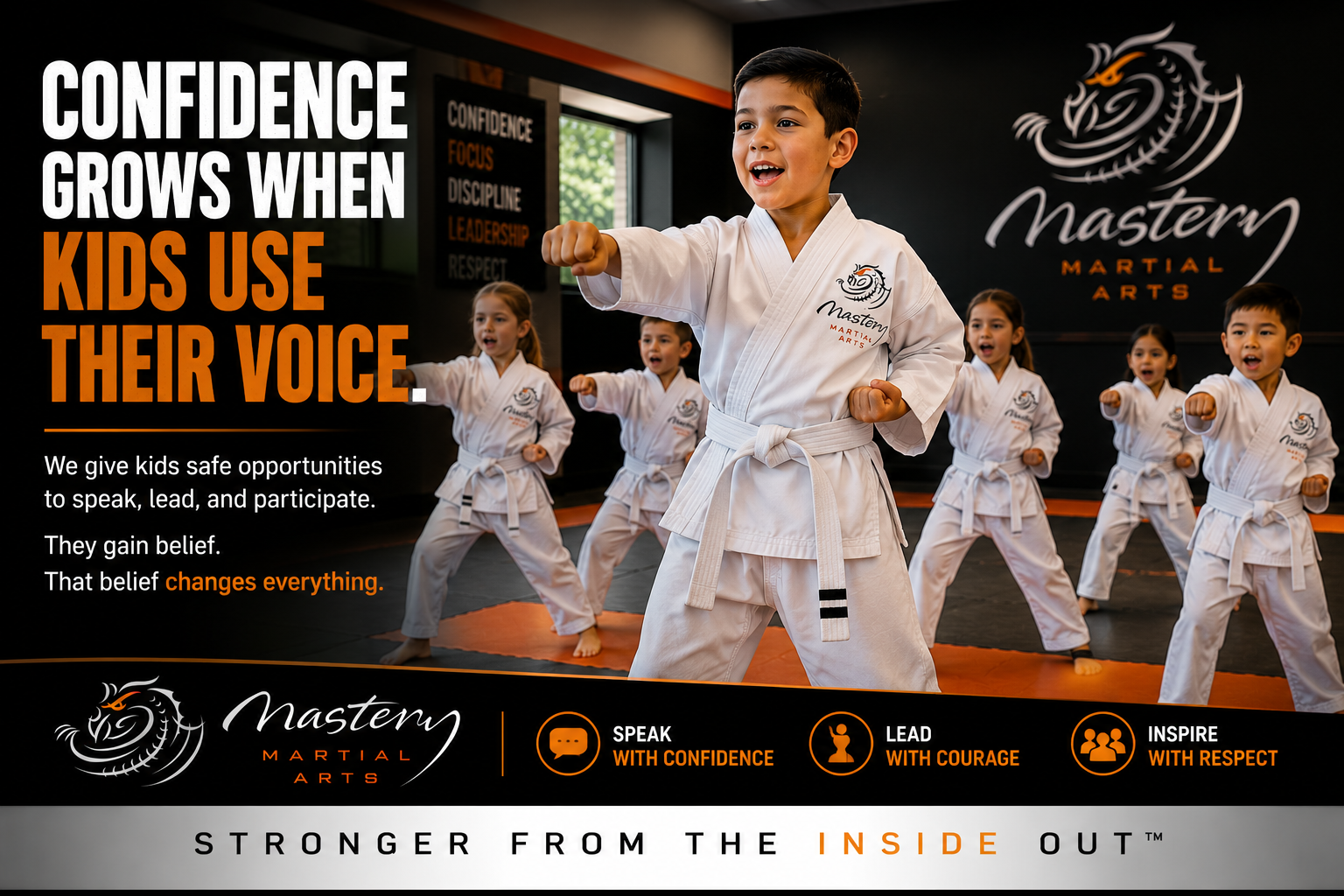
Many people think confidence means being loud.
It does not.
Confidence is not about becoming the loudest person in the room.
Confidence is believing your voice still matters even when you feel nervous.
A confident child can still feel butterflies.
They can still feel unsure.
They can still care what others think.
The difference is that confidence gives them enough belief to act anyway.
Raise the hand.
Ask the question.
Introduce themselves.
Answer clearly.
Share an idea.
Stand up for someone else.
Those moments may look small to adults.
But to a child, they can feel enormous.
Every time a child speaks up despite feeling nervous, they build another piece of confidence.
That is why building confidence in kids s not about forcing children to be loud. It is about helping them collect real experiences that prove their voice matters.
Why Kids Become Afraid to Speak
Children often become afraid to speak up because they begin connecting attention with risk.
Maybe they answered a question wrong once.
Maybe someone laughed.
Maybe they were corrected harshly.
Maybe they compared themselves to a louder child.
Maybe they were told they were shy so many times that they started believing it was who they were.
Over time, the child may begin thinking:
“I should stay quiet.”
“It is safer not to try.”
“Other kids are better at this than me.”
“I do not want everyone looking at me.”
This is how silence becomes identity.
Not because the child lacks ability.
But because they have not yet had enough positive experiences proving that their voice is safe, valuable, and worth sharing.
Many children who are afraid to speak up are also afraid of being wrong. We explore that connection in How Parents Accidentally Teach Kids to Fear Failure.
Children Need Practice Being Brave
Speaking up is not just a communication skill.
It is an act of courage.
For some children, saying their name clearly in front of a group is brave.
For others, answering a question is brave.
For others, asking for help is brave.
For others, introducing themselves to someone new is brave.
Confidence grows when children practice these small brave moments repeatedly.
Not once.
Not when forced.
Not through pressure or embarrassment.
But through supportive repetition.
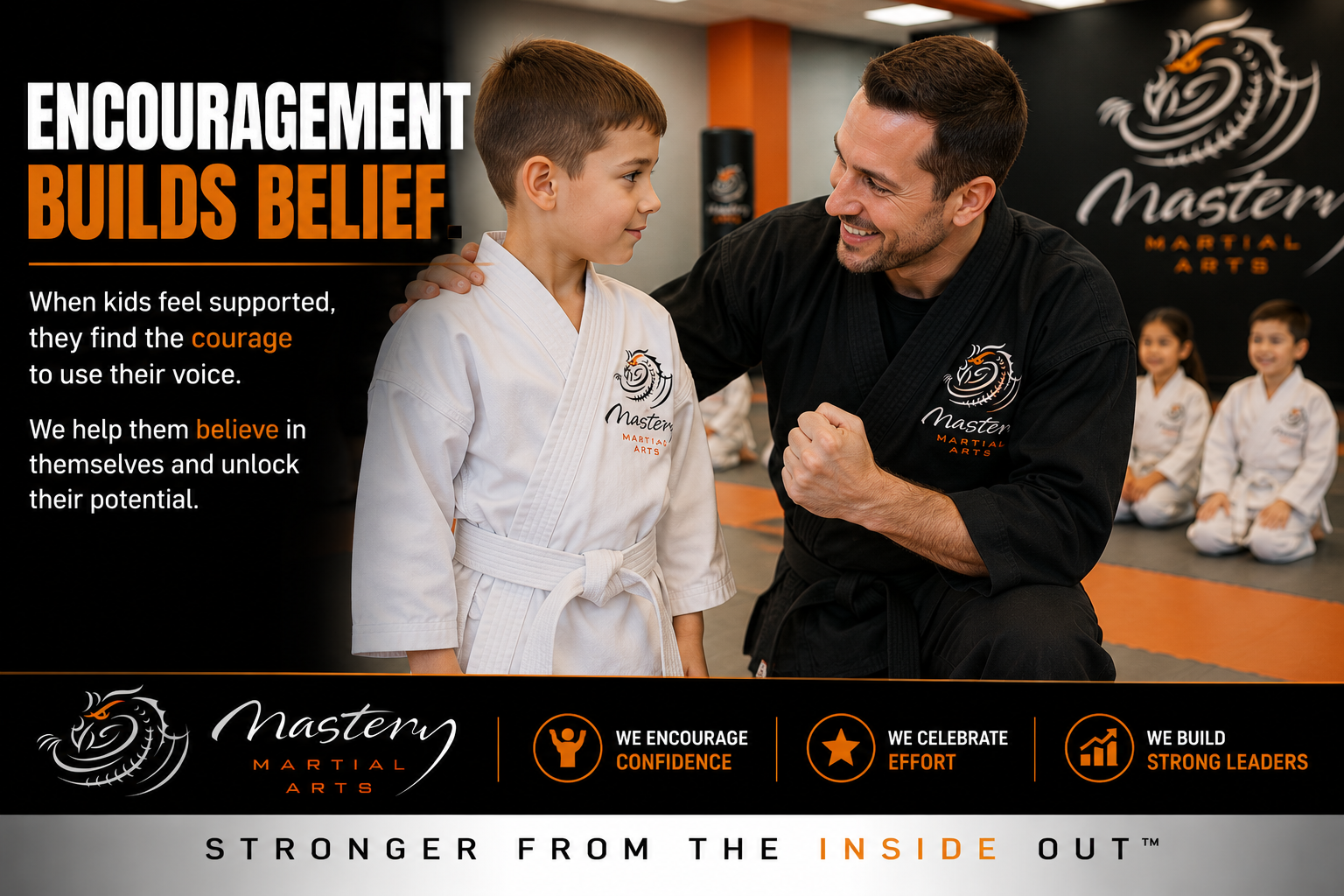
Children need environments where they can practice being heard without being judged.
They need adults who encourage them gently.
They need peers who celebrate effort.
They need opportunities to lead before they feel ready.
That is how confidence grows.
Confidence usually grows just outside a child’s comfort zone. That is why confidence comes from doing hard things, not from waiting until a child feels ready.
Why Martial Arts Helps Kids Find Their Voice
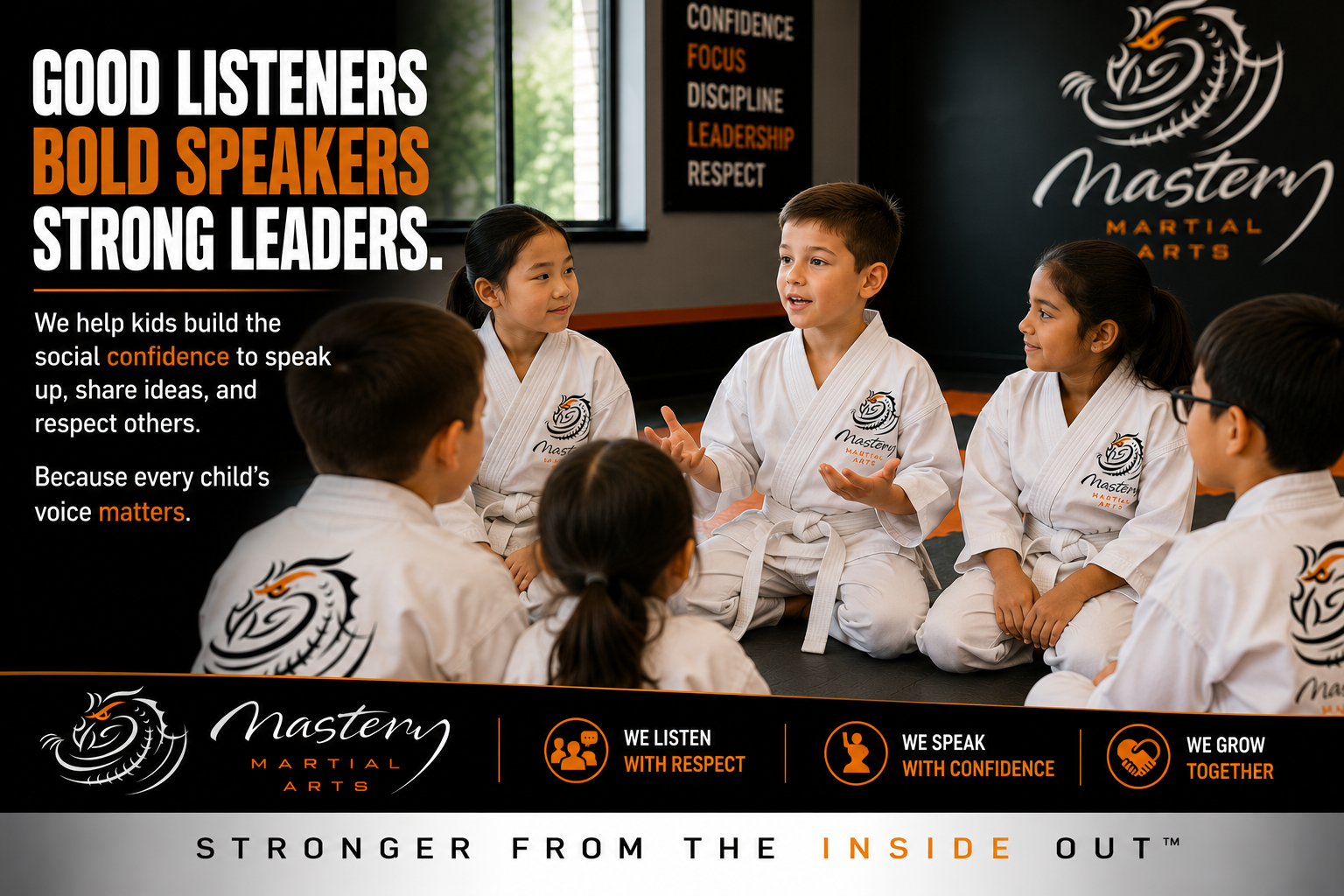
Martial arts is powerful because it gives children structured opportunities to speak, lead, and participate.
In class, children practice:
Answering questions.
Counting out loud.
Introducing themselves.
Making eye contact.
Encouraging partners.
Responding with confidence.
Leading warm-ups.
Helping newer students.
Standing in front of others.
These moments are not random.
They are part of the growth process.
A child who once whispered may begin speaking clearly.
A child who avoided attention may begin volunteering.
A child who hid in the back may begin stepping forward.
A child who thought, “I am shy,” may begin discovering, “I can lead.”
That is the real transformation.
The martial arts skills matter.
But the confidence children develop through those skills matters even more.
This is one reason martial arts helps build confidence in children. It gives kids repeated opportunities to practice speaking, leading, listening, and encouraging others.
Confidence Is Built Through Evidence
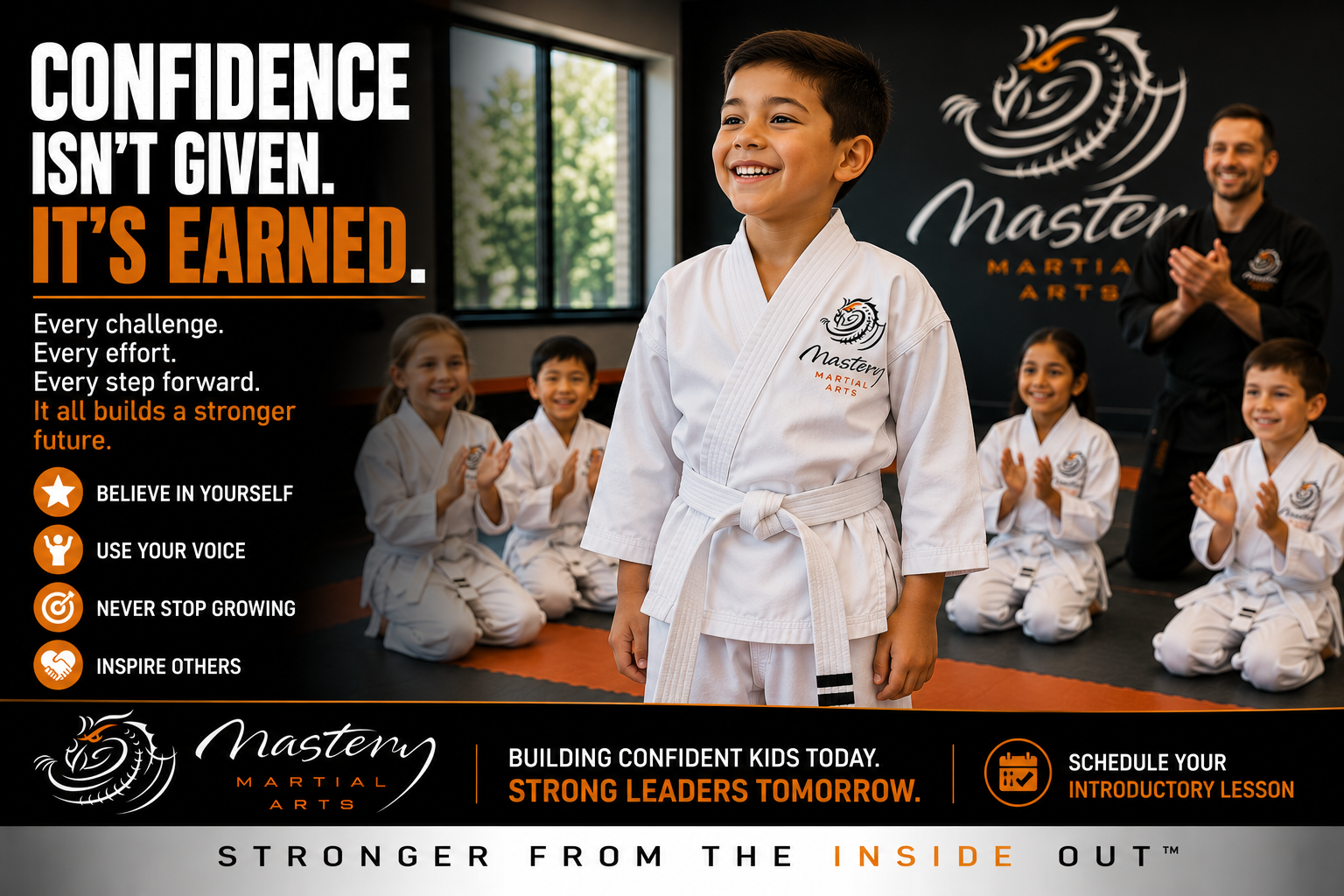
Children do not usually believe in themselves because someone tells them to.
They believe because they experience themselves doing something they once thought they could not do.
A child speaks in front of class.
Evidence.
A child helps another student.
Evidence.
A child answers a question loudly.
Evidence.
A child leads a line.
Evidence.
A child introduces themselves to a new friend.
Evidence.
Every experience becomes proof.
And enough proof becomes belief.
Eventually, the child begins thinking:
“I can do this.”
“My voice matters.”
“I am someone who can speak up.”
That is confidence becoming identity.
When a child repeatedly says “I can’t,” it often means they have not collected enough evidence that they can. We explain this in "Why Your Child Says “I Can’t”
Parents Can Help at Home
Parents do not need to force a quiet child to become outgoing.
That can backfire.
Instead, parents can create small opportunities for courage.
Let your child order their own food at a restaurant.
Encourage them to greet an adult.
Ask open-ended questions at dinner.
Let them explain something they learned.
Give them time to answer before jumping in.
Praise the courage it took to speak, not just whether the answer was perfect.
Instead of saying:
“Why are you so shy?”
Try saying:
“I noticed you answered even though you were nervous. That took courage.”
Instead of saying:
“Speak louder.”
Try saying:
“I want to hear your idea. Try that again with a strong voice.”
Instead of rescuing them from every social moment, coach them through it.
Children often rise to the identity adults help them see.
Parents do not need to rescue children from every uncomfortable moment. In fact, kids need to feel capable, not just protected especially when they are learning to use their voice.
What One Parent Experienced
One of the most rewarding moments for a parent is seeing their child do something they never thought they could do.
For Beth Saylors, that moment came as she watched her son, AJ, begin finding his voice.
She shared:
“AJ is coming out of his shy shell because of the people at Mastery Martial Arts North Attleboro. He is starting to participate willingly, and watching his confidence grow has been amazing.”
Those words capture something every parent hopes for.
Not that their child becomes the loudest person in the room.
But that they become willing to raise their hand.
To ask a question.
To introduce themselves.
To share an idea.
To believe their voice matters.
That is how confidence grows.
It is not built in one dramatic moment.
It is built through hundreds of small victories that quietly tell a child:
“I have something worth saying.”
Why Speaking Up Matters for Life
Helping a child speak up is about much more than classroom participation.
A child who learns to use their voice is better prepared to:
Ask for help.
Stand up for themselves.
Stand up for others.
Make friends.
Handle peer pressure.
Share ideas.
Lead groups.
Communicate with adults.
Solve problems.
Build healthy relationships.
One day, your child will need their voice in moments you cannot be there for.
They may need to say no.
They may need to ask for help.
They may need to defend someone.
They may need to speak honestly.
They may need to lead.
That is why building social confidence early matters so much.
Children who learn to speak up are also better prepared to handle social pressure. We explore that connection in Why Confident Kids Handle Peer Pressure Better.
Helping Children Become Confident Leaders
At Mastery Martial Arts, we do not simply teach children how to kick and punch.
We help children discover who they are becoming.
Every class gives students opportunities to practice confidence in real ways.
They practice standing tall.
They practice making eye contact.
They practice using a clear voice.
They practice encouraging others.
They practice leading.
They practice being seen.
Over time, those experiences help children become stronger from the inside out.
They begin to believe:
“I can speak.”
“I can lead.”
“I can help.”
“I can be brave.”
“I matter.”
That belief changes everything.
About This Topic
Social confidence is one of the most important life skills a child can develop.
Children who learn to speak up are not simply becoming better communicators.
They are developing courage, self-respect, emotional strength, leadership, and belief in themselves.
At Mastery Martial Arts, students practice these skills in a structured, encouraging environment where confidence is built one experience at a time.
About Mastery Martial Arts
For more than 30 years, Mastery Martial Arts has partnered with families to help children develop confidence, discipline, focus, leadership, respect, and resilience.
Our mission is helping kids become confident leaders for life.
We believe children become stronger not only through physical training, but through the inner growth that happens when they face challenges, practice courage, and discover what they are capable of.
That is what we mean by:
Stronger From The Inside Out™
Families Across Rhode Island & Massachusetts Trust Mastery Martial Arts
Families throughout Rhode Island and Massachusetts choose Mastery Martial Arts to help children become stronger mentally, emotionally, physically, and socially.
Mastery Martial Arts has locations serving families in:
Mastery Martial arts Warwick, RI
Mastery Martial Arts, Coventry, RI
Mastery Martial Arts, Johnston RI
Mastery Martial Arts, Smithfield RI
Mastery Martial Arts, Barrington RI
Mastery Martial Arts, East Greenwich RI
Mastery Martial Arts, Cumberland RI
Mastery Martial Arts, North Attleboro, MA
A Final Thought for Parents
If your child is afraid to speak up, do not assume their voice is missing.
It may simply be waiting for enough courage to come forward.
Confidence does not happen all at once.
It grows through small moments.
One answer.
One introduction.
One question.
One leadership opportunity.
One brave step at a time.
And every time your child uses their voice, they are learning something powerful:
“My voice matters.”
That belief can shape the rest of their life.
Ready to Help Your Child Find Their Voice?

At Mastery Martial Arts, we help children build the confidence to speak, lead, participate, and believe in themselves.
If you want your child to become more confident, more courageous, and more willing to step forward, we would love to meet your family.
Schedule your child’s Introductory Lesson today and help them become stronger from the inside out.
Call 888-MASTERY
