How to Teach Kids Discipline Without Yelling, Threats, or Constant Reminders
Every parent wants their child to become more disciplined.
To listen the first time.
To stay focused.
To follow through.
To control their emotions.
To finish what they start.
To do the right thing even when no one is standing over them.
But many parents feel stuck.
They remind.
Then they repeat.
Then they raise their voice.
Then they threaten consequences.
Then they feel guilty.
And even after all of that, the same behavior happens again the next day.
That is exhausting.
But here is the important truth:
Discipline is not built through yelling.
Discipline is built through practice.
Through structure.
Through clear expectations.
Through responsibility.
Through emotional control.
Through repetition.
And through helping children learn how to manage themselves from the inside out.
Because real discipline is not a child obeying because an adult is upset.
Real discipline is a child learning:
“I can control my body.”
“I can manage my emotions.”
“I can follow through.”
“I can make a better choice.”
“I can do what needs to be done, even when I do not feel like it.”
That is discipline becoming confidence.
Quick Answer
Kids learn discipline when they practice focus, self-control, responsibility, and follow-through in a consistent environment. Yelling may create short-term compliance, but it does not build internal discipline. Parents can help by using clear expectations, calm consistency, small responsibilities, natural consequences, and repeated opportunities for children to make better choices.
Key Takeaways
Discipline is a skill children build through practice.
Yelling may create obedience, but it rarely creates self-discipline.
Children need structure, consistency, and clear expectations.
Discipline grows when children learn to pause, think, and choose.
Responsibility and discipline are closely connected.
Martial arts helps children practice focus, respect, self-control, and follow-through in every class.
Discipline Is Not the Same as Punishment
Many people hear the word discipline and think of punishment.
Timeouts.
Grounding.
Taking things away.
Threats.
Consequences.
But discipline is much deeper than punishment.
The word discipline is connected to teaching.
Guiding.
Training.
Helping a child learn how to control themselves.
Punishment focuses on what happened after a mistake.
Discipline focuses on what the child needs to learn before the next moment.
That difference matters.
Because the real goal is not simply to make a child stop a behavior.
The real goal is to help the child develop the skill behind the behavior.
If a child keeps interrupting, they may need patience.
If a child keeps melting down, they may need emotional regulation.
If a child keeps forgetting, they may need responsibility.
If a child keeps quitting, they may need resilience.
If a child keeps rushing, they may need focus.
Discipline is not about controlling children.
It is about helping children learn to control themselves.
Why Yelling Does Not Build Self-Discipline
Most parents yell because they are overwhelmed, frustrated, tired, or out of options.
That does not make them bad parents.
It makes them human.
But yelling usually creates short-term reaction, not long-term discipline.
A child may move faster because a parent yells.
They may stop a behavior because they are afraid of getting in trouble.
They may comply because the pressure got high enough.
But that is not the same as self-discipline.
Yelling teaches children to respond to external pressure.
Discipline teaches children to develop internal control.
That is the goal.
Not “Do it because I said so.”
But:
“Do it because it matters.”
“Do it because you are responsible.”
“Do it because this is who you are becoming.”
That connects closely to responsibility. A child who learns ownership is better prepared to build discipline.
Internal link to add:
How to Teach Kids Responsibility
What Self-Discipline Looks Like in Children
Self-discipline does not mean a child is perfect.
It does not mean they never get distracted.
It does not mean they never get upset.
It means they are learning to pause and make a better choice.
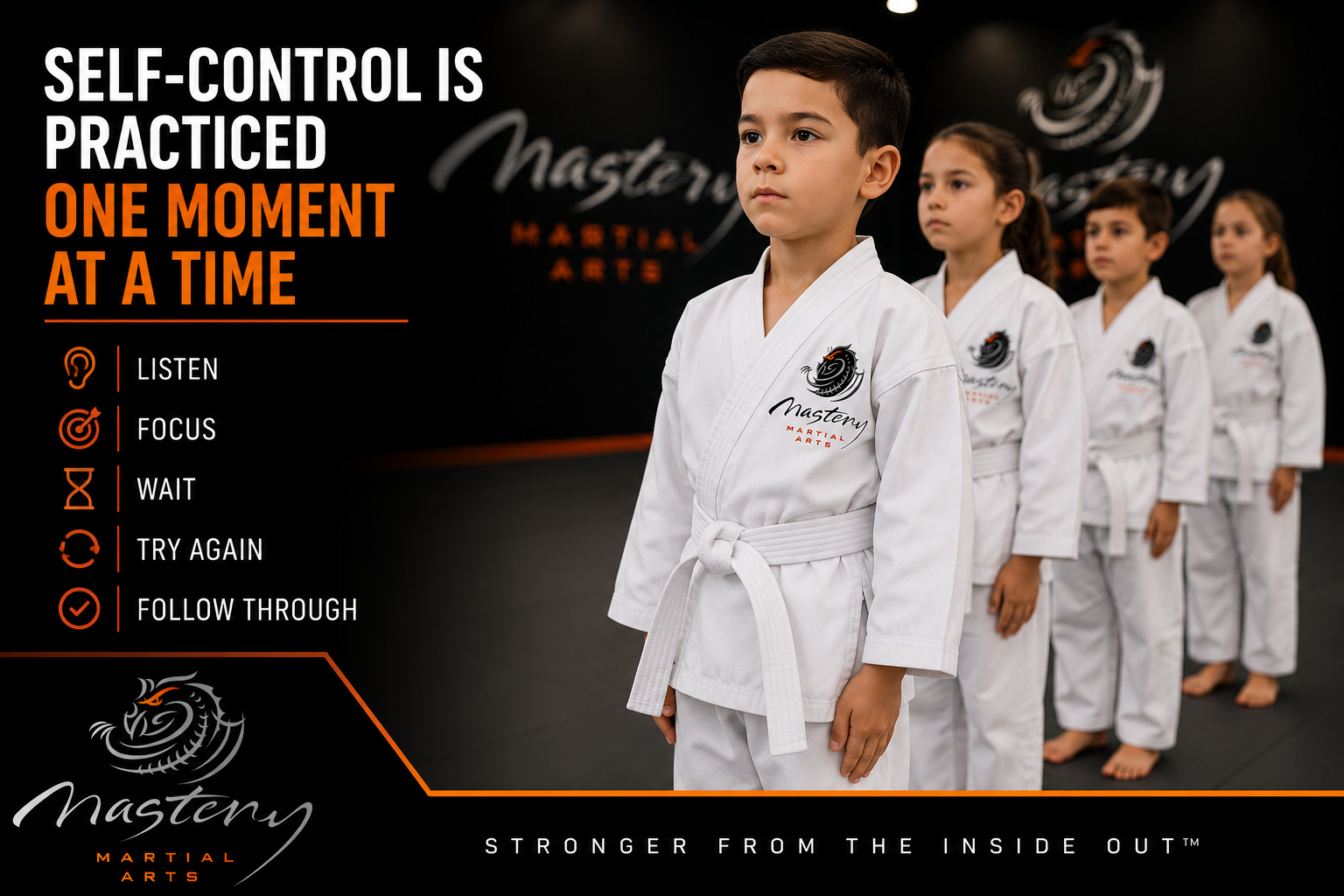
In children, discipline may look like:
Listening when directions are given
Keeping hands and feet to themselves
Waiting their turn
Trying again after frustration
Finishing a task
Following a routine
Respecting others
Controlling their voice
Practicing even when it is hard
Saying “I made a mistake” instead of blaming
Doing what needs to be done before doing what they want to do
These are not small things.
These are life skills.
And like all life skills, they take repetition.
Discipline Starts With Structure
Children do better when they know what to expect.
Structure helps children feel safe.
It reduces confusion.
It lowers emotional chaos.
It makes expectations clear.
Without structure, many children drift.
They wait for reminders.
They test boundaries.
They react emotionally.
They rely on adults to manage the moment.
Structure gives children a path.
At home, structure may sound like:
“Backpack first, then screen time.”
“Shoes by the door.”
“Homework before games.”
“Belt and water bottle packed before class.”
“One reminder, then you own the next step.”
In martial arts, structure is built into every class.
Students bow in.
Line up.
Listen.
Respond.
Practice.
Wait their turn.
Encourage others.
Follow instructions.
Complete challenges.
That repeated structure helps children feel capable.
And capable children are more likely to become disciplined.
Internal link to add:
Kids Need to Feel Capable, Not Just Protected
Why Discipline and Confidence Are Connected
Discipline and confidence may seem like two different things.
But they are deeply connected.
A child who cannot control their body often feels out of control.
A child who constantly gets corrected may start believing they are “bad.”
A child who cannot follow through may begin to doubt themselves.
A child who gives up quickly may start saying, “I can’t.”
But when a child begins developing discipline, they also begin collecting evidence.
“I listened.”
“I stayed focused.”
“I finished.”
“I controlled myself.”
“I did better than last time.”
That evidence builds confidence.
Not fake confidence.
Real confidence.
The kind that says:
“I can handle myself.”
That is why discipline is not just about behavior.
It is about identity.
Internal link to add:
How to Build Confidence in Kids
The Discipline Shift Parents Need to Make
Many parents unintentionally try to install discipline from the outside.
More reminders.
More pressure.
More lectures.
More consequences.
More emotion.
But self-discipline grows when children begin practicing control from the inside.
That shift takes time.
Instead of asking:
“How do I make my child listen?”
A better question is:
“How do I help my child build the skill of listening?”
Instead of:
“How do I stop my child from quitting?”
Ask:
“How do I help my child build follow-through?”
Instead of:
“How do I get my child to calm down?”
Ask:
“How do I teach my child to recognize emotions before they take over?”
That is the difference between managing behavior and developing the child.
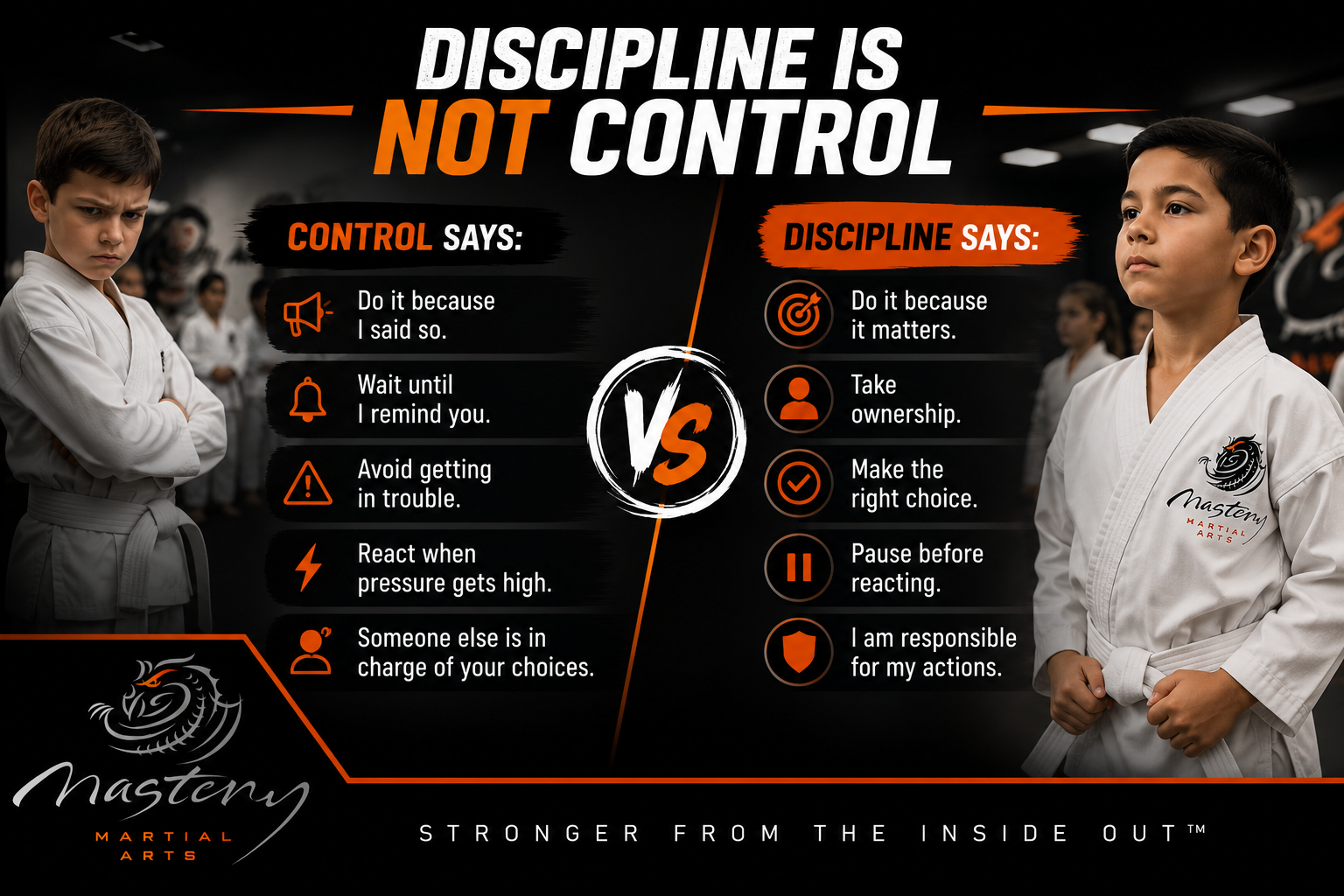
Discipline vs. Control
DISCIPLINE IS NOT CONTROL
CONTROL SAYS:
Do it because I said so.
Wait until I remind you.
Avoid getting in trouble.
React when pressure gets high.
Someone else is in charge of your choices.
DISCIPLINE SAYS:
Do it because it matters.
Take ownership.
Make the right choice.
Pause before reacting.
I am responsible for my actions.
Use this image after this section.
How Parents Can Teach Discipline Without Yelling
Here are seven practical ways parents can help children build discipline at home.
1. Make the Expectation Clear
Children cannot meet expectations they do not understand.
Be simple.
Be specific.
Be calm.
Instead of:
“Why do you always make this so difficult?”
Try:
“Your job is to put your shoes by the door before dinner.”
Clear expectations create less conflict.
2. Use Fewer Words
When parents are frustrated, they often explain too much.
Children tune out long lectures.
Use fewer words.
Say:
“Backpack first.”
“Try again.”
“Use a calm voice.”
“Hands to yourself.”
“Finish what you started.”
Short, calm language is easier for children to process.
3. Let Practice Do the Teaching
If your child forgets, rushes, interrupts, or quits, treat it like a skill that needs practice.
Not a character flaw.
Not a personal failure.
Not proof that they are disrespectful.
A child who struggles with discipline needs more practice, not more shame.
Ask:
“What can you do differently next time?”
“What is your next step?”
“What would better focus look like right now?”
Practice builds the skill.
4. Praise Self-Control When You See It
Many parents correct poor behavior but miss moments of progress.
When your child shows discipline, name it.
Say:
“I noticed you waited your turn. That showed self-control.”
“You wanted to quit, but you kept going. That showed discipline.”
“You got upset, but you used your words. That showed maturity.”
Children repeat what gets recognized.
5. Avoid Rescuing Every Time
If a child forgets something, pause.
If they rush through something, have them redo it.
If they make a poor choice, help them repair it.
The goal is not punishment.
The goal is ownership.
Children learn discipline when they experience the connection between their choices and outcomes.
Internal link to add:
Why Children Need to Struggle to Grow
6. Build Routines
Discipline becomes easier when the routine does not change every day.
Morning routine.
School routine.
Homework routine.
Martial arts class routine.
Bedtime routine.
Routines reduce decision fatigue.
They help children know what comes next.
Over time, routines become habits.
And habits make discipline feel more natural.
7. Connect Discipline to Identity
The deepest goal is not a cleaner room.
The goal is helping your child become someone who follows through.
Say:
“You are becoming someone who can be trusted.”
“That choice showed discipline.”
“You handled that like a leader.”
“You controlled your body even though you were frustrated.”
“That is what responsible people do.”
When children connect discipline to identity, it becomes more than a rule.
It becomes part of who they believe they are becoming.
Internal link to add:
Children Become the Story They Tell Themselves
Why Some Kids Struggle With Discipline
Some children struggle with discipline because they are defiant.
But many struggle for deeper reasons.
They may be tired.
Overstimulated.
Anxious.
Unprepared.
Immature.
Distracted.
Afraid of failing.
Unsure where to start.
Lacking confidence.
Or simply not practiced enough yet.
This is why discipline must be taught with both structure and patience.
Children need expectations.
But they also need encouragement.
They need standards.
But they also need support.
They need correction.
But they also need belief.
That combination is powerful.
Support without standards can become permissive.
Standards without support can feel harsh.
But support plus standards helps children grow.
Research-Backed Insight
One important child-development principle is self-regulation.
Self-regulation is the ability to manage emotions, attention, behavior, and impulses.
Children are not born with fully developed self-regulation.
They build it through repeated practice, supportive relationships, predictable structure, and opportunities to make better choices over time.
That means discipline is not simply something children “have” or “do not have.”
It is something they develop.
Every time a child pauses before reacting, listens when distracted, tries again after frustration, or follows through on a responsibility, they are strengthening self-regulation.
That is why discipline grows through practice.
Not pressure alone.
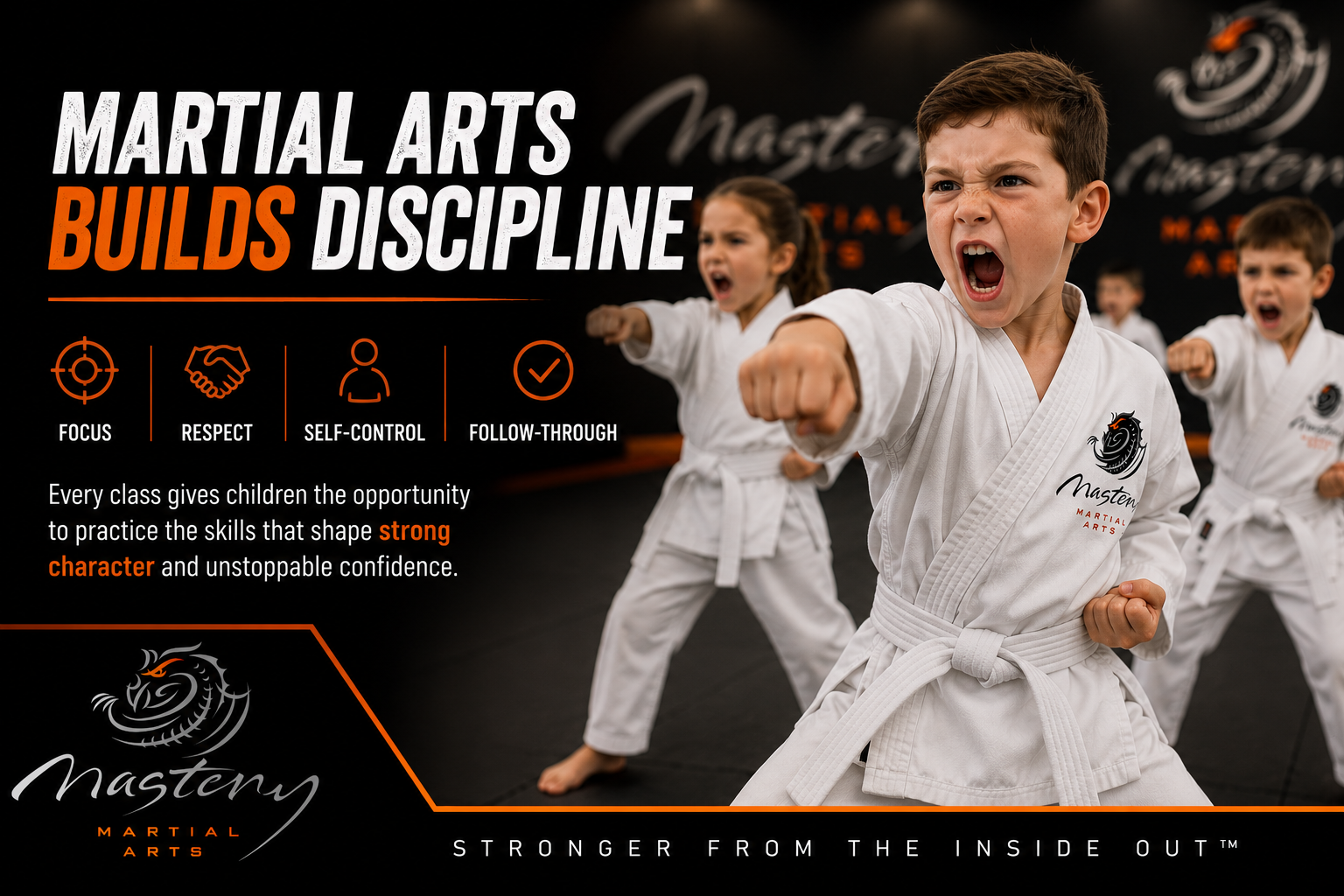
Why Martial Arts Helps Kids Build Discipline
Martial arts gives children a place to practice discipline in a way they can feel.
They do not just hear:
“Pay attention.”
They practice focus.
They do not just hear:
“Show respect.”
They practice respect.
They do not just hear:
“Control yourself.”
They practice controlling their body, voice, emotions, and effort.
In class, children learn to:
Stand still
Listen carefully
Follow directions
Wait their turn
Respect instructors
Practice with partners
Keep going when corrected
Control their body
Use a strong voice
Finish what they start
That is why martial arts is so powerful.
It turns discipline into an experience.
Children can feel themselves improving.
And when they feel that improvement, they begin to believe:
“I can control myself.”
“I can focus.”
“I can follow through.”
“I can do hard things.”
Internal link to add:
Building Confidence in Children Through Martial Arts
What Parents Tell Us
One Barrington parent shared how Mastery helped his son grow in confidence, focus, and discipline:
“Our son has grown tremendously in confidence, focus, and discipline, and the impact has carried over into school and other parts of his life.
Ms. Lemoi and Mr. Parks are exceptional teachers. They are encouraging, respectful, and hold kids to high standards in a way that makes their achievements feel truly earned.
Highly recommend to any parent looking for more than just an activity.”
— Aaron Vieira, Mastery Martial Arts Barrington Parent
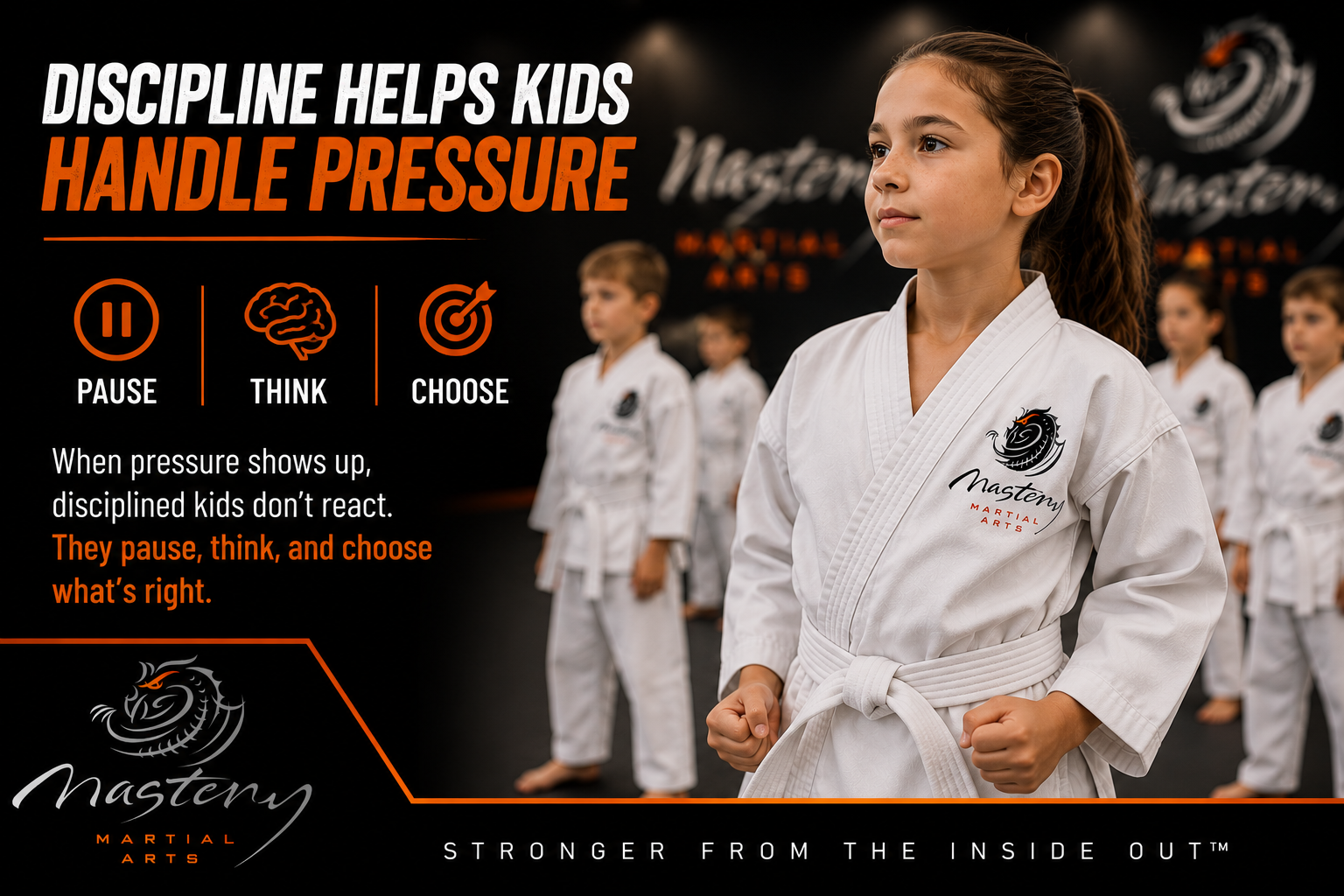
Discipline Helps Kids Handle Peer Pressure
Discipline matters most when no parent is standing beside the child.
As children get older, they will face moments where they need to choose.
Do I follow the crowd?
Do I say no?
Do I speak up?
Do I walk away?
Do I control myself?
Do I do what is right?
That is where discipline becomes character.
A disciplined child is not perfect.
But they are more prepared to pause.
Think.
Choose.
And act from values instead of pressure.
Internal link to add:
Why Confident Kids Handle Peer Pressure Better
Frequently Asked Questions
How do you teach kids discipline without yelling?
You teach kids discipline without yelling by using clear expectations, calm consistency, routines, natural consequences, and repeated practice. Yelling may create short-term compliance, but self-discipline grows when children learn how to manage their own choices.
Why does my child only listen when I yell?
Many children only listen when parents yell because they have learned that the raised voice is the real signal. To change this, make calm directions meaningful. Give clear expectations, follow through consistently, and avoid repeating the same request many times.
What is the difference between discipline and punishment?
Punishment focuses on what happens after a mistake. Discipline focuses on teaching the skill a child needs before the next moment. Discipline helps children build self-control, responsibility, and better decision-making.
How can I help my child build self-control?
Help your child build self-control by giving them opportunities to pause, wait, listen, follow directions, and recover from frustration. Praise small moments of control and help them practice again when they struggle.
What are examples of discipline for kids?
Examples of discipline include listening the first time, waiting their turn, finishing homework, controlling emotions, keeping hands to themselves, following a routine, practicing a skill, and doing what needs to be done before doing what they want to do.
Why does my child struggle with discipline?
Children may struggle with discipline because of immaturity, distraction, low frustration tolerance, anxiety, lack of practice, unclear expectations, or inconsistent structure. Discipline is a skill, and many children need repeated practice before it becomes natural.
Can martial arts help with discipline?
Yes. Martial arts helps children build discipline by practicing focus, respect, self-control, listening, effort, responsibility, and follow-through in every class.
How does discipline build confidence?
Discipline builds confidence because children gain proof that they can control themselves, follow through, and make better choices. Every disciplined action becomes evidence that they are capable.
How do I stop nagging my child?
Start by giving one clear expectation, then allow your child to own the next step. Use fewer reminders, ask ownership-based questions, and follow through calmly. The goal is to transfer responsibility from the parent to the child.
What age should kids start learning discipline?
Children can begin learning discipline as toddlers through simple routines, waiting, cleaning up, following one-step directions, and practicing calm behavior. Discipline should grow gradually as the child matures.
About This Topic
Discipline is one of the most important life skills children can develop. It helps kids build focus, self-control, responsibility, emotional regulation, confidence, and follow-through. When discipline is taught through structure, practice, and encouragement, children learn how to manage themselves instead of simply reacting to pressure.
About Mastery Martial Arts
At Mastery Martial Arts, we help children build more than physical skills.
We help them develop confidence, focus, discipline, respect, resilience, responsibility, and leadership.
Every class gives students opportunities to practice listening, effort, self-control, communication, respect, and follow-through.
That is what we mean by:
Stronger From The Inside Out™
Find a Mastery Martial Arts Location Near You
Mastery Martial Arts Warwick, RI
Mastery Martial Arts Coventry, RI
Mastery Martial Arts Johnston, RI
Mastery Martial Arts Smithfield, RI
Mastery Martial Arts Barrington, RI
Mastery Martial Arts East Greenwich, RI
Mastery Martial Arts Cumberland, RI
Mastery Martial Arts North Attleboro, MA
Ready to Help Your Child Build Discipline?
Discipline is not built in one lecture.
It is built through practice.
One focused moment.
One better choice.
One calm correction.
One completed responsibility.
One opportunity to try again.
At Mastery Martial Arts, we help children develop the confidence, focus, and discipline they need at home, in school, and in life.
Schedule your child’s Free Introductory Lesson today:
Or call 888-MASTERY to learn more.
Mastery Martial Arts — Stronger From The Inside Out™
