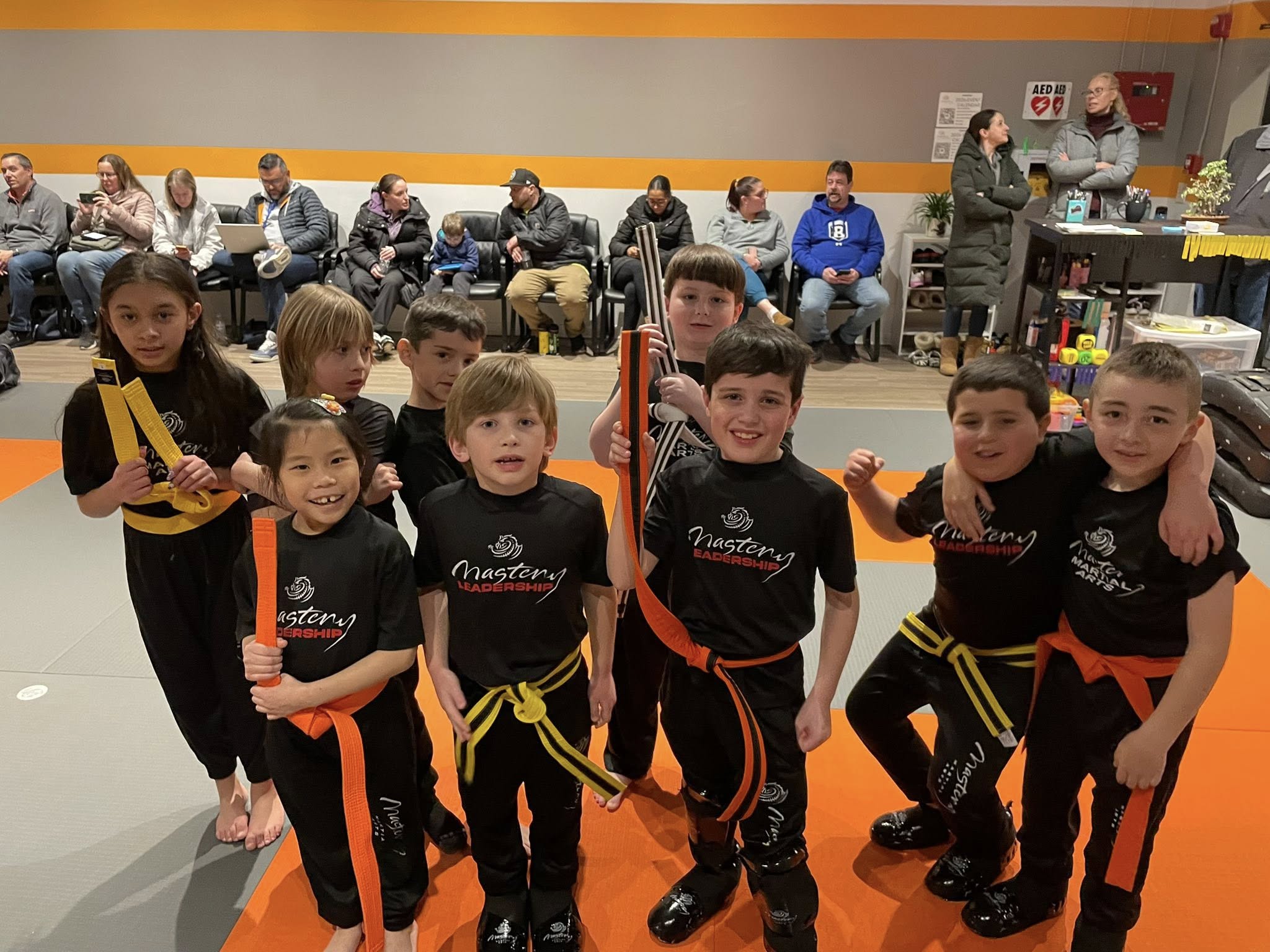
Why Kids Need Safe Places to Practice Being Brave
Why Kids Need Safe Places to Practice Being Brave
Every child feels fear.
Fear of raising their hand.
Fear of making a mistake.
Fear of looking silly in front of other kids.
Fear of failing.
This is completely normal.
In fact, fear is part of how the brain is designed to keep us safe.
But here’s the challenge many parents face today.
If children never get the chance to practice moving through fear, they begin building a habit of avoiding it.
And over time, avoidance becomes their default response to life’s challenges.
This is why children don’t just need encouragement.
They needsafe environments where they can practice being brave.
Courage Is Not Something Kids Are Born With
Many people believe courage is a personality trait.
Something you either have or you don’t.
But research and real-life experience tell us something different.
Courage is a trained behavior.
It grows through experience.
Every time a child:
tries something difficult
pushes through frustration
speaks in front of others
attempts a skill they are unsure about
their brain learns something powerful.
“I can handle this.”
That message rewires how they see themselves.
Why Avoiding Fear Makes Fear Grow
The brain learns through repetition.
When a child avoids something scary, their brain receives this message:
“This situation is dangerous.”
The more avoidance happens, the stronger that belief becomes.
Eventually the fear spreads.
A child who avoids speaking in class may later avoid:
joining group activities
trying new sports
meeting new friends
sharing ideas
Avoidance slowly shrinks their world.
But when children experience small victories over fear, something different happens.
Their brain learns:
“I was nervous… and I handled it.”
That belief builds real confidence.
You can see how these moments contribute to a child’s psychological immune systemin this article:
https://masteryma.com/post/psychological-immune-system-in-children
The Power of Small Courage Moments
Confidence rarely comes from one big achievement.
It grows from hundreds of small moments.
Moments like:
raising a hand in class
introducing themselves to someone new
trying a difficult skill
continuing after a mistake
performing in front of others
Each of these experiences sends a message to the brain:
“I am capable.”
Over time, these small courage moments stack together.
And something incredible begins to happen.
Children stop asking:
“Can I do this?”
And they start saying:
“Let me try.”
Why Environment Matters So Much
Children grow fastest in environments where three things exist.
1. Challenge
Kids need goals that stretch them slightly beyond their comfort zone.
Too easy and they get bored.
Too hard and they give up.
But the right level of challenge builds resilience.
2. Support
Children also need encouragement while they try.
Knowing someone believes in them makes a powerful difference.
Support helps kids stay calm when things feel difficult.
If you'd like ideas for how parents can create this kind of supportive environment at home, our free guide may help:
https://masteryma.com/nomoreyelling
3. Repetition
Confidence grows through repetition.
The brain builds belief through repeated experiences of trying, adjusting, and improving.
That’s why environments where children practice courage regularly are so powerful.
What Parents Often Notice First
When children begin practicing courage regularly, parents often notice subtle changes.
Your child may begin to:
handle frustration more calmly
try again after mistakes
speak up more confidently
encourage other kids
take initiative
These changes may seem small.
But they represent something much bigger happening inside your child.
Their identity is shifting.
They are beginning to see themselves as someone who can handle challenges.
The Hidden Skill Behind Confidence
Confidence is not the absence of fear.
Confidence is the belief that you can handle what happens next.
And that belief comes from experience.
Children develop it when they repeatedly practice courage in environments that encourage growth.
That is why environments built around challenge, encouragement, and progress can shape a child’s future in powerful ways.
The Long-Term Impact
Years from now, your child will face moments where courage matters.
Moments like:
standing up for themselves
speaking in front of others
making difficult decisions
resisting peer pressure
trying something new
In those moments, they won’t rely on a lecture.
They will rely on their identity.
They will rely on what they believe about themselves.
And that belief was built through hundreds of small experiences when they were young.
Moments where they discovered:
“I was nervous… and I still did it.”
What East Greenwich Families Are Saying
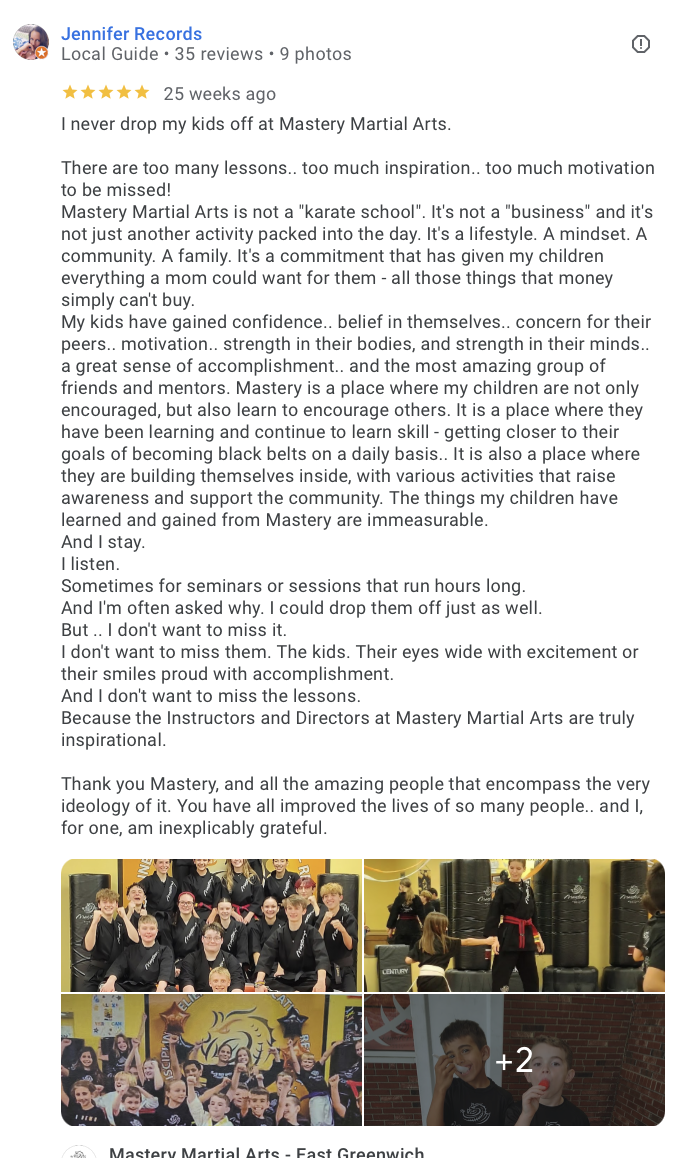
Many parents enroll their child in martial arts hoping they’ll gain confidence, discipline, and focus. What often surprises them is how deeply the experience impacts the entire family.
That’s exactly what this East Greenwich parent shared about their experience at Mastery Martial Arts:
“Mastery is truly a life changing experience — for the students and parents alike.”
One of the most powerful parts of child development is when confidence begins following a child into every area of life — at school, socially, emotionally, and mentally.
As this parent beautifully explained:
“‘Yes I can’ follows our son everywhere, and things he thought he couldn’t do, he’ll at least try.”
At Mastery Martial Arts East Greenwich, our mission is to help children develop confidence, leadership, resilience, emotional strength, and belief in themselves through structured martial arts training and positive mentorship.
Many families discover that Mastery becomes much more than an activity — it becomes a community built around growth, encouragement, and helping children become their best.
As this parent shared:
“Mastery truly nurtures future leaders.”
Read the full parent review here:
https://maps.app.goo.gl/Ax69vQPKLLNvDHkQ9
From Mastery Martial Arts
This article was created by Mastery Martial Arts, a youth development academy dedicated to helping children build confidence, resilience, emotional strength, and leadership skills.
At Mastery Martial Arts, students develop more than martial arts ability. They strengthen their identity, courage, focus, and emotional resilience, learning how to face challenges with confidence and perseverance.
Families throughout Rhode Island and Massachusetts trust Mastery Martial Arts as a place where children develop theirInner Black Belt mindset— the belief that they can handle difficult things and continue growing.
Learn more about how Mastery Martial Arts helps children build confidence and resilience:
