psychological-immune-system-in-children
The Psychological Immune System
Why Confident Kids Are Much Harder to Manipulate
Think about the human body for a moment.
Your body has an immune system that protects you from viruses and bacteria.
Your child’s mind has something similar.
It’s called apsychological immune system.
This mental immune system helps protect children from things like:
peer pressure
manipulation
social pressure
fear narratives
negative influences
identity attacks
When a child’s psychological immune system is strong, they can hear ideas without automatically absorbing them.
When it’s weak, outside voices begin shaping their beliefs, their confidence, and even their identity.
And in today’s world, children face more outside influence than ever before.
Social media.
Algorithms.
Constant comparison.
Pressure to fit in.
This is why developing a strong psychological immune system is no longer optional.
It’s essential.
The 7 Pillars of a Strong Psychological Immune System
1. Identity Strength
Children with a weak sense of identity often find themselves constantly asking:
“What do people think of me?”
“Do I fit in?”
“Am I good enough?”
When identity is unclear, children begin borrowing their identity from the people around them.
They follow the crowd because they don’t yet know who they are.
But children with strong identity think differently.
They begin saying things like:
“This is who I am.”
“These are my values.”
“This is how I act.”
When kids develop identity anchors like:
“I am brave.”
“I am respectful.”
“I am disciplined.”
They become much harder to influence negatively.
Identity gives children a stable foundation they can stand on.
If you're interested in recognizing how this kind of grounded identity shows up in children, you may find this helpful:
👉https://masteryma.com/post/signs-of-quiet-confidence-in-children
2. Emotional Regulation
Many forms of pressure and manipulation work by triggering strong emotions.
Fear.
Anger.
Shame.
Urgency.
When children cannot regulate their emotions, they often react quickly without thinking.
This can lead to:
frustration meltdowns
shutting down when things get difficult
anxiety when facing challenges
avoiding new experiences
But when children learn to pause, breathe, and regulate their emotions, something powerful happens.
Their thinking brain stays online.
They can stay calm, think clearly, and solve problems instead of reacting emotionally.
Calm confidence becomes one of their greatest strengths.
If your child struggles with emotional frustration, this article may help explain why:
👉https://masteryma.com/post/child-gets-frustrated-easily-how-to-help
3. Self-Efficacy
Self-efficacy simply means:
“I believe I can handle challenges.”
Kids who lack this belief often:
give up quickly
avoid trying new things
fear making mistakes
wait for adults to solve problems
Kids with strong self-efficacy say something very different.
They say:
“Let me try.”
You can see this moment clearly when a child breaks a board for the first time.
In that instant their brain shifts from:
“I can’t.”
to
“I can.”
That belief becomes a powerful foundation for everything they attempt later in life.
Confidence often grows fromsmall wins that build belief over time, something we explore here:
👉https://masteryma.com/post/small-wins-build-big-confidence-in-children
4. Courage Training
Courage is not the absence of fear.
Courage means taking action even when fear is present.
Every time a child:
raises their hand in class
speaks in front of others
attempts something difficult
tries again after failing
they strengthen their courage.
Over time, fear stops being the boss.
And that is a powerful life skill.
5. Community Belonging
Humans are wired for belonging.
If children feel isolated or rejected, they often look for acceptance anywhere they can find it.
Sometimes that leads them toward unhealthy influences.
But when children belong to a positive, supportive community, something very different happens.
They feel:
seen
supported
encouraged
valued
Belonging strengthens identity.
And strong identity protects children from negative pressure.
You can see how belonging strengthens leadership and identity development here:
👉https://masteryma.com/post/why-belonging-builds-leadership-in-children
6. Values and Moral Compass
Without clear values, children often follow the loudest voice or the strongest emotion in the moment.
But when kids develop values, they begin asking better questions:
“Is this the right thing to do?”
“Is this respectful?”
“Is this responsible?”
Values create an internal decision compass.
They help children make good choices even when no one is watching.
7. Meaning and Purpose
When children feel their life has meaning, they become far more resilient.
Purpose gives direction.
Children who believe they are growing into something important develop internal motivation.
They stop waiting for approval.
They start taking initiative.
Purpose gives kids a reason to keep going when things get hard.
Why This Matters More Than Ever
Children today are growing up in a world where their attention and identity are constantly being shaped by outside influences.
Things like:
social media
constant comparison
online entertainment
digital algorithms
Their psychological immune system is being tested every single day.
The answer is not simply trying to control everything children are exposed to.
That’s impossible.
The real solution is helping children become strong enough internally to handle the world around them.
The strongest defense is not restriction.
It’s development.
How Parents Can Help Strengthen Their Child’s Psychological Immune System
Parents play a powerful role in shaping these qualities.
Here are a few simple ways you can support your child’s development at home.
Encourage Effort More Than Results
Confidence grows when children learn that effort matters more than perfection.
Instead of saying:
“Good job, you’re so talented.”
Try saying:
“I love how hard you worked on that.”
This teaches children that improvement comes through effort.
Allow Children to Face Small Challenges
It’s natural to want to protect children from struggle.
But overcoming small challenges helps children build resilience.
Let them:
solve problems
try again after mistakes
work through frustration
These moments teach children:
“I can handle difficult things.”
Model Emotional Regulation
Children learn how to handle emotions by watching the adults around them.
When parents pause, breathe, and respond calmly during stressful moments, children learn to do the same.
If you're working on creating a calmer emotional environment at home, this free resource can help:
👉https://masteryma.com/nomoreyelling
Give Children Opportunities to Lead
Confidence grows when children feel capable and responsible.
Simple opportunities help, like:
helping younger siblings
leading small family tasks
making decisions
Leadership experiences strengthen identity.
Signs Your Child’s Confidence Is Growing
Parents often notice small changes when children develop a stronger psychological immune system.
For example, your child might begin to:
try again after failing
handle frustration better
speak up with more confidence
encourage other kids
believe they can figure things out
These are powerful signs that your child’s confidence and resilience are developing.
What We’re Really Building at Mastery Martial Arts
When you zoom out, the Mastery Martial Arts program is not just about learning martial arts techniques.
It’s about helping children develop the internal strengths they need for life.
Every class helps strengthen a child’s:
identity
courage
emotional regulation
belonging
responsibility
purpose
These are the same qualities that create resilient, confident adults.
The Question Every Parent Eventually Faces
At some point, every parent asks an important question.
What kind of person will my child become when life gets difficult?
Will they shrink away from challenges?
Or will they face them with confidence and courage?
Will they follow the crowd when pressure appears?
Or will they trust themselves enough to stand on their own values?
These qualities rarely appear by accident.
They are developed through environments that encourage children to try, fail, grow, and discover what they are capable of.
And when children experience those environments early in life, something powerful begins to happen.
They stop asking:
“Can I do this?”
And they begin saying:
“Let me try.”
That simple shift can shape the direction of a child’s life.
What Johnston Families Are Saying
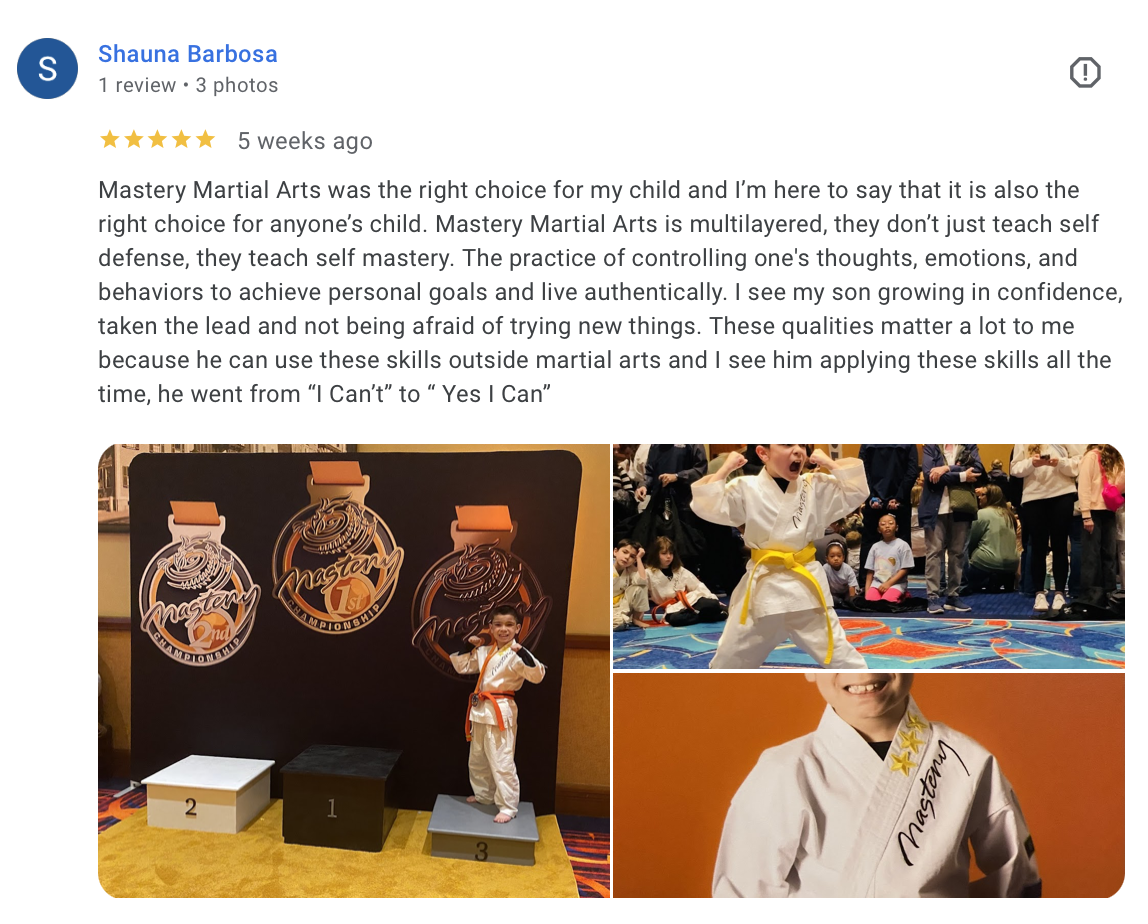
Many parents initially enroll their child in martial arts hoping they’ll gain confidence or self-defense skills. What often surprises them is how deeply the experience impacts their child’s mindset, emotional growth, and willingness to believe in themselves.
That’s exactly what this Johnston parent shared about their experience at Mastery Martial Arts:
“Mastery Martial Arts is multilayered, they don’t just teach self defense, they teach self mastery.”
One of the most important life skills a child can develop is learning how to manage their thoughts, emotions, and behaviors while continuing to move forward through challenges.
As this parent beautifully described:
“I see my son growing in confidence, taking the lead and not being afraid of trying new things.”
At Mastery Martial Arts Johnston, our mission is to help children build confidence, resilience, emotional strength, leadership, and belief in themselves through structured martial arts training and positive mentorship.
Many parents tell us the greatest transformation happens when their child begins carrying that confidence into everyday life outside the dojo.
As this parent shared:
“He went from ‘I Can’t’ to ‘Yes I Can.’”
Read the full parent review here:
https://maps.app.goo.gl/RN5kBECKTgaM4Rn78
From Mastery Martial Arts
This article was created by the team atMastery Martial Arts, a youth development academy dedicated to helping children build confidence, resilience, emotional strength, and leadership skills.
At Mastery Martial Arts, the focus goes far beyond physical training. Our programs are designed to help children strengthen theiridentity, emotional regulation, courage, and character, while learning how to navigate challenges in today’s world with confidence and self-belief.
Through structured martial arts training, leadership development, and life skill coaching, thousands of families across Rhode Island and Massachusetts have watched their children grow into more confident, focused, and resilient young leaders.
Parents often describe Mastery as a place where children develop their“Inner Black Belt”— the mindset that helps them stay calm under pressure, believe in themselves, and keep trying even when things feel difficult.
To learn more about how Mastery Martial Arts helps children build confidence, resilience, and leadership skills, visit:
