Why Kids Act Differently at Home Than They Do in Public (And What It Really Means)
Why Kids Act Differently at Home Than They Do in Public (And What It Really Means)
Many parents have experienced this.
Teachers say your child is respectful and focused.
Instructors describe them as calm and cooperative.
Then at home?
Big emotions.
Resistance.
Meltdowns.
Parents often wonder:
“Why can my child hold it together everywhere else—but not at home?”
The answer may be more reassuring than you think.
_________________________
Free Parent Resource:
If you ever catch yourself raising your voice—and wish you had calmer tools in the moment—you’re not alone.
We created afree 21-day “No More Yelling” email course to help parents stay calm, connected, and confident when emotions run high.
👉Start the free course here:
https://masteryma.com/nomoreyelling
_________________________
Home Is Where Kids Feel Safest
When children act out at home, it’s often not a sign of poor behavior.
It’s a sign of emotional safety.
Kids instinctively release emotions where they feel:
Accepted
Secure
Loved unconditionally
Home becomes the place where feelings finally come out.
This doesn’t mean boundaries aren’t needed—it means emotional regulation is still developing.
Why Structure Changes Behavior So Quickly
Kids often behave differently in structured environments because structure:
Reduces uncertainty
Clarifies expectations
Creates emotional predictability
When kids know what’s expected, their nervous system can relax.
That’s why environments that build confidence, focus, and emotional strength often bring out a calmer version of a child.
👉https://masteryma.com/post/how-martial-arts-builds-confidence-focus-emotional-strength
Emotional Regulation Is a Learned Skill
Children aren’t born knowing how to:
Pause before reacting
Express frustration calmly
Recover after disappointment
These skills must be practiced.
When kids lack emotional tools, emotions show up as behavior.
That’s not defiance—it’s communication.
Why Kids “Hold It Together” in Public
In public or structured settings, kids often:
Mask emotions
Follow cues from others
Rely on external structure
This takes energy.
By the time they’re home, emotional capacity may be depleted.
Understanding this helps parents respond with guidance instead of frustration.
Free Mastery Lesson
Many parents notice emotional regulation improve when children practice structure, focus, and recovery in the right environment. A Free Mastery Lesson gives kids a supportive space to move, focus, reset, and succeed—helping emotional control carry over into home life.
How Confidence Changes Emotional Behavior
As kids build confidence, they:
Feel safer expressing emotions verbally
Recover faster after setbacks
Need less emotional release at home
Confidence doesn’t eliminate emotions—it gives kidstools to manage them.
This is also why confident kids tend to handle pressure better as expectations grow.
👉https://masteryma.com/post/why-confident-kids-handle-pressure-better
What Parents Often Notice Over Time
With consistent guidance and structure, parents often see:
Fewer emotional explosions
Better communication
Increased independence
Greater emotional awareness
Kids don’t stop having feelings.
They learn how to navigate them.
What Smithfield Families Are Saying
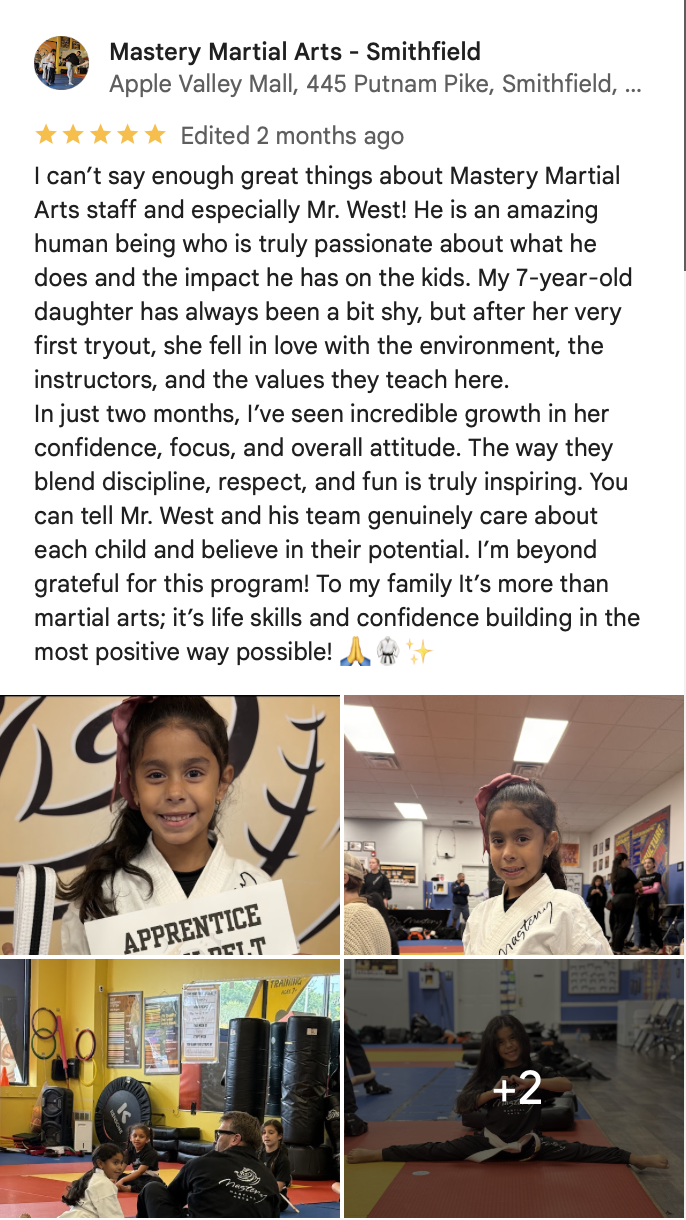
Many parents hope martial arts will help their child become more confident and focused. What often makes the biggest difference is when children feel genuinely supported, encouraged, and believed in by mentors who truly care about their growth.
That’s exactly what this Smithfield parent shared about their daughter’s experience at Mastery Martial Arts:
“In just two months, I’ve seen incredible growth in her confidence, focus, and overall attitude.”
For many children, confidence begins growing when they feel emotionally safe, encouraged to try new things, and surrounded by positive leadership that helps bring out the best in them.
As this parent beautifully described:
“My 7-year-old daughter has always been a bit shy, but after her very first tryout, she fell in love with the environment, the instructors, and the values they teach here.”
At Mastery Martial Arts Smithfield, our mission is to help children build confidence, discipline, resilience, focus, and emotional strength through structured martial arts training and positive mentorship.
Many families discover that the greatest transformation happens when children begin carrying that confidence and positivity into everyday life outside the dojo as well.
As this parent shared:
“To my family it’s more than martial arts; it’s life skills and confidence building in the most positive way possible!”
Read the full parent review here:
https://maps.app.goo.gl/ABji27REeKuYzxEY8
A Reframe That Helps Parents Breathe Easier
If your child struggles most at home, it doesn’t mean you’re doing something wrong.
It often means:
You’re their safe place
They trust you
Their emotional skills are still forming
With the right support, emotional release turns into emotional regulation.
Author Bio
This article was written by the leadership team behind Mastery Martial Arts, where martial arts is used as a tool to help children build confidence, focus, emotional strength, and character. For over two decades, Mastery has partnered with families to support kids through the emotional stages that shape lifelong resilience.
Join Our Mastery Parents Community
Parenting emotionally aware kids is easier when you’re surrounded by parents who understand the journey. Join our Mastery Parents Facebook Community to learn, connect, and grow together.
👉https://www.facebook.com/share/g/1BnGCZYFPa/
Emotional regulation doesn’t happen by accident.
Activate your child’s free Mastery lesson by clicking this link:
👉https://masteryma.com
