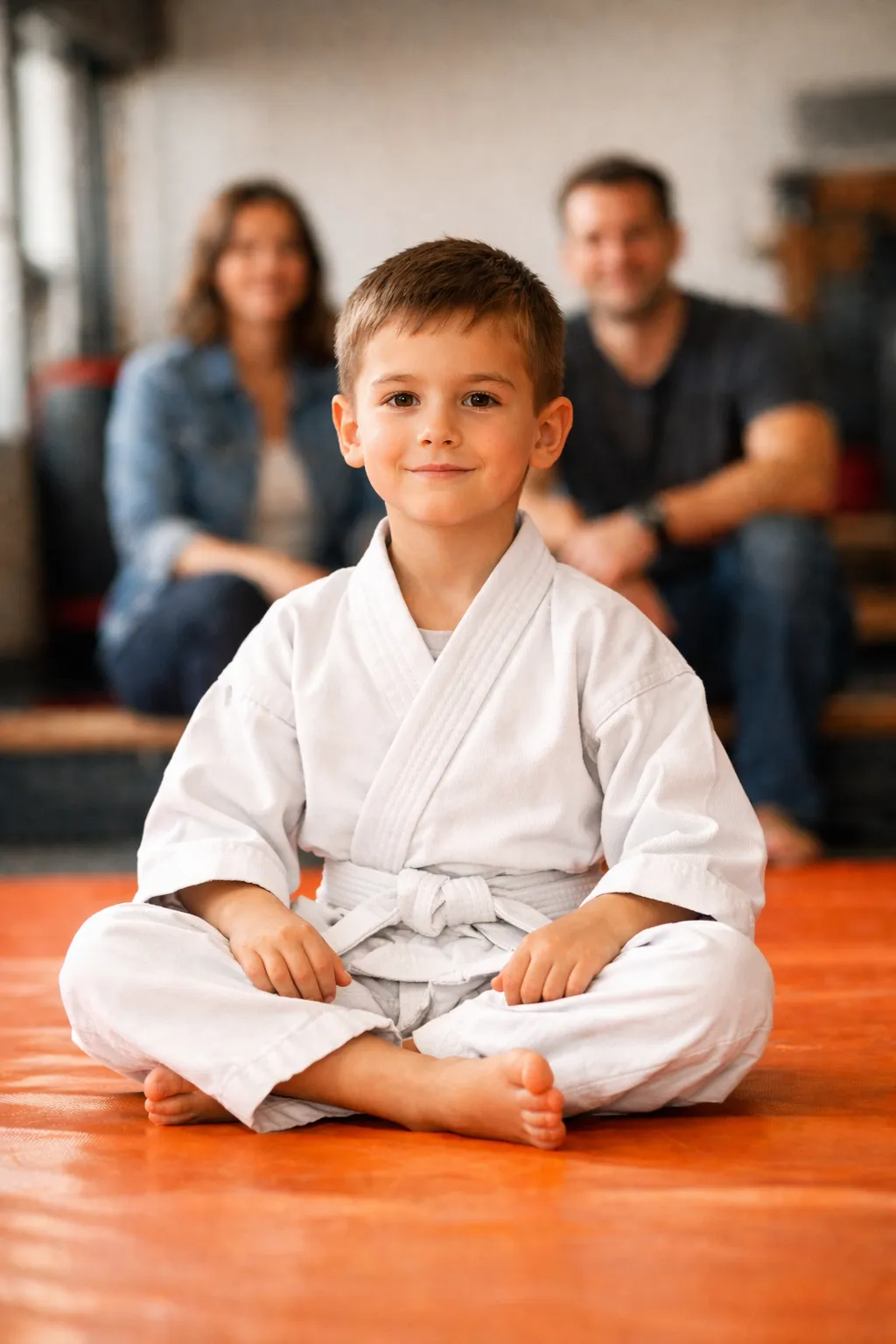
7 reasons why kids should practice confidence now
7 Reasons Why Kids Under 10 Should Be Practicing Confidence Now (Not Later)
Most parents wait for a problem to appear before they act. But when it comes to confidence, waiting is the problem.
By Mastery Martial Arts · 8 min read
Here's something most parents don't realize until it's already happened: by the time a child reaches their teens, the foundation of how they see themselves is largely already in place. The beliefs they carry — "I'm capable," "I can figure this out," "it's okay to fail and try again" — or the opposite of those beliefs — were built quietly, brick by brick, in the years before middle school.
Confidence isn't a switch that flips on when a child turns thirteen. It's a practice. It's a habit. And like all habits, the earlier it starts, the more deeply it takes root.
If you have a child under ten, you are sitting inside one of the most powerful developmental windows of their entire life. This isn't meant to create pressure — it's meant to offer a perspective shift. The things your child is doing right now, the way they approach a challenge, how they talk to themselves when they make a mistake, whether they raise their hand or stay silent — these patterns are forming. And you have real influence over how they form.
Here are seven reasons why confidence-building can't wait — and what that actually means for your child.
1. Confidence is easier to build early than fix later
Before the noise of peer comparison, social media, and self-criticism sets in, young children have something remarkable going for them: openness. They aren't yet carrying years of "I'm not good enough" or "what will people think?" They're willing to try, to fall down, to get back up — often without a second thought.
That openness is the window. Not because kids are naive, but because they're genuinely available for growth. They haven't yet decided who they are. And that means the experiences they have right now — trying something hard, being encouraged to push through, being celebrated for effort rather than outcome — land in fertile ground. Waiting until self-doubt has already become a habit means spending years undoing what could have been built in the first place.
2. The way your child sees themselves is forming right now
Children are always writing their own story — they just don't know it yet. Every experience, every comment from a teacher, every moment of success or embarrassment is adding a sentence to the narrative they carry about who they are. By the time they're teenagers, that narrative feels permanent. "I'm shy." "I'm not athletic." "I'm bad at speaking up." What started as a moment — one uncomfortable experience, one awkward situation — became an identity.
The goal in these early years isn't to shield children from difficulty. It's to give them enough positive reps that their default story becomes: "I can do hard things." Not because you've told them so, but because they've lived it. That's a completely different kind of confidence — earned, not gifted.
"The goal isn't to protect your child from hard things. It's to make sure they know they can handle them."
3. Confidence changes how they handle challenges
Watch two kids face the same obstacle — say, learning a new skill they're not immediately good at. One kids sighs, says "I can't do this," and finds a reason to quit. The other looks frustrated, tries again, and asks for help. The difference isn't talent. It's almost never talent. It's whether they believe that effort matters — that struggling through something is the process, not a signal to give up.
Confident kids don't avoid hard things. They step in. They're not fearless, but they've learned through experience that discomfort is temporary and growth is real. That belief — built through practice, not just reassurance — is what makes the difference between a child who reaches their potential and one who stops just short of it for years.
4. It impacts how they show up socially
Long before your child says a single word in a new situation, their confidence has already communicated something. The way they walk into a room. Whether they make eye contact. How they respond when someone says hello. Confidence is physical before it's verbal — and children who have practiced it show up differently in social situations than children who haven't.
This matters enormously in early childhood, when friendships are forming, when group dynamics are being established, when kids are figuring out who they are in relation to others. The child who speaks up, introduces themselves, tries to join the game — that child has real advantages. Not because they're louder or bolder by nature, but because they've been given tools and experiences that make social confidence feel achievable rather than terrifying.
5. It affects how they respond to pressure and adversity
Life is going to throw things at your child. Tests. Disappointments. Social rejection. The question isn't whether they'll face adversity — it's how they'll respond when they do. Confident kids have a fundamentally different relationship with setbacks. They don't crumble as easily. They don't catastrophize. When something goes wrong, they're more likely to reset, look at the situation clearly, and keep moving.
That resilience isn't magic — it comes from accumulated experience with small doses of challenge handled well. Every time a child pushes through something uncomfortable and comes out the other side intact, they're building evidence: "I can get through things." That evidence becomes a buffer when the harder moments of life arrive.
6. Habits formed now last for years
The behaviors your child practices between ages five and ten are quite literally becoming their defaults. Neuroscience makes this clear: the brain is in a period of explosive development during these years, and the patterns laid down now — how to respond to failure, whether to ask for help, how to regulate emotion under pressure — become deeply ingrained. They don't disappear at adolescence. They strengthen.
This cuts both ways. A child who has practiced quitting when things get hard, avoiding speaking up, or seeking external validation for every decision is building those as defaults too. The patterns your child rehearses right now — not just occasionally, but regularly, through structured practice — will follow them into their teenage years and beyond. That's not a threat. It's a reality that, when understood early, becomes an incredible opportunity.
7. Waiting doesn't build confidence — practice does
There's a common misconception that confidence is something kids grow into. That eventually, with enough time and experience, it just shows up. But confidence isn't passive. It doesn't arrive through waiting — it arrives through doing. Through being put in situations that require courage and getting through them. Through failing and being coached to try again. Through being seen, challenged, and celebrated in ways that build genuine self-belief rather than empty praise.
A child who is kept comfortable, always protected from discomfort, always given the easy path — that child isn't building confidence. They're building a fear of anything difficult. The gift you give a young child when you put them in challenging, structured, supported environments isn't cruelty. It's preparation. It's the single most loving thing a parent can do for their child's future.
"You don't want to wait until your child is struggling… to wish they had started sooner."
The truth most parents feel but don't always say
Every parent has a version of this fear: their child, years from now, held back by something that could have been addressed sooner. Not academically. Not athletically. But internally. A deep uncertainty about whether they're capable, whether they belong, whether they're worth listening to.
That fear is worth listening to. Not because it predicts the future, but because it points toward something real: the early years matter. The habits, beliefs, and experiences forming in your child right now are not neutral. They're either building a foundation of confidence or they're not. And the window to shape them is open right now.
That's why we start early at Mastery Martial Arts
We don't just teach kicks and punches. We coach kids how to believe in themselves, take action, and feel genuinely proud of who they're becoming. Every class is designed to give children the kind of structured challenge, positive repetition, and meaningful encouragement that builds confidence from the inside out — not performance, not trophies, not false praise. Real belief, earned through real effort.
If your child is between 4 and 10 years old, there is no better time to start. The window is open. The practice is here.
Learn how it works
What Coventry Families Are Saying
https://maps.app.goo.gl/6NGmLxjkc2gJVKMm8
Many parents want to know if martial arts can truly help their child build confidence, emotional control, and self-discipline — especially at a young age.
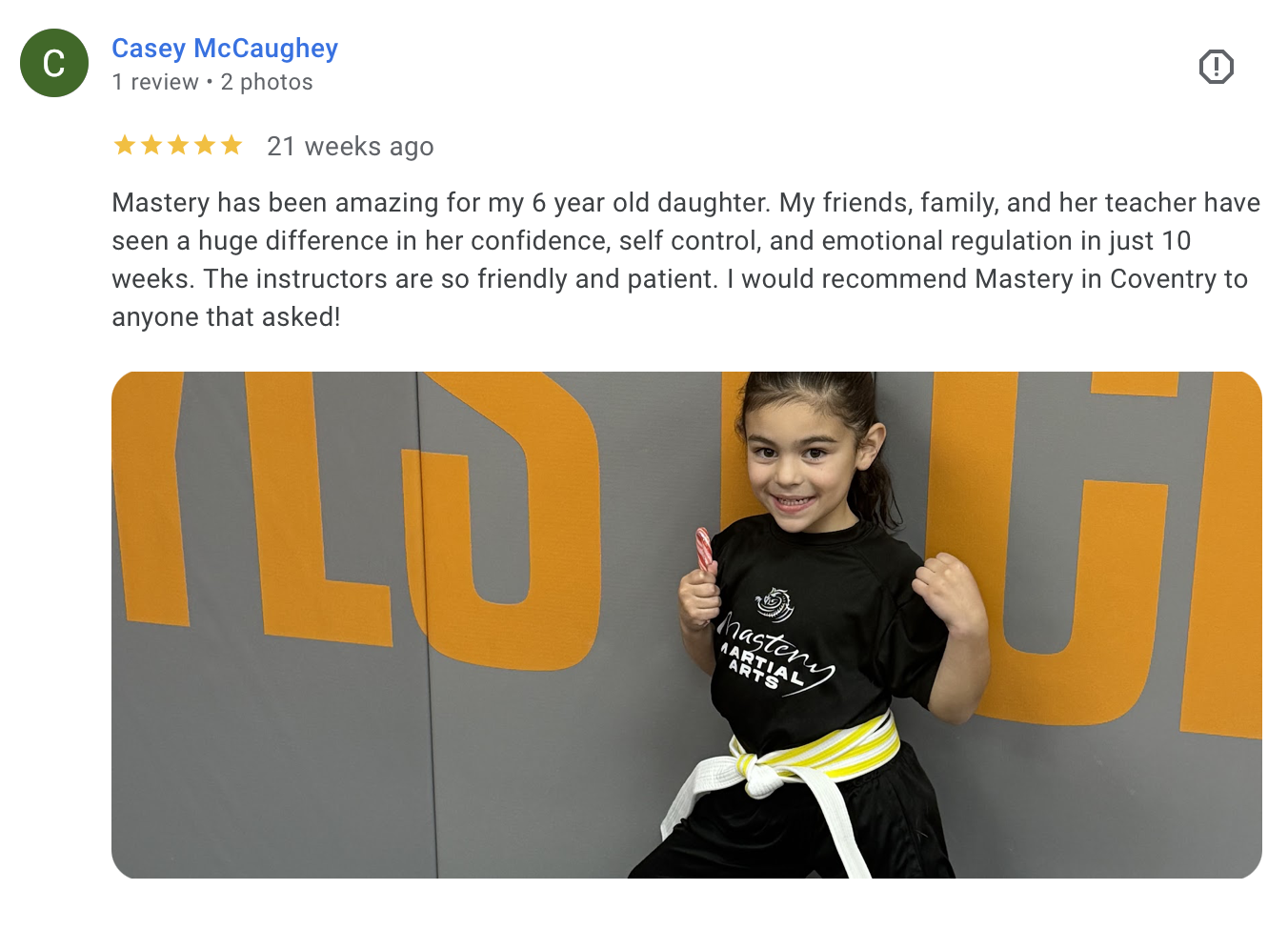
That’s why stories like this from a Coventry parent are so meaningful:
“Mastery has been amazing for my 6 year old daughter. My friends, family, and her teacher have seen a huge difference in her confidence, self control, and emotional regulation in just 10 weeks.”
One of the most rewarding parts of child development is when growth becomes visible not only at home — but at school, around friends, and in everyday life.
At Mastery Martial Arts Coventry, our goal is to help children develop confidence, focus, emotional resilience, and leadership skills through structured martial arts training in a positive and encouraging environment.
Read the full parent review here:
https://maps.app.goo.gl/6NGmLxjkc2gJVKMm8
Mastery Martial Arts specializes in developing confident, focused, and resilient children through structured martial arts training. By combining physical skill development with emotional and cognitive growth, Mastery helps kids build what can be described as a psychological immune system—allowing them to handle pressure, resist negative influences, and trust themselves.
