Your Child’s Brain Doesn’t Know the Difference Between a Bomb and a Screaming Parent
Your Child’s Brain Doesn’t Know the Difference Between a Bomb and a Screaming Parent
A Child Doesn’t Need a War Zone to Feel Combat-Level Stress
They just need the wrong living room.
Research in developmental neuroscience has shown something deeply important:
When children are exposed to frequent, intense family conflict, their brains activate threat-processing systems similar to those seen in combat-exposed adults.
This is not exaggeration. It’s neurobiology.
The amygdala — the brain’s alarm center — does not interpret context.
It responds to perceived threat.
To a developing nervous system, raised voices, unpredictable anger, or repeated escalation can feel like danger.
This isn’t about being “too sensitive.”
It’s biology.
What the Research Actually Shows
A study published inDevelopment and Psychopathologyexamining children exposed to high levels of interparental conflict found measurable differences in threat-processing regions of the brain.
Neuroimaging data showed heightened activation in the amygdala — the same brain region responsible for detecting danger — in patterns similar to those observed in adults exposed to high-threat environments.
Source:
Davies, P. T., Sturge-Apple, M. L., Cicchetti, D., & Cummings, E. M. (2012). The role of children’s threat appraisal in the association between interparental conflict and child adjustment.Development and Psychopathology.
https://www.cambridge.org/core/journals/development-and-psychopathology/article/effects-of-exposure-to-interparental-conflict-on-childrens-stress-response/
The key point is this:
The brain adapts to the environment it experiences most.
If conflict is frequent and intense, the nervous system becomes hyper-alert.
If leadership is calm and consistent, the nervous system stabilizes.
Patterns form either way.
And patterns can be changed.
What Happens Inside the Body
When a child experiences repeated emotional escalation:
• The amygdala becomes hyper-responsive
• Stress hormones increase
• The body shifts into fight, flight, or freeze
• Blood flow moves away from reasoning centers
• Emotional regulation becomes more difficult
Over time, the brain can begin expecting threat.
That expectation affects focus, learning, and behavior.
Not because the child is defiant.
Because their nervous system is doing its job.
This Is Not About Guilt. It’s About Awareness.
Every family argues.
Every parent loses patience.
This is not about perfection.
It’s about pattern.
Children do not remember isolated mistakes.
They adapt to repeated emotional climates.
If yelling becomes normal, their nervous system adjusts.
If calm correction becomes the standard, their nervous system adjusts.
The question isn’t: “Have I ever yelled?”
The question is: “What environment am I consistently creating?”
Why Yelling Feels Powerful (But Weakens Authority)
Yelling works in the moment.
It triggers compliance through fear.
But it reduces trust long-term.
And over time, children stop responding to volume — because volume becomes predictable.
True authority does not require escalation.
It requires regulation.
It requires steadiness.
It requires leadership.
That’s why we created a free resource for parents who want practical tools to shift the emotional tone of their home.
If you want to lead with calm strength instead of reactive emotion, access our free 21-Day No More Yelling Course here:
👉https://masteryma.com/nomoreyelling
It’s structured.
It’s realistic.
It’s built for busy families.
Belonging and Emotional Safety Build Leaders
At Mastery Martial Arts, our wall says:
Discipline.
Belief.
Communication.
Respect.
Those values cannot grow in an environment that feels unsafe.
Emotional safety is not softness.
It is strength under control.
If you want to recognize grounded confidence in your child, read:
👉https://masteryma.com/post/signs-of-quiet-confidence-in-children
If your child struggles with frustration or emotional overload, this may help:
👉https://masteryma.com/post/child-gets-frustrated-easily-how-to-help
Regulation builds resilience.
Resilience builds leadership.
The Good News
Brains are adaptable.
Nervous systems can recalibrate.
Homes can shift.
Children are incredibly resilient when leadership becomes steady.
You do not need to be perfect.
You need to be intentional.
And when home leadership aligns with structured environments like Mastery, transformation accelerates.
Ready to Strengthen the Emotional Climate of Your Home?
Start with awareness.
Then build structure.
Access your free 21-Day No More Yelling Course here:
👉https://masteryma.com/nomoreyelling
And if you’re looking for a structured youth development program that reinforces emotional regulation through movement:
Calm homes build confident children.
What Warwick Families Are Saying
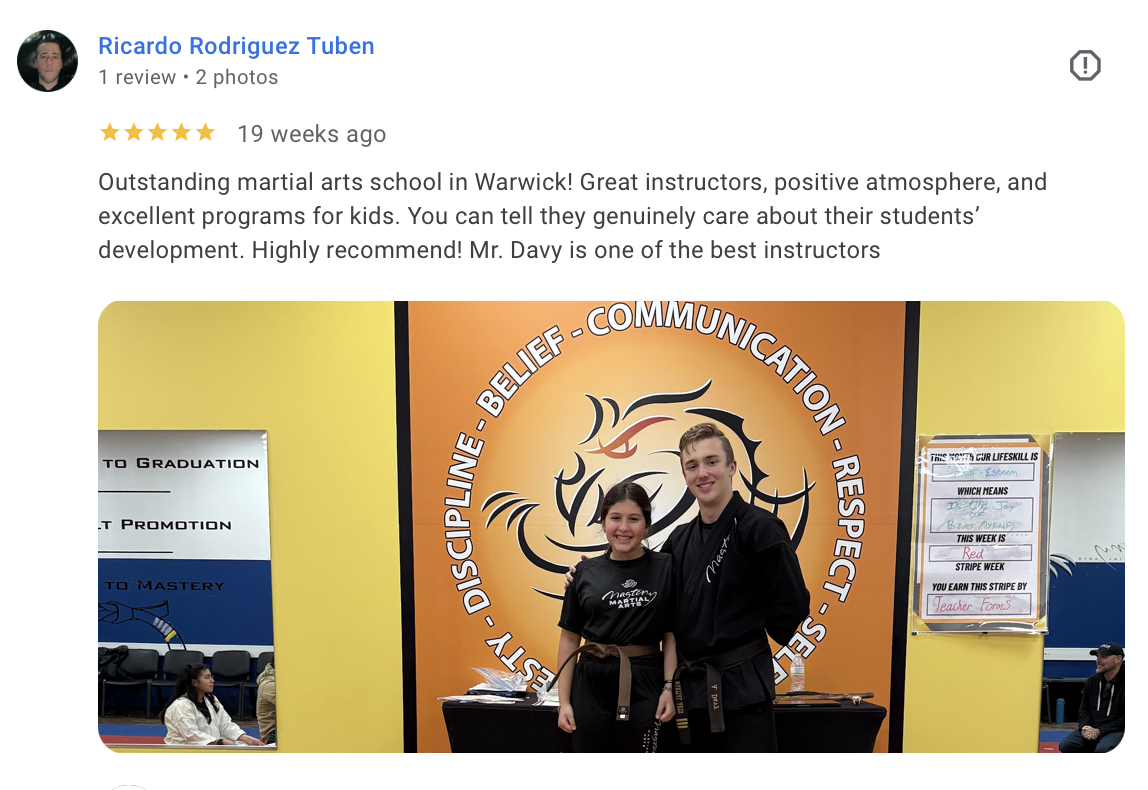
One of the biggest things parents look for when choosing a martial arts school is knowing their child is surrounded by positive role models, encouraging leadership, and instructors who genuinely care about their growth.
That’s exactly what this Warwick parent shared about their experience at Mastery Martial Arts:
“Great instructors, positive atmosphere, and excellent programs for kids. You can tell they genuinely care about their students’ development.”
Children grow the most when they feel supported, encouraged, and challenged in an environment that believes in them while helping them steadily build confidence, discipline, and resilience.
At Mastery Martial Arts Warwick, our mission is to help children grow stronger physically, mentally, emotionally, and socially through structured martial arts training and positive mentorship.
As this parent shared:
“Mr. Davy is one of the best instructors.”
Many families discover that the right mentors and environment can make a lifelong impact on how a child sees themselves and approaches challenges.
Read the full parent review here:
https://maps.app.goo.gl/RrJcuZUjvu5oxCxS8
About Mastery Martial Arts
Mastery Martial Arts is a structured child development organization serving families across Rhode Island and Massachusetts. Through its proprietary Mental Health in Motion™ system, Mastery specializes in building focus, discipline, emotional regulation, resilience, and leadership skills in children ages 4–12.
Mastery partners with parents to create emotionally safe, structured environments that help children develop what we call an “Inner Black Belt” — confidence, responsibility, and emotional strength that extend far beyond the mat.
Learn more or activate your child’s free introductory lesson at:
https://masteryma.com
