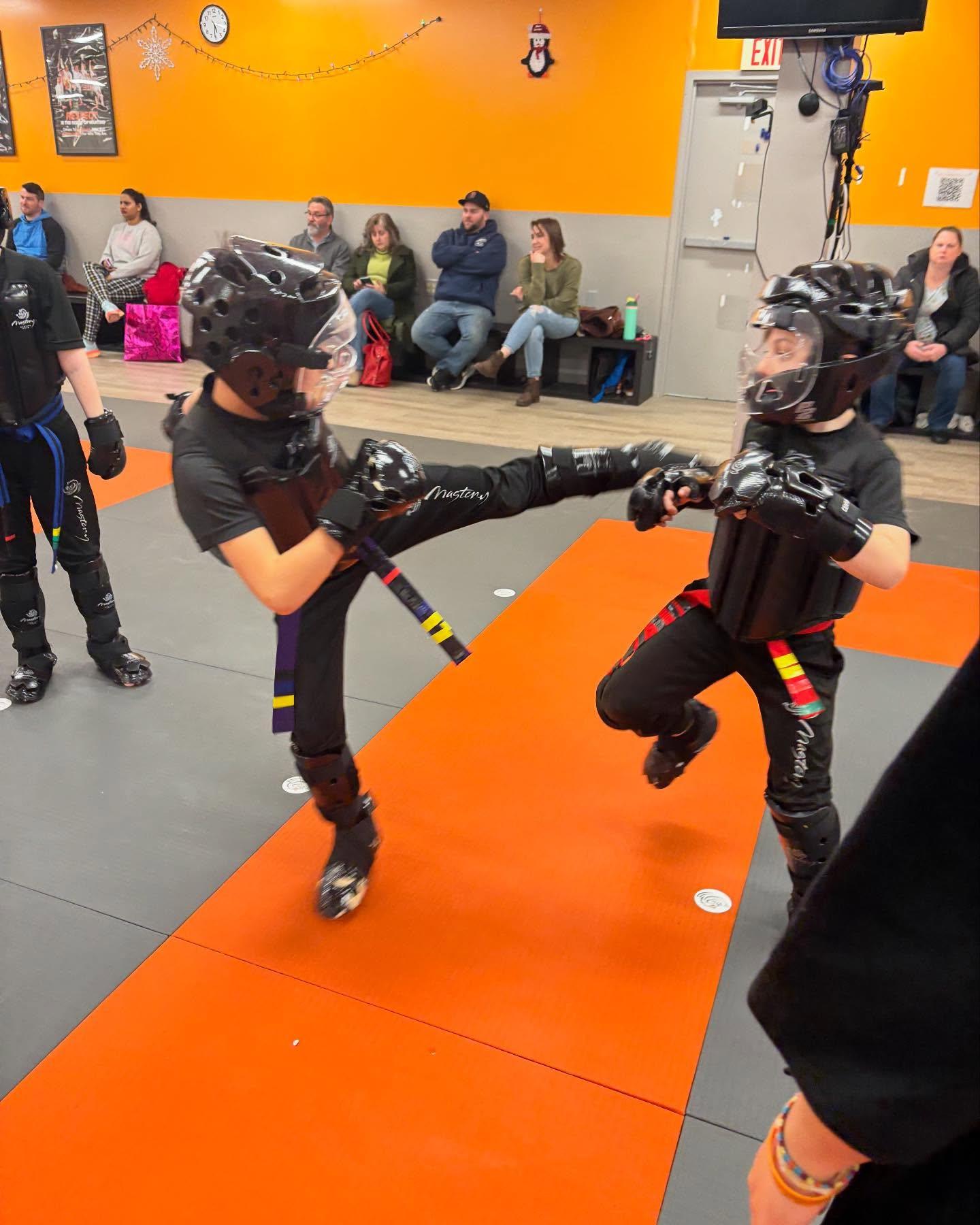
Why Discipline Is Really Self-Respect (And How Kids Learn It Naturally
Why Discipline Is Really Self-Respect (And How Kids Learn It Naturally)
The worddisciplineoften gets a bad reputation.
Many parents picture:
Strict rules
Raised voices
Punishment and control
But true discipline—healthy discipline—has nothing to do with fear.
At its core, discipline is aboutself-respect.
It’s the ability to:
Do what’s right even when it’s hard
Stay committed when motivation fades
Follow through because you value yourself
And kids aren’t born with this skill.
They learn it—through experience.
Families looking for a program that focuses on confidence, focus, and emotional strength can experience this approach at our Smithfield martial arts location.
👉https://masteryma.com/smithfield
Discipline Isn’t Control — It’s Internal Guidance
When discipline is enforced externally, kids comply only when someone is watching.
When discipline is developed internally, kids:
Take responsibility for effort
Stay consistent without reminders
Feel proud of showing up
That’s the difference between obedience and self-respect.
Self-respect says:
“I do this because it matters to me.”
Why Kids Struggle With Discipline Today
Most kids don’t lack discipline because they’re lazy.
They struggle because:
Expectations are unclear
Routines change constantly
Follow-through isn’t modeled
Without structure, kids rely on motivation—and motivation is unreliable.
That’s why environments that buildconfidence, focus, and emotional strengthare so effective at developing discipline naturally.
👉https://masteryma.com/post/how-martial-arts-builds-confidence-focus-emotional-strength
Structure Teaches Discipline Without Pressure
Structure removes guesswork.
When kids know:
What’s expected
What comes next
What effort looks like
They stop resisting—and start engaging.
Discipline grows when children feel capable, not controlled.
Over time, consistency becomes identity:
“This is who I am.”
Discipline and Emotional Control Go Together
Discipline isn’t just about actions—it’s about emotions.
Kids who develop discipline also learn to:
Pause before reacting
Push through frustration
Stay calm when things feel challenging
That’s why disciplined kids are often better able tohandle pressure calmlyas expectations increase.
👉https://masteryma.com/post/why-confident-kids-handle-pressure-better
Free Mastery Lesson –
For many families, discipline starts to click when a child experiences it firsthand. A Free Mastery Lesson gives kids a structured, supportive environment where consistency, effort, and follow-through are practiced—often helping them realize,“I’m capable of doing hard things.”
What Parents Often Notice First
As discipline develops, parents often see:
Better routines at home
Less resistance to responsibility
Improved focus and follow-through
Increased confidence in daily tasks
These changes aren’t forced.
They’re earned—through consistency and guidance.
For Parents
If your child struggles with discipline, it doesn’t mean they lack character.
It often means they haven’t yet learned how discipline connects toself-respect.
When kids learn to value their effort, discipline becomes empowering—not restrictive.
What Smithfield Families Are Saying
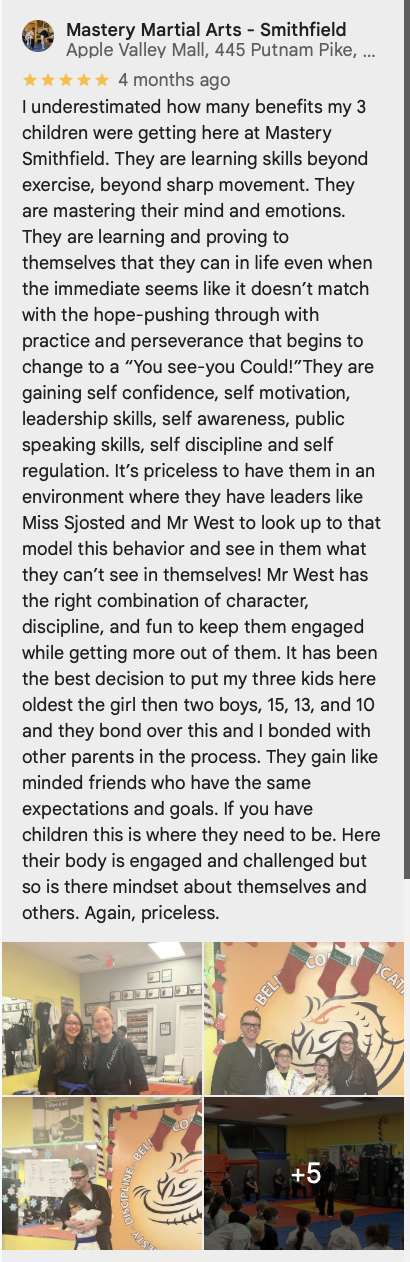
Many parents hope martial arts will help their child become more confident and disciplined. What often surprises them is how deeply the experience begins shaping their mindset, emotional growth, leadership skills, and belief in themselves.
That’s exactly what this Smithfield parent shared about their family’s experience at Mastery Martial Arts:
“They are mastering their mind and emotions.”
One of the most powerful things children can develop is the ability to keep going when things feel difficult, frustrating, or uncomfortable — while learning how to believe in themselves through perseverance and growth.
As this parent beautifully described:
“They are learning and proving to themselves that they can in life even when the immediate seems like it doesn’t match with the hope.”
At Mastery Martial Arts Smithfield, our mission is to help children develop confidence, emotional resilience, self-discipline, leadership, focus, and belief in themselves through structured martial arts training and positive mentorship.
Many families also discover that the greatest transformation happens when children begin surrounding themselves with positive role models, supportive friendships, and an environment that consistently encourages growth.
As this parent shared:
“They are gaining self confidence, self motivation, leadership skills, self awareness, public speaking skills, self discipline and self regulation.”
Read the full parent review here:
https://maps.app.goo.gl/MR29GpvLEem9Sgoi7
Author Bio
This article was written by the leadership team behind Mastery Martial Arts, founded by educators and instructors who have worked with thousands of children and families over the past two decades. Mastery uses martial arts as a tool to help children build confidence, focus, emotional strength, and character—skills that support them far beyond the mat.
Join Our Mastery Parents Community
Parenting disciplined, confident kids is easier when you’re surrounded by other parents who value growth and guidance. Join ourMastery Parents Facebook Communityto connect, learn, and grow together.
