5 Ways Martial Arts Builds Unshakeable Confidence in Kids | Mastery Martial Arts

5 Ways Mastery Martial Arts Builds Unshakeable Confidence in Kids
Published: September 30, 2025 | Reading Time: 8 minutes
As a parent, you want nothing more than to see your child succeed in life. You watch them navigate the playground, struggle with new challenges at school, and sometimes shrink back when faced with difficult situations. If you've noticed your child lacking confidence or struggling with self-esteem, you're not alone. According to recent studies, many children today face challenges with confidence that can impact their academic performance, social relationships, and overall well-being.
The good news? There's a proven solution that has been transforming children's lives for generations: martial arts training. Research published in the journal Children found that participation in martial arts leads to "increased social skills and self-confidence, along with less aggressiveness" among young practitioners. But how exactly does martial arts build this unshakeable confidence that every parent wants to see in their child?
At Mastery Martial Arts, we've witnessed countless transformations over the years. We've seen shy, hesitant children walk through our doors and emerge as confident, capable young leaders. Today, we're sharing the five key ways martial arts builds lasting confidence in children, backed by research and real-world experience.
1. Mastery Through Progressive Achievement
One of the most powerful confidence-building aspects of martial arts is the structured progression system. Unlike many childhood activities where success can feel arbitrary or dependent on natural talent, martial arts provides a clear, achievable path forward for every child.
The Belt System: A Roadmap to Success
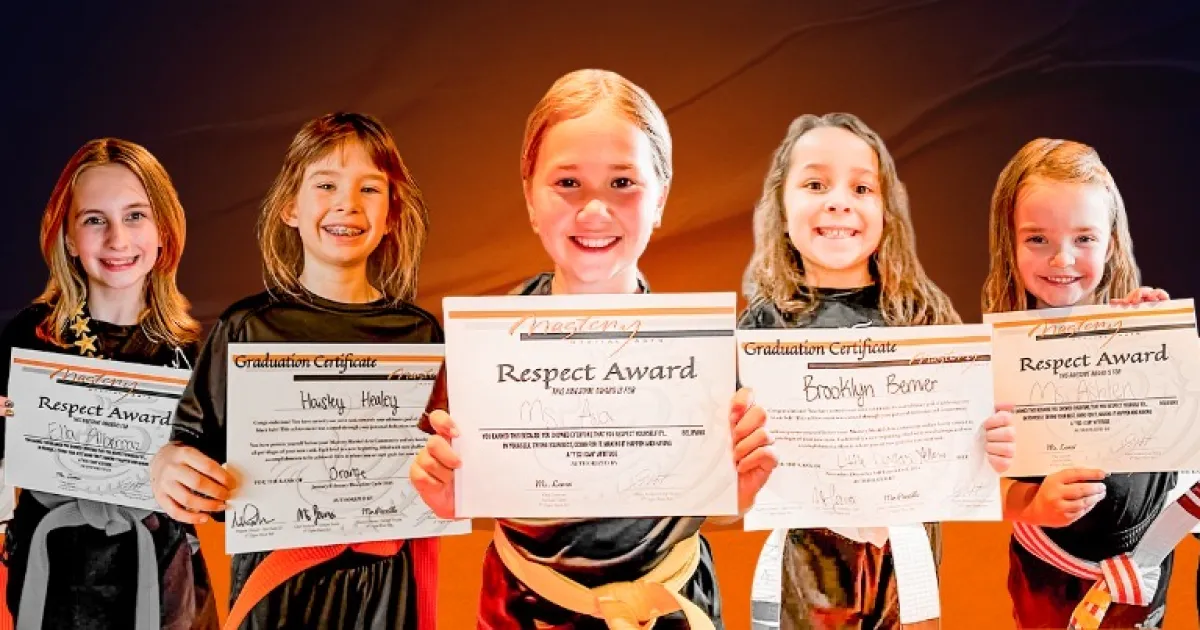
The traditional belt ranking system serves as more than just a way to organize skill levels—it's a carefully designed confidence-building tool. Each belt represents a specific set of skills and knowledge that a child has mastered. When a student earns their next belt, they're not just receiving a piece of colored fabric; they're gaining tangible proof of their growth and capability.
This system is particularly effective because it breaks down what might seem like an overwhelming goal (becoming a black belt) into manageable, achievable steps. A white belt student doesn't need to worry about complex techniques—they focus on basic stances, simple blocks, and fundamental movements. As they master these basics, their confidence grows, and they're ready for the next challenge.
Celebrating Small Wins
Research in developmental psychology shows that children build confidence most effectively when they experience frequent, meaningful successes. Martial arts training is designed around this principle. In every class, students have opportunities to succeed:
• Perfecting a technique they've been working on
• Helping a newer student learn a movement
• Demonstrating improved focus during meditation
• Showing better form in their stances
These small victories accumulate over time, creating a foundation of self-belief that extends far beyond the martial arts school. Children begin to understand that with effort and persistence, they can overcome challenges and achieve their goals.
The Power of Personal Progress
Unlike team sports where a child's success might depend on their teammates' performance, martial arts is fundamentally about personal growth. Each child progresses at their own pace, competing only with their previous self. This removes the pressure of comparison with others and allows children to focus on their own journey.
When a child who struggled with coordination finally masters a complex kata (form), or when a shy student successfully breaks their first board, the confidence boost is immediate and profound. They've proven to themselves that they can overcome obstacles through dedication and practice.
2. Physical Empowerment and Body Awareness
Confidence often begins with how we feel in our own bodies. Many children today struggle with physical confidence due to sedentary lifestyles, limited physical challenges, or negative experiences with traditional sports. Martial arts addresses these issues head-on by developing physical competence and body awareness.
Building Real Strength and Coordination
Martial arts training develops functional strength, flexibility, and coordination in ways that feel natural and enjoyable for children. Unlike repetitive gym exercises, martial arts movements are dynamic and engaging. Children develop:
• Core strength through proper stances and techniques
• Balance and coordination through forms and sparring drills
• Flexibility through stretching routines and high kicks
• Cardiovascular fitness through active training sessions
As children become stronger and more coordinated, they naturally feel more confident in their physical abilities. This confidence translates into better posture, more assertive body language, and a willingness to try new physical challenges.
Self-Defense Skills: The Ultimate Confidence Booster
While we hope children never need to use self-defense skills, knowing they possess them provides an incredible confidence boost. Children who understand how to protect themselves walk taller and feel more secure in various situations.
This isn't about encouraging aggression—quite the opposite. Martial arts teaches children that true strength comes from self-control and the wisdom to avoid conflict when possible. However, knowing they have the skills to protect themselves if necessary gives children a quiet confidence that permeates all areas of their lives.
Overcoming Physical Fears
Many children have physical fears that limit their confidence: fear of falling, fear of contact, or fear of looking awkward while moving. Martial arts training gradually and safely exposes children to these challenges in a controlled environment.
Through partner exercises, controlled sparring, and breakfall training, children learn that they're more resilient than they thought. They discover they can handle physical challenges, recover from mistakes, and push through discomfort. These lessons in physical courage translate directly into emotional and mental confidence.
3. Mental Discipline and Focus Development
In our distraction-filled world, the ability to focus and maintain mental discipline is increasingly rare and increasingly valuable. Martial arts training develops these crucial mental skills while simultaneously building confidence in a child's ability to control their own mind and emotions.
Meditation and Mindfulness Training
Most martial arts classes begin and end with a period of meditation or quiet reflection. This isn't just tradition—it's a powerful tool for developing mental discipline and self-awareness. Children learn to:
• Quiet their minds and focus on the present moment
• Recognize and manage their emotions
• Develop patience and persistence
• Build mental resilience
As children become more skilled at managing their thoughts and emotions, they feel more in control of their lives. This sense of internal control is a cornerstone of genuine confidence.
Goal Setting and Achievement
Martial arts naturally teaches goal-setting skills. Whether working toward their next belt, perfecting a challenging technique, or preparing for a tournament, children learn to set specific, achievable goals and work systematically toward them.
This process teaches valuable life skills:
• Breaking large goals into smaller, manageable steps
• Creating practice schedules and sticking to them
• Dealing with setbacks and failures constructively
• Celebrating achievements appropriately
Children who master these skills in martial arts apply them to academic work, social situations, and other challenges. They develop confidence in their ability to achieve what they set their minds to.
Handling Pressure and Performance
Martial arts provides numerous opportunities for children to perform under pressure in a supportive environment. Whether demonstrating techniques for belt testing, competing in tournaments, or simply performing in front of their classmates, children learn to manage performance anxiety and deliver their best effort when it matters.
These experiences are invaluable for building confidence. Children learn that they can handle pressure, that mistakes aren't catastrophic, and that they're capable of performing well even when nervous. This confidence transfers directly to school presentations, social situations, and other challenging moments in their lives.
4. Social Skills and Leadership Development
Confidence isn't just about individual achievement—it's also about how we interact with others. Martial arts training provides a unique environment for developing social skills and leadership abilities that boost confidence in group settings.
Respect and Communication
Martial arts culture emphasizes respect for instructors, fellow students, and oneself. Children learn to communicate clearly and respectfully, to listen actively, and to show consideration for others. These social skills make children more comfortable and confident in social situations.
The formal structure of martial arts classes—bowing, using proper titles, following etiquette—might seem old-fashioned, but it serves an important purpose. It teaches children how to navigate social hierarchies respectfully and confidently, skills that serve them well in school and other structured environments.
Peer Teaching and Mentorship
As children advance in their martial arts training, they often have opportunities to help newer students. This peer teaching serves multiple confidence-building functions:
• It reinforces their own knowledge and skills
• It develops leadership and communication abilities
• It builds empathy and social awareness
• It provides a sense of responsibility and importance
When a child successfully teaches a technique to a younger student, they experience the confidence that comes from being helpful and knowledgeable. They begin to see themselves as leaders and mentors, roles that naturally boost self-esteem.
Teamwork and Individual Achievement
While martial arts is primarily an individual pursuit, training often involves partner work and group activities. Children learn to balance personal achievement with cooperation and mutual support. They discover that they can be competitive while still being supportive of their training partners.
This balance is crucial for developing healthy confidence—confidence that doesn't depend on putting others down or being better than everyone else, but rather on personal growth and mutual respect.
Conflict Resolution Skills
Martial arts training teaches children how to handle conflict constructively. They learn de-escalation techniques, how to stand up for themselves without being aggressive, and how to resolve disputes peacefully. These skills make children more confident in social situations because they know they can handle disagreements and challenges effectively.
5. Character Development and Inner Strength
Perhaps the most profound way martial arts builds confidence is through character development. The values and principles taught in martial arts—integrity, perseverance, respect, and self-discipline—create a foundation of inner strength that supports lasting confidence.
Integrity and Authenticity
Martial arts emphasizes doing the right thing even when no one is watching. Children learn to be honest about their efforts, to admit mistakes, and to take responsibility for their actions. This development of integrity creates authentic confidence—confidence based on genuine character rather than external validation.
When children know they're living according to their values, they feel more secure and confident in their decisions. They're less likely to be swayed by peer pressure or to compromise their principles for temporary approval.
Perseverance Through Challenges
Martial arts training is designed to be challenging. Children will face techniques they can't master immediately, physical demands that push their limits, and moments when they want to quit. Learning to persevere through these challenges builds incredible inner strength and confidence.
Children discover that they're more resilient than they thought. They learn that failure isn't permanent, that effort leads to improvement, and that they can overcome obstacles through persistence. These lessons create unshakeable confidence because they're based on proven personal experience.
Service and Contribution
Many martial arts schools emphasize community service and giving back. Children might participate in charity events, community demonstrations, or volunteer activities. These experiences help children see themselves as valuable contributors to their community, which naturally boosts confidence and self-worth.
When children understand that they have something valuable to offer the world, their confidence becomes grounded in purpose rather than just personal achievement.
Emotional Regulation and Self-Control
Martial arts training teaches children to manage their emotions effectively. They learn to channel anger constructively, to stay calm under pressure, and to respond rather than react to challenging situations. This emotional self-control is a crucial component of confidence.
Children who can manage their emotions feel more in control of their lives and more capable of handling whatever challenges come their way. They're less likely to be overwhelmed by difficult situations and more likely to respond with confidence and clarity.
The Transformation: From "I Can't" to "I Did It!"
At Mastery Martial Arts, we see this transformation regularly. Children who start training with us often arrive feeling uncertain, hesitant, or lacking in self-belief. Through consistent training and supportive instruction, we watch them develop into confident, capable young people.
The change isn't just visible in their martial arts skills—it shows up in their posture, their willingness to try new things, their interactions with peers, and their approach to challenges. Parents frequently tell us about improvements they see at home and school: better grades, more friends, increased willingness to participate in activities, and a general sense of self-assurance.
This transformation happens because martial arts addresses confidence from multiple angles simultaneously. It's not just about physical skills or mental discipline or social development—it's about all of these elements working together to create a comprehensive foundation for lifelong confidence.
Getting Started: Your Child's Confidence Journey
If you're ready to help your child develop unshakeable confidence through martial arts, the first step is simple: schedule a trial class. At Mastery Martial Arts, we offer free trial classes that allow children to experience our training environment and teaching methods firsthand.
During a trial class, your child will:
• Learn basic martial arts techniques in a fun, supportive environment
• Experience our positive, encouraging teaching style
• Meet our instructors and other students
• Get a feel for the martial arts culture and values
We understand that every child is different, and we're committed to helping each student succeed at their own pace. Our experienced instructors know how to work with shy children, energetic children, and everything in between.
Conclusion: Building Confidence That Lasts a Lifetime
The confidence that martial arts builds in children isn't temporary or superficial—it's deep, authentic, and lasting. It's based on real skills, genuine achievement, and strong character development. This type of confidence serves children well throughout their lives, helping them navigate challenges, pursue their goals, and contribute positively to their communities.
As research continues to confirm what martial arts instructors have known for generations, the benefits of martial arts training extend far beyond physical fitness or self-defense skills. The confidence, discipline, and character that children develop through martial arts training become the foundation for success in all areas of life.
If you're looking for a way to help your child develop unshakeable confidence, martial arts offers a proven, comprehensive approach that addresses the whole child—body, mind, and spirit. The journey begins with a single step onto the training mat, but the confidence your child develops will last a lifetime.
Ready to see how martial arts can transform your child's confidence? Contact Mastery Martial Arts today to schedule your free trial class and take the first step on this incredible journey of growth and development.
Mastery Martial Arts is dedicated to helping children develop confidence, character, and life skills through traditional martial arts training. Our experienced instructors create a positive, supportive environment where every child can succeed.Emailorcallus today to learn more about our programs and schedule your free trial class.Click hereto join our FB Parents group.
